Analysis: Wind and solar save UK from gas imports worth £5.9bn during Hormuz crisis
The UK has avoided the need for gas imports worth £5.9bn since the start of the Hormuz crisis as a… The post Analysis: Wind and solar save UK from gas imports worth £5.9bn during Hormuz crisis appeared first on Carbon Brief .
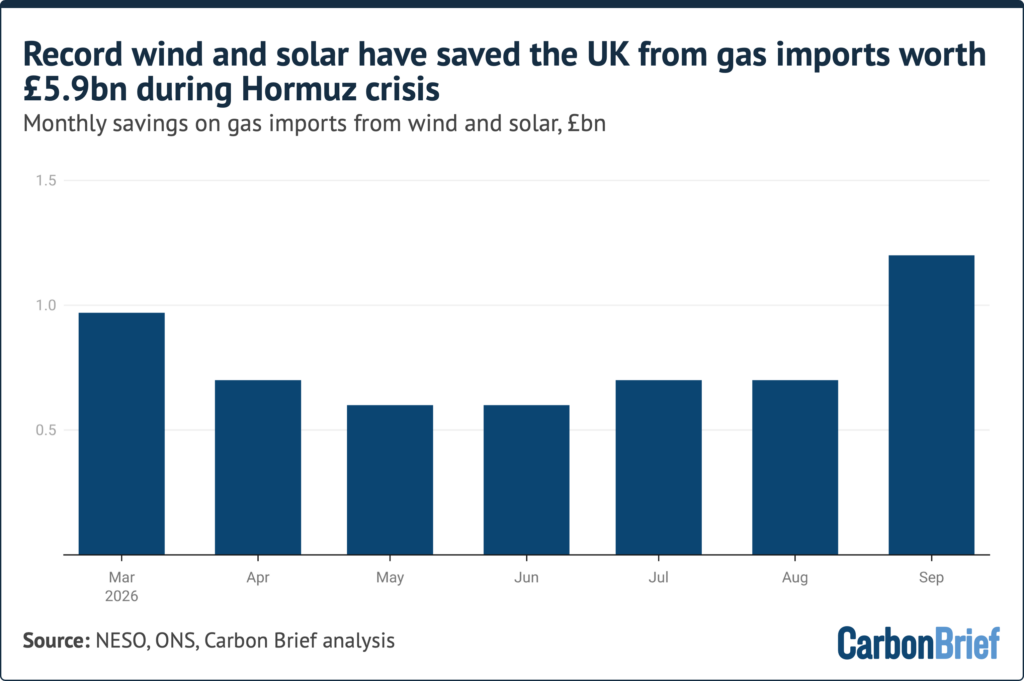
Since the onset of the Hormuz crisis, the United Kingdom has managed to avoid requiring gas imports worth £5.9 billion due to the substantial increase in wind and solar power generation. Wind and solar power have surged by 14% year-on-year, contributing to a record 41% share of the UK's electricity needs, compared to 25% from gas. This shift has resulted in a 10% decrease in gas-fired electricity generation since the start of the year.
The analysis reveals that these avoided gas imports would have necessitated the acquisition of over 100 additional tanker deliveries of liquefied natural gas (LNG). The significant £1.3 billion saving in gas imports in September 2026 alone is attributed to record wind and solar output, around 10 terawatt hours (TWh), coupled with surging gas prices.
Wholesale gas prices in the UK have remained elevated since Russia halted supplies to Europe following its invasion of Ukraine in 2022. Gas prices averaged 90p per therm from 2023 until the start of this year, nearly three times higher than 2019 prices. However, since the outbreak of war in the Middle East in March, gas prices have surged to 134p per therm, nearly four times the 2019 level. In September 2026, gas prices averaged 189p per therm, reaching their highest point since the global energy crisis in 2022.
The UK's escalating gas prices are due to the impending winter, increasing demand for heating, and the ongoing Hormuz crisis. European gas stocks are low, forcing Europe to compete with Asia for LNG shipments necessary to maintain warmth. This situation exacerbates high wholesale gas prices, which are impacting household gas bills under the price cap set by energy regulator Ofgem.
However, thanks to clean energy, electricity bills have only increased by 4%, compared to a 33% rise in typical household gas bills, amounting to £200 per year.
Written by urgent.news from Carbon Brief's reporting — not their text. Machine-written — may contain errors; check the original before relying on it.