AI poised to boost public, cultural services in Qatar
<p>Doha, Qatar: Artificial intelligence (AI) will transform how people engage with Qatar’s government and cultural institutions, enabling faster, simpler, and more personalised services as complex tasks are managed more efficiently, according to market experts.</p> <p>Speaking at a panel session during the recently concluded Artefact AI Connect Summit, industry leaders highlighted the role of AI…
Doha, Qatar - Artificial intelligence (AI) is set to revolutionize how Qatar's government and cultural institutions interact with the public, according to market experts. At the recent Artefact AI Connect Summit, industry leaders emphasized the potential of AI in the public sector and cultural experiences.
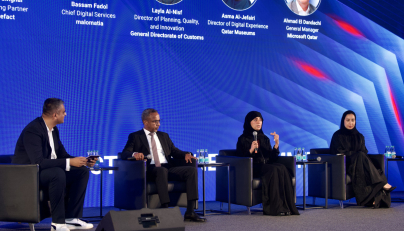
Layla Al-Nisf, Director of Planning Quality and Innovation at the General Directorate of Customs, stated that by 2030, government services could become significantly more proactive and straightforward, thanks to AI handling much of the complexity involved in processing information and making assessments. She described a future where citizens and businesses encounter easy-to-navigate services, even when sophisticated systems are operating underneath.
Customs could see a significant impact from this transformation, with goods and travelers moving through Qatar's borders more seamlessly by the end of the decade. AI would manage risk assessments, data analysis, and decision-support functions while maintaining trust, security, and quality.
Al-Nisf stressed the importance of linking AI solutions to specific outcomes, ensuring that AI initiatives contribute to measurable improvements in the user journey. Meanwhile, Qatar Museums' Director of Digital Experience, Asma Al-Jefairi, highlighted how AI is changing how audiences interact with the country's cultural institutions. Visitors could experience Qatar's heritage and culture in personalized ways tailored to their individual interests, languages, and circumstances.
Rather than simply viewing exhibits, audiences could interact with cultural content through conversation, exploration, and personalized digital experiences. Al-Jefairi emphasized the challenge of helping audiences navigate the vast cultural ecosystem while using AI to expand accessibility, including support for French and Chinese, and conversational technology that allows audiences to engage with artworks and cultural sites in new ways.
Microsoft Qatar's General Manager, Ahmed El Dandachi, noted that AI should augment human capabilities rather than replace humans. He stressed that AI is designed to amplify and help humans be more responsible, focusing on responsibility as a central consideration in determining how entities deploy AI. Companies are increasingly examining which tasks can be handled by AI agents and where humans should remain directly involved in decisions.
As Qatar's public institutions explore the possibilities of AI, the emphasis is on creating simpler services, improving accessibility, strengthening decision-making, and creating more responsive experiences for the people who use them.
Written by urgent.news from The Peninsula Qatar's reporting — not their text. Machine-written — may contain errors; check the original before relying on it.