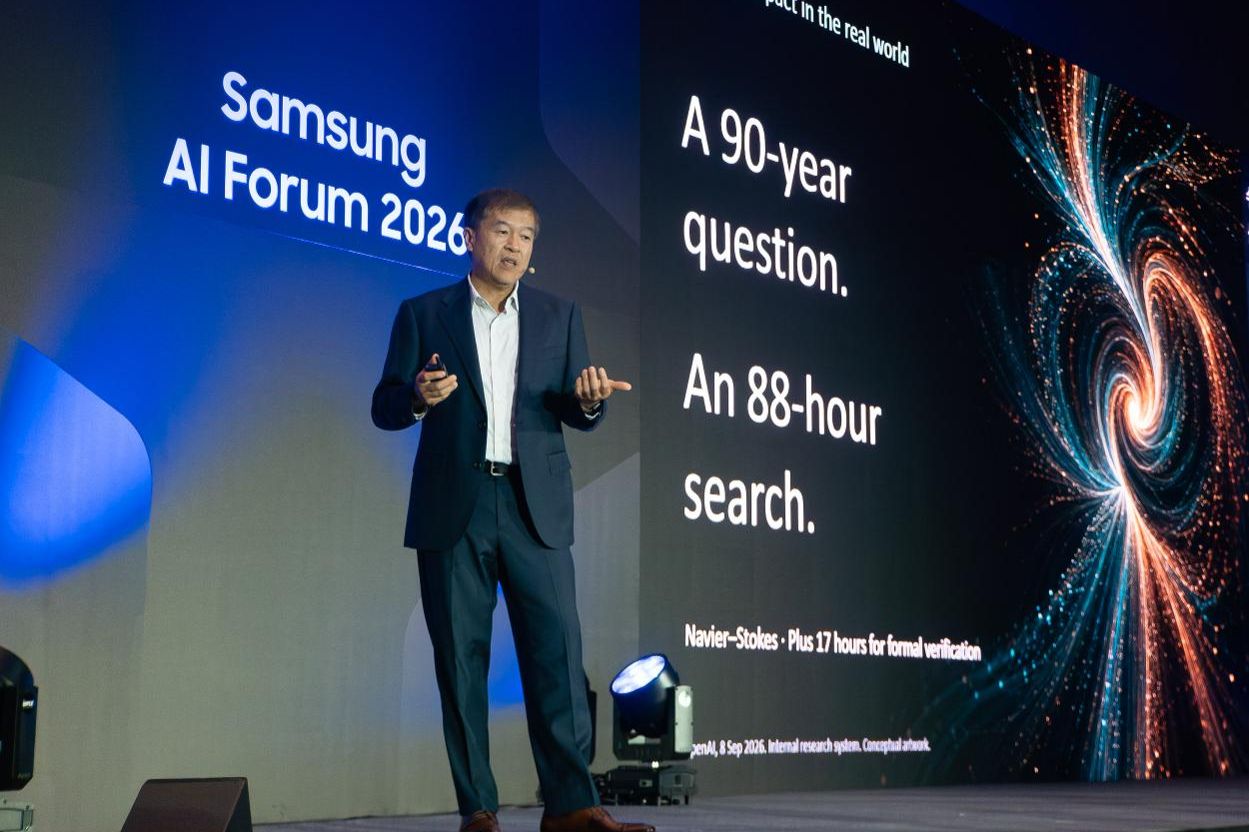
AI makes its first meaningful breakthrough in theoretical physics
One of the greatest challenges — and perhaps the most important challenge of all — for any theoretical physicist is to connect something you can predictively calculate to something you can go out and measure experimentally or observationally. This is the key not just to testing your current best understanding of reality, but to discovering any anomalies that could pave the way forward to the next…
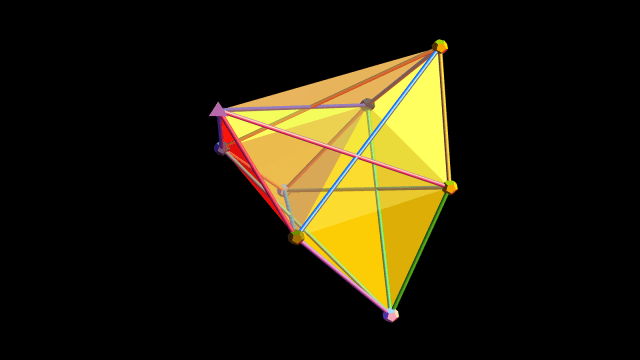
One of the greatest challenges for theoretical physicists is to connect theoretically calculated predictions with experimental or observational measurements. This is crucial not only for testing current understanding of reality but also for discovering anomalies that may lead to the next revolution in our understanding of the Universe.
Throughout history, significant revolutions in physics have emerged where theory and observation do not match, such as the discovery of Neptune from the mismatch in Uranus's predicted orbit, the extra precession of Mercury's orbit leading to general relativity, and the failure of classical physics to predict black body radiation, which sparked the quantum revolution.
Quantum field theory (QFT) has been the most precise physical theory, providing accurate predictions and driving hopes for going beyond the Standard Model. However, calculating observables like cross-sections and scattering amplitudes to ever-increasing precisions has been computationally challenging. Recently, an LLM-based AI has achieved calculating an important theoretical result in quantum field theory to a higher loop-order than any human, even with the assistance of computers, had ever done before. This breakthrough is significant and noteworthy.
Quantum field theory is a fundamental framework for understanding the Universe, different from prior conceptions of reality like Newtonian physics. Unlike Newtonian physics, which treats particles as having well-defined properties, QFT posits that particles exhibit probabilistic behavior. This inherent uncertainty is a core aspect of quantum physics, evident in phenomena such as the energy-time uncertainty, which is illustrated by the Z boson's mass being 91.187 GeV with an uncertainty of about +/- 3%.
In quantum field theory, the underlying fields associated with fundamental forces are also made quantum in nature. This means that even in empty space, these quantum fields persist, shaping the fabric of the Universe. The theory extends beyond particles, incorporating the quantum nature of fields that underpin the fundamental forces of nature.
The presence of electrically charged particles generates electric and magnetic fields, but when quantum uncertainty is present, the fields must also be treated quantum mechanically. This leads to the conclusion that the quantum nature of particles extends to the quantum nature of the fields that constitute the Universe.
Written by urgent.news from Big Think's reporting — not their text. Machine-written — may contain errors; check the original before relying on it.