A Brief History of the Bloomberg Terminal
Financial markets have always relied on timely information, and the drive for timeliness has always adapted to the latest technology. From clipper ships transiting the oceans to telegraph wires connecting cities to fiber-optic cables conducting trades in microseconds , traders have embraced any advantage to get the most up-to-date information. Indeed, the history of finance is really a story…
The Bloomberg Terminal has a rich history that traces back to the early days of financial markets. From the clipper ships of the 19th century to the telegraph wires of the 1840s and 1850s, traders have consistently sought timely information to gain an edge in the markets. The evolution of communication technology, from telegraphy to electronic networks, has been a driving force behind this quest for information.
In 1841, the Mercantile Exchange, a forerunner of Dun & Bradstreet, began offering proprietary business information to its clients. Decades later, Paul Julius Reuter introduced telegraph dispatches and stock price information via pigeons carrying slips of paper with daily prices. Edward Calahan's telegraphic ticker-tape machine, introduced in 1867, marked a significant milestone in real-time information dissemination. Thomas Edison improved upon this design with his patented ticker tape in 1871.
The Dow Jones Industrial Average debuted in 1896, providing a snapshot of key U.S. businesses listed on stock exchanges. Traders relied on messengers delivering quotes from the trading floor and stock tickers keeping them informed of prices.
The first paperless financial service, Quotron's electronic screens for market quotes, debuted in 1960. Over the next two decades, various companies rolled out innovations for distributing financial news and data. When Michael Bloomberg entered this industry in 1981, he aimed to offer specialized financial data and analytical tools that would provide a competitive edge.
Bloomberg, formerly known as IMS, was founded by Michael Bloomberg after he was fired from Salomon Brothers. With a US $10 million equity payout, he joined forces with former Salomon colleagues Thomas Secunda, Duncan MacMillan, and Charles Zegar. IMS focused on developing a computer terminal that could provide up-to-date information and perform instant quantitative analysis based on historical data.
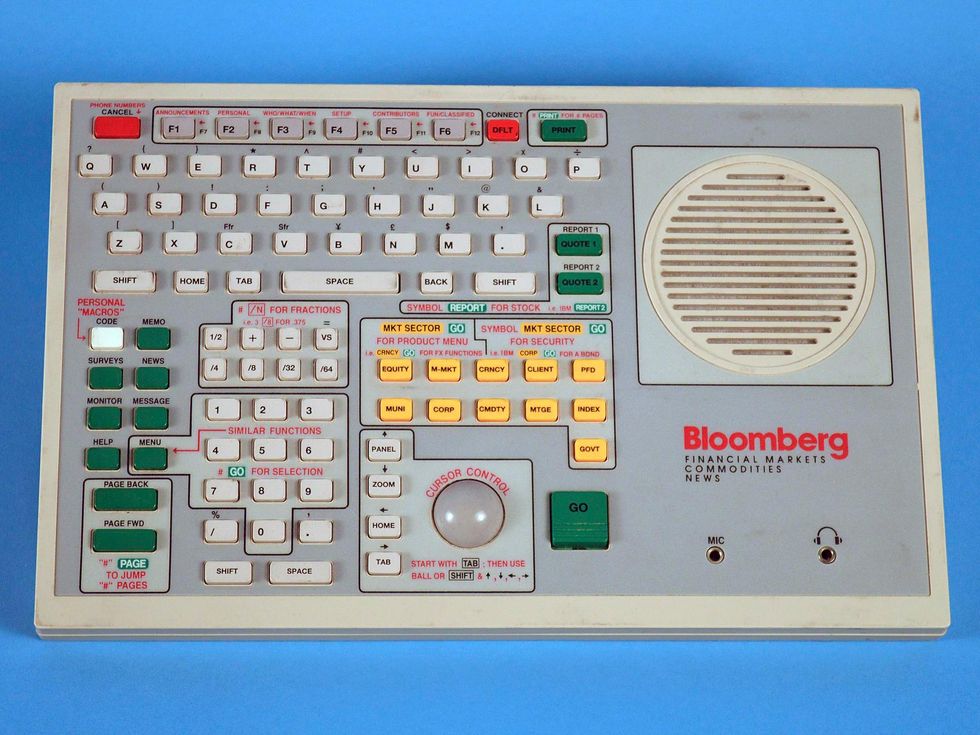
The Market Master terminal, the cornerstone of the Bloomberg Terminal, consisted of a monochrome CRT monitor, a custom keyboard, and a communications/controller unit connected to the company's private network. Initially, it provided U.S. government bond prices and bond-calculation tools. In 1982, IMS delivered the first 22 Market Master terminals to Merrill Lynch, which invested $30 million (approximately $110 million today) for a 30 percent stake and exclusive rights to the terminals for five years.
Written by urgent.news from IEEE Spectrum's reporting — not their text. Machine-written — may contain errors; check the original before relying on it.
Also reported by 1 other outlet
- A Brief History of the Bloomberg Terminal spectrum.ieee.org