4-winged fossil found in Liaoning challenges single origin of dinosaur flight
Scientists have unveiled an exceptionally well-preserved 100-million-year-old fossil of a small, feathered dinosaur in northeastern China that could reshape our understanding of how dinosaurs took to the skies. The newly discovered species, named Norellraptor barsboldi, is a four-winged predatory dinosaur measuring 57cm (22 inches) long. Belonging to the microraptorines – small dinosaurs with…
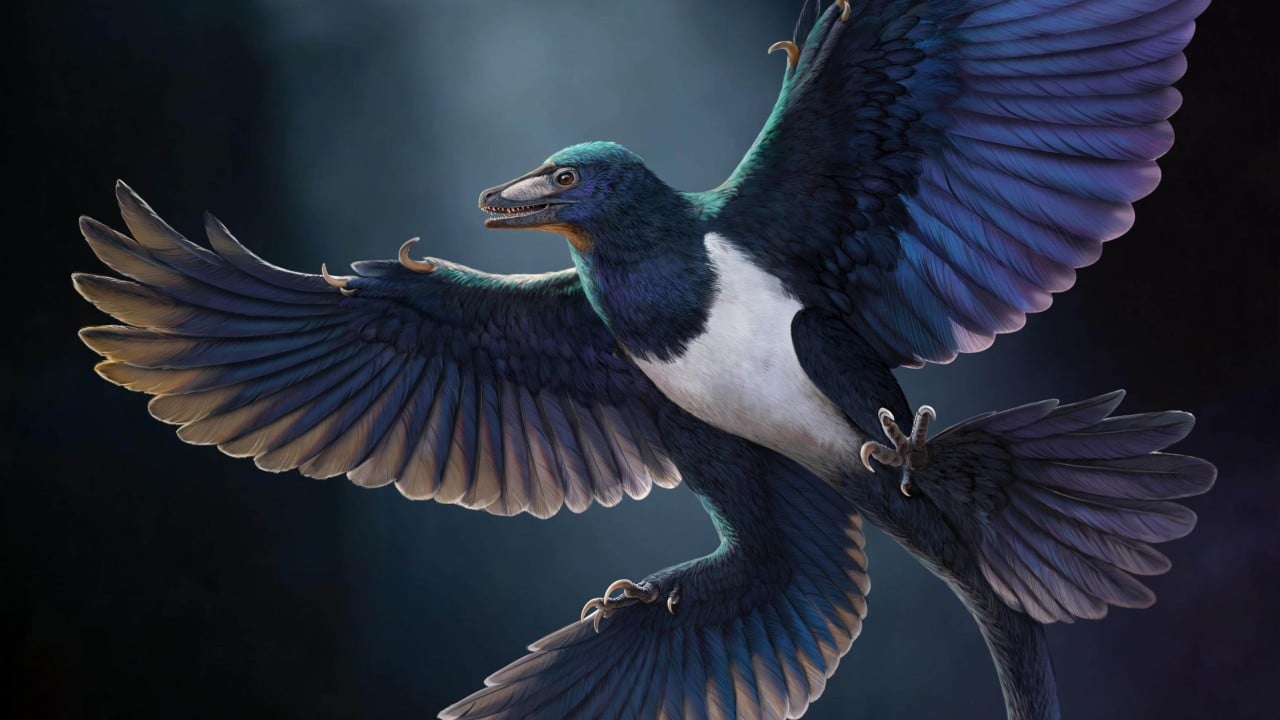
Scientists have unveiled a remarkably well-preserved 100-million-year-old fossil of a small, feathered dinosaur in northeastern China, which could fundamentally alter our understanding of how dinosaurs gained the ability to fly. The newly identified species, dubbed Norellraptor barsboldi, measures approximately 57 centimeters (22 inches) in length and is a four-winged predatory dinosaur belonging to the microraptorines – a group of small feathered dinosaurs with wings closely related to birds.
This discovery provides compelling evidence that flight evolved independently in multiple dinosaur lineages, rather than originating from a single common source. The research team, comprising scientists from China, Italy, and Slovakia, published their findings in the peer-reviewed journal Nature Communications. For many years, experts have debated whether the ability to fly in birds and microraptorines shared a single evolutionary origin or developed separately.
Previous fossil evidence has shown that some microraptorines possessed long feathers on both their front and hind limbs, suggesting adaptations for flight; however, it was unclear if these features marked the birth of flight in Paraves or evolved independently. The "exquisitely preserved" fossil, complete with a skeleton and plumage, was unearthed in the Lower Cretaceous Jiufotang Formation located in the northeastern coastal province of Liaoning.
The geological formation is dated to be between 145 million and 100 million years old and is known for its exceptional preservation of fossils from the late phase of the Jehol Biota, an important Early Cretaceous terrestrial ecosystem. The newly discovered Norellraptor barsboldi species was named in honor of American paleontologist Mark Allen Norell and Mongolian paleontologist Rinchen Barsbold, who both passed away in 2025.
By examining the unique anatomical features of the dinosaur, the scientists discovered that 30 percent of the flight-related changes seen in microraptorine evolution also occurred in the bird lineage. However, the two groups developed these shared features in a different sequence. Birds first fused their wrist bones, elongated their breastbones, and subsequently shortened their hand digits, while microraptorines shortened their manual phalanges – finger bones – much earlier, which reduced their grasping ability.
These distinct sequences of flight-related novelties along the two lineages suggest that distinct selective pressures likely influenced the development of their flight adaptations. The researchers concluded that birds and microraptorines did not inherit a shared flight apparatus or inherit a common developmental process for flight evolution.
Instead, different selective pressures likely drove the development of their flight-adapted traits. Future research will necessitate further fossil sampling of birdlike dinosaurs to ascertain the extent of this unique growth pattern and to better understand the forces that propelled dinosaurs into the air.
Written by urgent.news from South China Morning Post's reporting — not their text. Machine-written — may contain errors; check the original before relying on it.