10 señales de que la próxima crisis laboral será la falta de personas
Mientras tememos que la IA nos robe el empleo, ignoramos la verdadera crisis: faltarán humanos para realizar los trabajos físicos, de cuidados y mantenimiento que los algoritmos no asumen. Leer
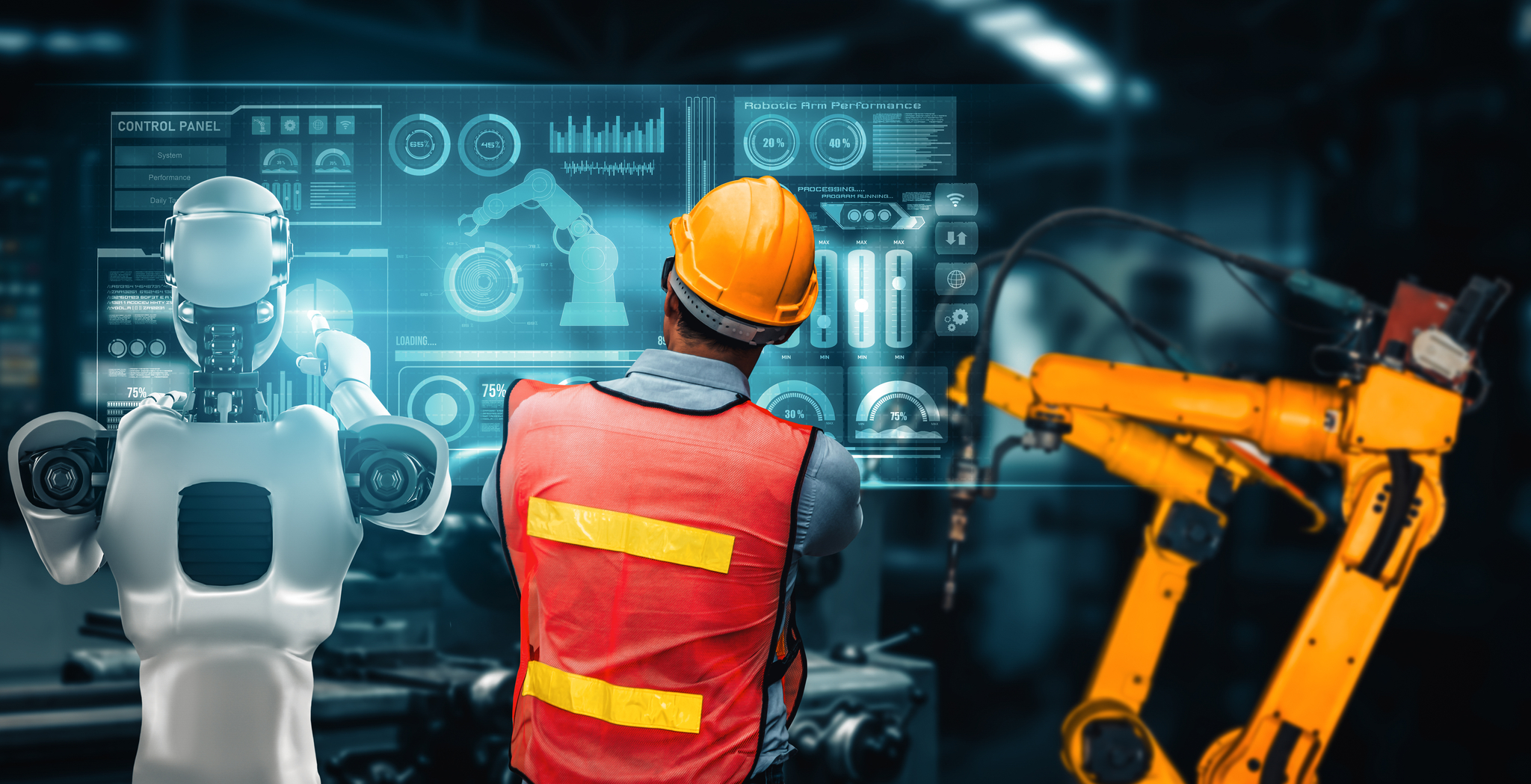
The upcoming labor crisis will likely be driven by a shortage of people, not job displacement: there will be a lack of human workers to perform physical jobs, caregiving roles and maintenance tasks that algorithms cannot handle. Focusing on a potential shortage of professionals due to artificial intelligence, we may overlook what could happen if, while machines learn to handle an increasing portion of work, there are not enough people to do exactly what machines cannot.
It is possible that we enter an economy where some companies discover they need fewer employees to produce intelligence, while others discover there are not enough workers to produce reality. Indeed Hiring Lab recently highlighted the risk of creating an extraordinary abundance of artificial intelligence to produce code, reports, analyses, documents or administrative work while human capacity for curing, caring, building, repairing, installing or maintaining remains scarce.
This is not a unique issue in the United States: the mechanism applies to other markets that combine aging, massive retirements, replacement difficulties and unequal adoption of AI. In fact, there are ten signals suggesting that aging can turn automation into a productive necessity while simultaneously leaving unresolved major labor shortages.
The first signal is demographic. The European Commission projects the EU active population to decrease by about 25 million people, roughly 12%, between 2022 and 2070. An economy may improve employment rates and still have fewer workers. The US provides an early version of this scenario: Indeed calculates that the US workforce lost about 700,000 workers in 2026, an exceptional figure outside of a recession, while unemployment remained around 4%.
Reduced employment growth no longer implies less demand: it may mean there are fewer people available to hire. Aging has already led to automation before the era of ChatGPT. A study by MIT led by Daron Acemoglu suggests that faster-aging countries adopt more industrial robots more rapidly. And that there is more innovation related to automation where aging advances more quickly, because the relative scarcity of workers creates economic incentives to develop technologies capable of replacing their tasks.
Sometimes automation occurs because it is difficult to find someone to hire. AI automates first sectors where it is easier to find talent, and this is probably the most paradoxical signal. Indeed projects the greatest impact of AI in information, finance and professional and business services: sectors with high salaries, abundant graduates and strong capacity to attract new workers.
In those scenarios of most substitutive AI, these activities would accumulate displaced workers while other sectors continue looking for personnel. In Europe, McKinsey calculates that up to 58% of hours currently worked in ten economies contain automatable activities with existing technologies, but warns this is a measure of technical possibility, not a prediction of jobs eliminated.
Automation through digital agents and physical automation through advanced robots advance at very different speeds. Indeed detects high retirement rates in education and health, manufacturing and public administration. It is not enough for young people to enter the labor market; they must want and be able to join those sectors. In health, there are high credentialing and training requirements; other sectors present less attractive salaries, conditions or locations compared to office occupations that many graduates aspire to.
The European Skills Intelligence Observatory identifies particularly intense deficits in health and care, engineering, ICT and skilled trades, and warns that training supply does not grow at the same pace as demand. Jobs that will grow the most include many that require bodies, not just brains. The World Economic Forum's Future of Jobs Report 2025 concludes that the occupations with the greatest absolute growth include agricultural workers, drivers, construction workers, food processors, nurses and teachers.
Alongside them, AI specialists, big data or software engineers prosper, but a significant portion of new work will still occur in front of a patient, in a construction site or in front of a student. This sets a limit to AI. The OIT Global Exposure Index shows the impact is especially concentrated in occupations involving information-intensive and labor-intensive tasks.
Most of the exposed jobs will not disappear, and many physical jobs are far from the current frontier of automation. Construction is a perfect example. In theory, it can use AI for budgeting, planning, purchasing, design or project control. But someone must physically execute much of the work. Hays classifies construction as especially resistant to AI substitution in its US 2026 hiring guide, and the European Construction Observatory estimates that achieving investment goals may require an additional 3.6 million workers in Europe by 2030.
Health demonstrates that automating tasks and replacing workers are distinct things. Harvard Business School views it as a redesign problem. In health, AI can handle documentation, coordination, training and cognitive tasks, but that does not automatically turn an algorithm into a nurse, caregiver or doctor.
Written by urgent.news from Expansion ES's reporting — not their text. Machine-written — may contain errors; check the original before relying on it.