Xi-Trump summit drew Chinese CEOs. So why couldn’t they get a seat at the table?
As American billionaires gathered at the White House to honour Chinese President Xi Jinping and his wife Peng Liyuan last Thursday, a group of Chinese business leaders spent the evening on the sidelines. They had travelled to the US capital to join the state dinner. But their invitations never arrived. For weeks, their participation was the subject of intense discussion between Washington and…
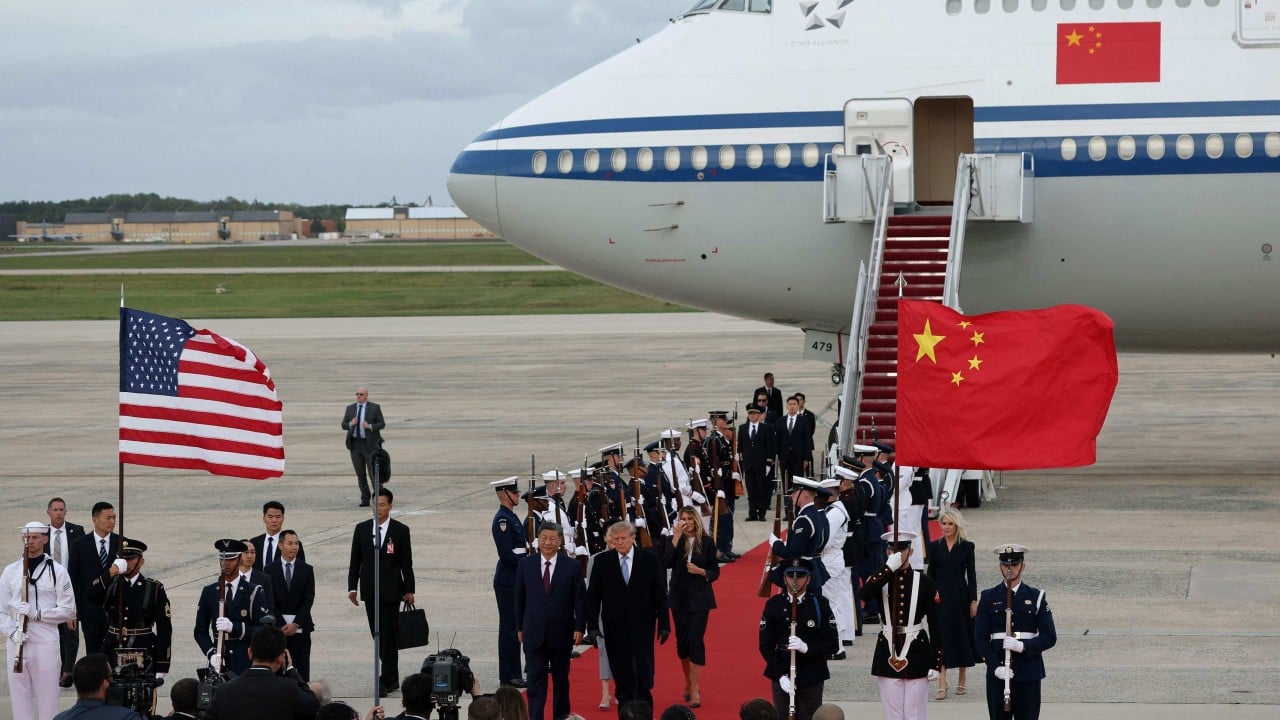
As American tycoons mingled at the White House to celebrate Chinese President Xi Jinping's visit, a delegation of Chinese business leaders remained on the sidelines. Despite their invitations being in the works for weeks, their participation was ultimately limited due to communication gaps between Washington and Beijing, differing views on reciprocity, and the White House's ambiguous stance on Chinese investments in the United States.
While over 130 high-profile guests, including Tesla CEO Elon Musk and Nvidia CEO Jensen Huang, attended the dinner, only 19 Chinese delegates were invited. This stark contrast starkly contrasted with Trump's May visit to Beijing, where American business leaders were part of the delegation. The South China Morning Post first reported in August that Chinese and US officials were discussing the possibility of business leaders joining Xi's delegation.
However, the White House was slow to respond to China's requests for more information, leading to frustration on both sides. Beijing viewed the lack of communication as evidence of Washington's reluctance to invite Chinese businesses to the White House, while Washington only wanted to extend reciprocity to senior government officials.
The lack of progress on potential Chinese investment deals and the issue of Chinese carmakers establishing manufacturing plants in the US further complicated the situation. Despite Trump's openness to the idea, his administration was navigating concerns at home, with American carmakers and lawmakers opposing Chinese investment. In the end, just three days before the summit, US Treasury Secretary Scott Bessent and US Trade Representative Jamie Zamansky met with their Chinese counterparts to finalize the summit's deliverables, but they were unable to reach an agreement on the business delegation.
The Chinese business leaders' presence at the state dinner became a matter of optics rather than substance, as Beijing chose not to press the issue further and risk overshadowing a state visit marked by grandeur.
Written by urgent.news from South China Morning Post's reporting — not their text. Machine-written — may contain errors; check the original before relying on it.