US Navy launches drone command that could reshape Taiwan war planning
The US Navy has set up a dedicated command to turn its growing array of aerial, surface and underwater drones into an integrated fighting force – a capability US commanders have linked to disrupting a PLA attack on Taiwan. The Robotic and Autonomous Systems Warfighting Development Centre, formally established on September 24 in Virginia, will develop doctrine and tactics for unmanned systems,…
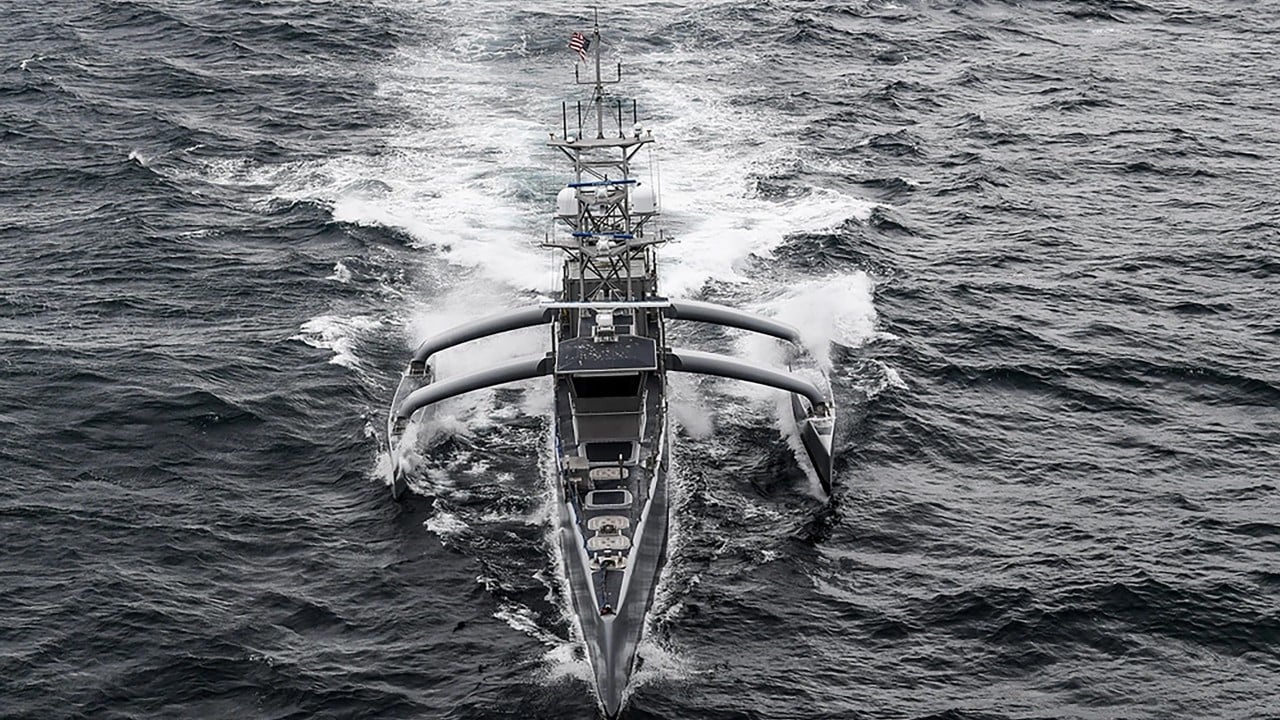
The U.S. Navy has established a new command dedicated to integrating its expanding fleet of aerial, surface, and underwater drones into a cohesive fighting force. This capability is seen as crucial for disrupting a potential People's Liberation Army (PLA) attack on Taiwan. The Robotic and Autonomous Systems Warfighting Development Centre, officially launched on September 24 in Virginia, will develop doctrine and tactics for unmanned systems, train sailors to operate them, and test their resilience under realistic conditions.
The center's director, Rear Admiral Melvin Smith, emphasized that the next step is not just creating individual prototypes but integrating them into a combat-ready force. While the U.S. government has acknowledged the challenges in organizing these systems, citing unclear responsibilities and inconsistent leadership, the new center aims to centralize and institutionalize these efforts.
The U.S. military has been exploring the potential of unmanned systems in various scenarios, including a hypothetical "hellscape" model for countering a PLA amphibious assault on Taiwan. This initiative aligns with broader U.S. strategies, such as the Pentagon's Replicator program, which aims to deploy thousands of low-cost autonomous systems across multiple domains.
However, the U.S. Navy acknowledges that integrating such a force will require overcoming significant hurdles, including managing communication disruptions and training personnel to work with new technologies. China is also advancing its unmanned warfare capabilities, with the PLA developing integrated systems that can operate effectively even under heavy electromagnetic interference.
Written by urgent.news from Reuters Business via SCMP's reporting — not their text. Machine-written — may contain errors; check the original before relying on it.
This story
This is one outlet's version. Read the fullest account.