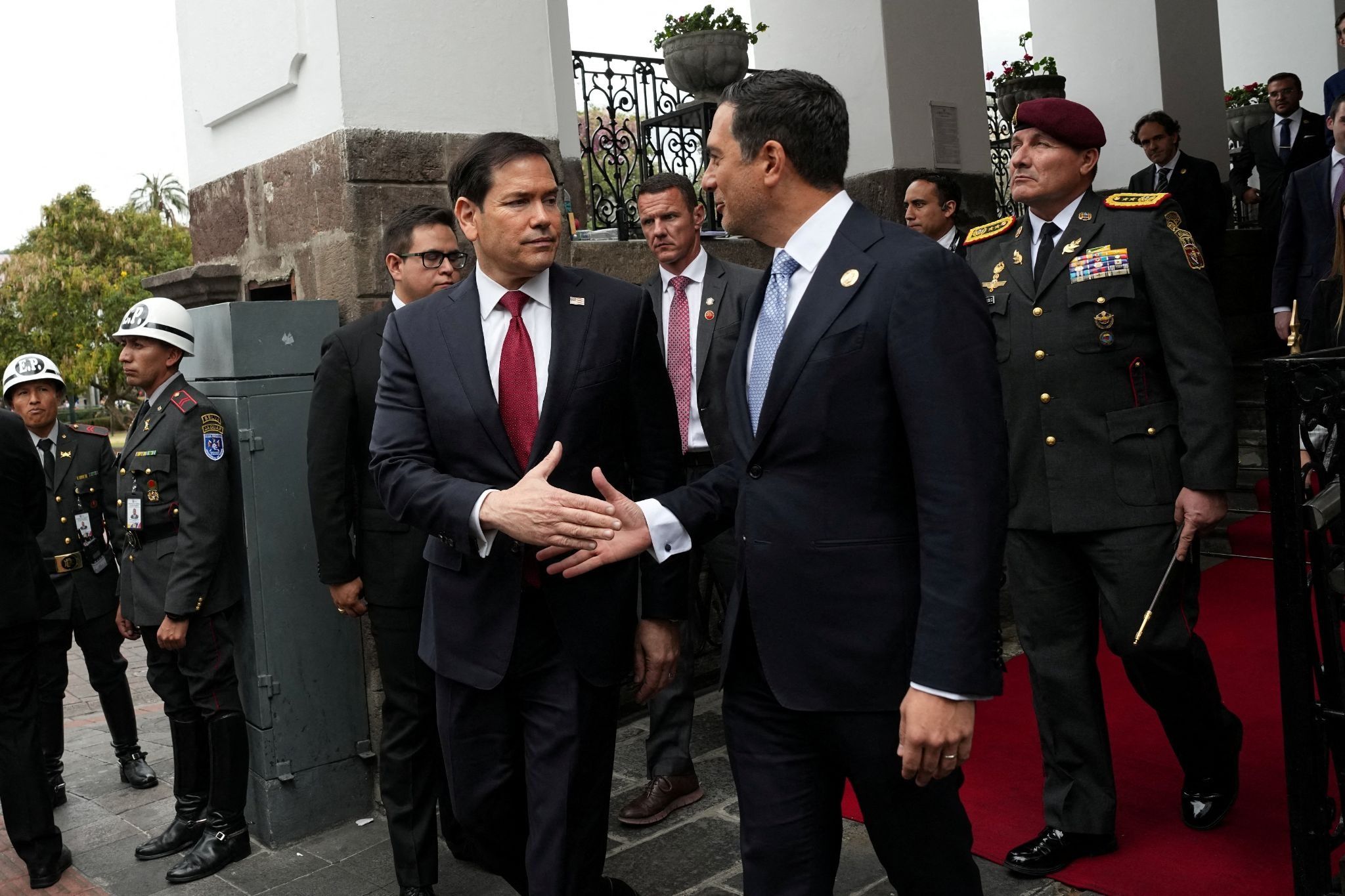
US cancels visas of several Latin American officials
The move intended to support politicians Washington regards as friendly to its regional ambitions.
Latin America stands out as one of the world's fastest-expanding video game markets, yet millions of players encounter hurdles in making payments for in-game content. EBANX, a global technology firm specializing in cross-border payments for emerging markets, has teamed up with NetEase Games Club, the official top-up destination for NetEase Games titles, to broaden payment options for gamers throughout the region.
Through this partnership, NetEase Games Club will initially roll out support for local payment methods like Pix in Brazil, SPEI in Mexico, PagoEfectivo in Peru, and the digital wallet Mercado Pago across the region, complementing credit and debit cards. While only one in four adults in Latin America possesses a credit card, over half of the population aged 15 and older has engaged in digital payments.
To address this payment gap, the collaboration offers players in Brazil, Mexico, Argentina, Chile, and Peru access to local payment methods that align with their preferences. For instance, Pix, a real-time payment system utilized by approximately 170 million people in Brazil, constitutes 96% of the adult population, and SPEI, an account-to-account payment system in Mexico, is embraced by around 60 million Brazilians without credit cards.
In Peru, PagoEfectivo, a cash-based payment method, reaches 64% of adults, while only 37% possess a credit card. The commercial implications of bridging this payment gap are evident, with EBANX merchants experiencing revenue growth of up to 37% within six months after integrating Pix in Brazil, a 46% increase within three months after incorporating SPEI in Mexico, and a 19% uplift within one month after implementing PagoEfectivo in Peru.
Sean Yu, VP of Commercial for APAC at EBANX, emphasized that merging cards with local payment methods enables NetEase Games Club to deliver a truly localized checkout experience while unlocking access to a considerable portion of the region's revenue potential. The five Latin American markets covered by this partnership are projected to generate USD 8.4 billion in video game revenues by 2026, with Brazil leading the pack at USD 3.8 billion this year.
According to Newzoo's latest report, the Latin American video game market experienced a growth rate of 6.4% in 2025, outpacing North America's 4.2% and Europe's 3.6% growth. With 372.3 million gamers and 69% of its online population playing games on at least one platform, the region presents a significant opportunity for video game companies to tap into a burgeoning market.
Written by urgent.news from Vietnam Investment Review's reporting — not their text. Machine-written — may contain errors; check the original before relying on it.
This story
This is one outlet's version. Read the fullest account.