Stop asking writers if they used AI. Just ask them how much
A humble suggestion for a new way, a new spectrum, to think about how writing is really put together: a scale of 0 to 5.
The question "Did you use A.I.?" has become a prominent concern in modern writing. However, it is the incorrect inquiry to make. A writer who asked a chatbot to revise a sentence, another who solicited a thorough fact check with sources, and yet another who requested to write an opinion piece each represent distinct uses of this emerging assistance.
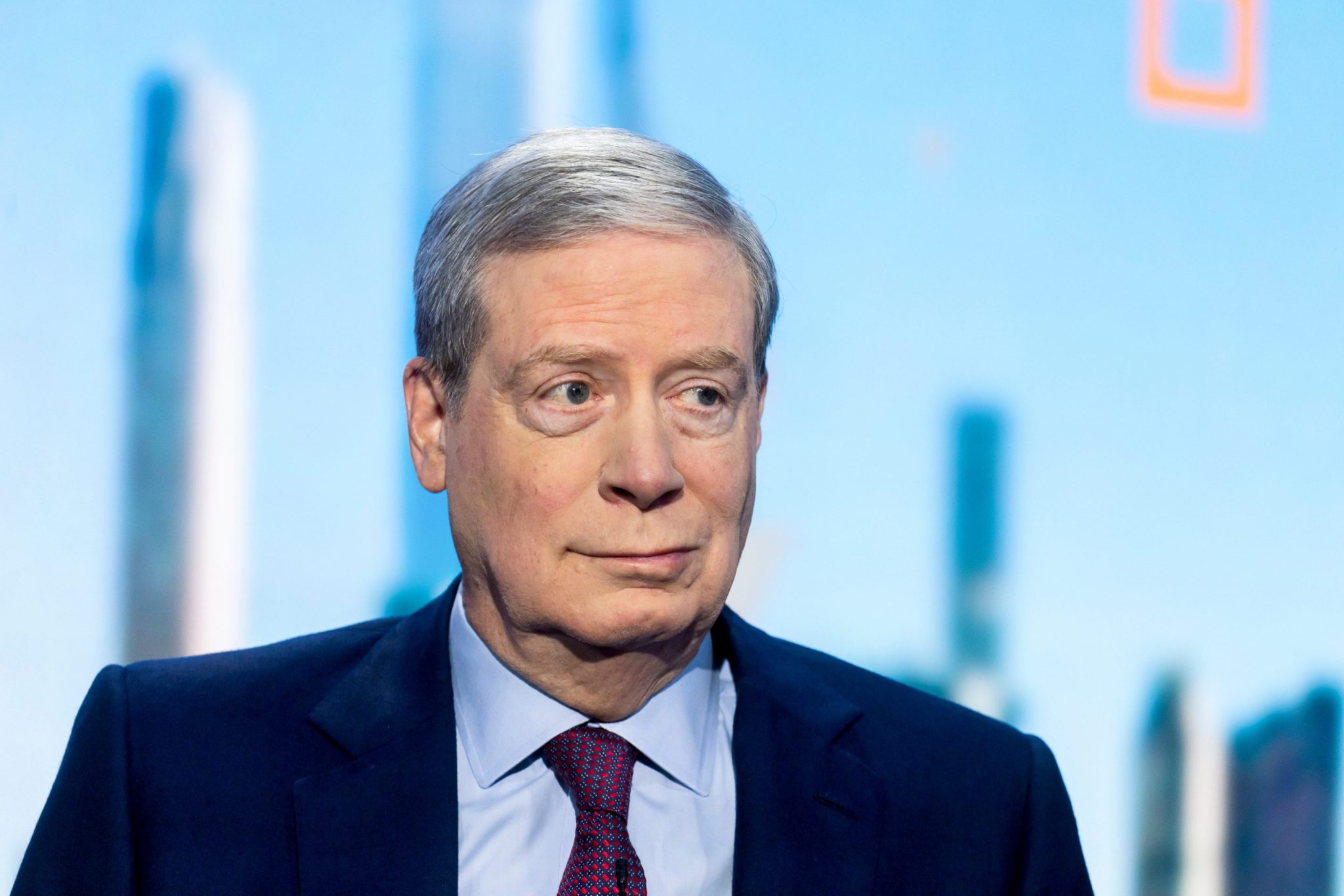
The majority of writers ought to incorporate A.I. in some capacity. The crucial question for readers is a better question, and a scale to assist in answering it. Recently, billionaire investor Stanley Druckenmiller candidly admitted to using A.I. to create a Wall Street Journal op-ed criticizing Treasury Secretary Scott Bessent's bond market interventions.
Readers quickly identified the telltale writing style, and the A.I. detector Pangram rated the piece 100% A.I. Druckenmiller remained unapologetic, stating, "Of course I utilized A.I.," and explaining that he now uses AI for writing in the same way he uses a calculator for mathematical problems. The Journal shared his stance, asserting that "AI is a fact of modern life."
The subsequent day, in a column, Gigot elaborated, "Mr. Druckenmiller's transgression against the media purists was his admission of its use." Beyond Druckenmiller's misguided analogy, the story revealed the core issue with A.I. in writing: we persist in asking writers a binary question ("did you use A.I.?) when the answer is increasingly somewhere in between.
Druckenmiller claimed he rejected numerous chatbot suggestions and that A.I. did not write the entire piece. Pangram, however, scored it 100 percent A.I. In writing and reporting, nuance is essential. Readers desire to know whether the idea belonged to a person or a chatbot, and whether they are reading the author's or the chatbot's words.
Having spent years covering A.I., I have witnessed its potential in misinformation. At NewsGuard, a firm that rates news site credibility, I monitored A.I.-generated falsehoods, and for The Wall Street Journal, I developed my own A.I.-driven propaganda site for $105 to demonstrate its accessibility. Currently, I lead Newsreel, a media startup dedicated to vetting independent journalists before they publish.
Even with this vetting, readers continue to want to know how much A.I. contributed to what they are reading. Therefore, I propose a straightforward, self-reported label printed alongside the byline or at the end of the article. For instance: The 'Who Wrote This?' Scale
H5: Human - No A.I. was used at all. (Spellcheck doesn't count.)
H4: Assisted - A.I. contributed to everything except writing: research, fact-check prompts, headline ideas, grammar fixes. It never rewrote a sentence, and the prose is entirely the author's.
H3: Polished - The author drafted the full piece, then A.I. revised parts of it (tightening sentences, condensing paragraphs, reordering sections).
H2: Co-written - The author and A.I. exchanged ideas. Some paragraphs originated with the model, others with the author, but the argument is the author's, and the author performed a real edit.
H1: Ghostwritten - A.I. drafted the initial complete draft from the author's notes, interviews, or reporting. The ideas are the author's; most of the sentences are not.
H0: A.I. Slop - A.I. crafted the entire article from a prompt with minimal edits. The ideas, structure, and voice are the model's. It is essential to note that I am not the first to recommend this idea. The open-source AI Usage Scale suggests six similar levels, and at least one publisher, The Datatech Times, now includes an A.I. level next to every byline.
Despite the existence of such scales, their adoption remains scarce. This shouldn't be the case. Writers are already apprehensive about an A.I. witch hunt, with some editing out em dashes and The Journal's James Taranto comparing Pangram to a "defamation machine" that fuels false accusations. A self-reported scale like "Who Wrote This?" could safeguard writers who utilize A.I. for research, editing, or brainstorming.
Once you disclose how you wrote something, there is nothing left to expose. Readers are more concerned about being misled than about learning that a writer used A.I. For example, unlike the controversy surrounding a president employing a speechwriter, which is a common practice in politics, voters are not upset about a president using a speechwriter.
Similarly, rich and famous individuals frequently hire ghostwriters, speechwriters, and P.R. staff to create language that appears under their name. In 1845, a journalist accused Alexandre Dumas, author of "The Three Musketeers" and "The Count of Monte Cristo," of operating a "novel factory" staffed by hidden collaborators. Dumas sued and won.
However, the central question from that case remains: Who wrote this? If we cannot stop people from asking this question, at least we can start answering it honestly. This article, I hereby reveal, is H3 Polished: The author wrote the full draft, then A.I. revised parts of it (tightening sentences, condensing paragraphs, reordering sections).
Written by urgent.news from Fortune's reporting — not their text. Machine-written — may contain errors; check the original before relying on it.