Rabbit vs hare: Why one runs and the other hides
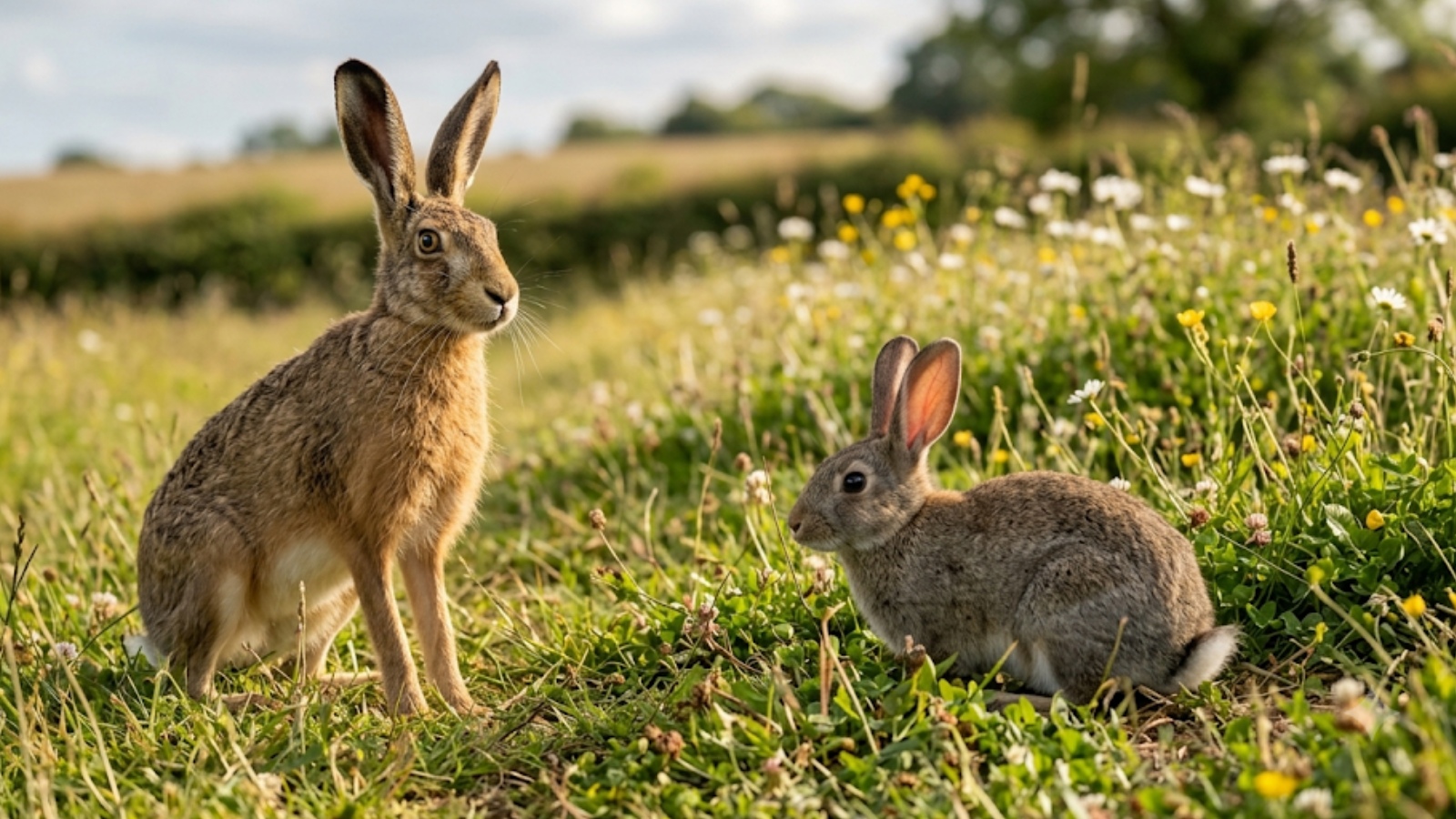
At first glance, rabbits and hares may appear quite similar, both falling under the same biological order. However, their differences become apparent when observing their size, features, habitat, behavior, and even how their offspring are born. Dr Vinod Sharma, Head of Veterinary Services at DCC Animal Hospital in Gurugram, provides insight into these distinctions.
One of the most noticeable differences is in their physical structure. Hares are larger, leaner, and built for speed, while rabbits are smaller and stockier, adapted to quickly seek shelter. Hares possess longer limbs and ears, while rabbits have shorter ears and legs relative to their body size. The ears of hares are long and sometimes have black tips, serving as an adaptation to their open habitats for better threat detection.
In contrast, rabbits have shorter, more rounded ears. Their living environments also differ; hares are typically found in open fields and meadows, living in shallow ground depressions called 'forms', whereas rabbits prefer areas with abundant cover and often live in burrows or warrens. Exceptions exist, such as cottontail rabbits, which do not typically burrow.
In terms of behavior, hares are solitary runners that rely on their swift legs for defense, while rabbits often hide and attempt to reach cover or a burrow upon sensing danger. This behavior is closely tied to their respective habitats. Differing fur characteristics also exist. Hares may exhibit more noticeable seasonal changes in their coat color and pattern depending on the species and environment, while rabbits generally have soft, grey-brown fur with less dramatic seasonal variations.
Perhaps the most striking difference can be seen at birth. Hares give birth to well-developed leverets within 42 days of gestation, who are already furred, have opened eyes, and can move shortly after birth. In contrast, rabbits have a shorter gestation period of about 30-31 days, and their blind, hairless kits remain in nests and depend entirely on their mothers for care.
To identify a hare or rabbit in the wild, consider these clues: a large, long-eared hare likely inhabiting an open field without burrows, or a smaller, rounder rabbit near vegetation or other cover, quickly retreating into a hole. Dr Sharma emphasizes that these characteristics, combined, offer a more reliable method of identification than focusing on a single feature.
Written by urgent.news from The Indian Express's reporting — not their text. Machine-written — may contain errors; check the original before relying on it.
This story
This is one outlet's version. Read the fullest account.
- Rabbit vs hare: Why one runs and the other hides indianexpress.com