Pakistan’s Hangor-class submarine fires missile, raising stakes in the Arabian Sea
Pakistan announced the successful test-firing of an anti-ship cruise missile from its newly acquired submarine. This missile is identified as the Chinese YJ-18, capable of engaging targets beyond the immediate battlespace. The event followed a recent maritime incident involving Indian and Pakistani naval vessels in the Arabian Sea. India's submarine fleet is facing delays in enhancing its…
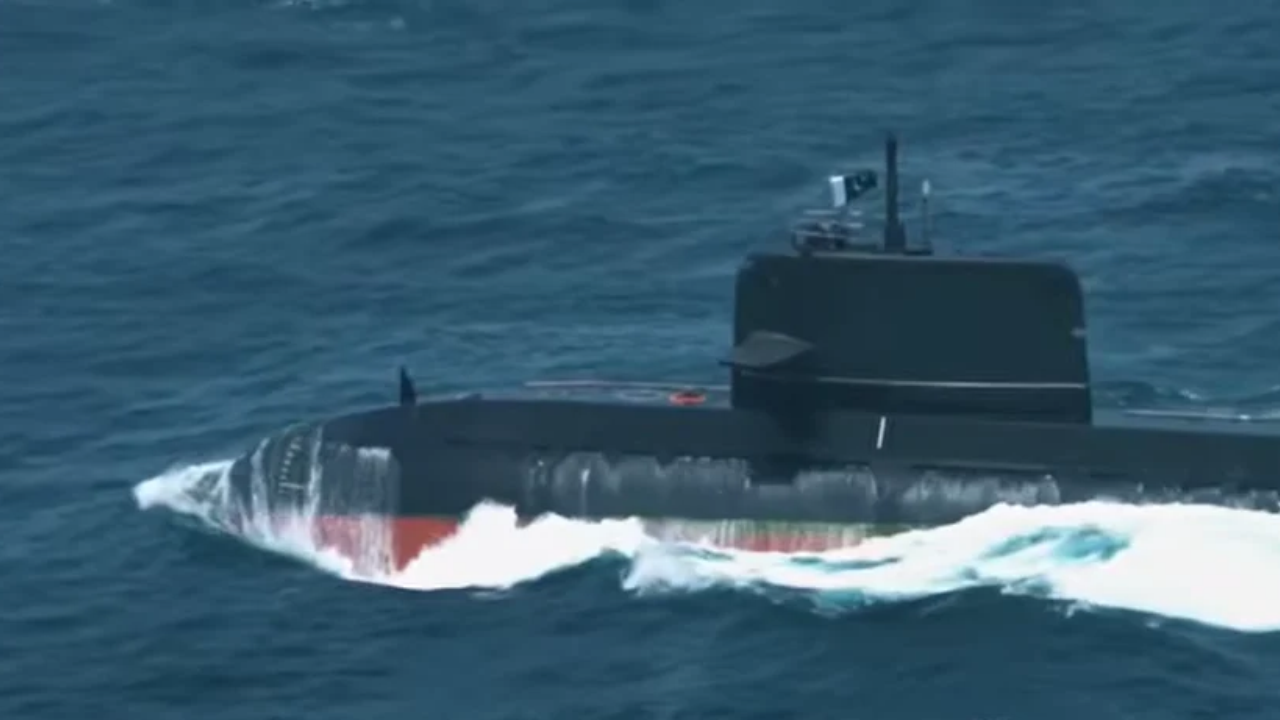
Pakistan's newly commissioned Hangor-class submarine, one of eight acquired from China, recently conducted a successful test firing of an anti-ship cruise missile in the North Arabian Sea. The missile, likely the Chinese YJ-18 derived from the Russian Klub family, boasts a strike range of up to 540 kilometers. This development occurs just 12 days after a collision between a Pakistani naval vessel and an Indian warship in the same region, leading to disputes over the incident.
The Hangor, commissioned in April and arriving in Karachi in June, is equipped with Air Independent Propulsion (AIP) technology, enabling it to remain submerged for extended periods without surfacing for battery recharging. This stealth feature makes the submarine challenging to detect and track. The test firing of cruise missiles by Pakistan's submarines marks a significant escalation in naval capabilities in the Arabian Sea, potentially enabling long-range strikes beyond the immediate maritime battlefield.
India's naval fleet primarily consists of 16 conventional diesel-electric submarines across various classes, with a focus on the AIP-enhanced system for future submarines. However, delays in the P-75(I) project and the ongoing development of nuclear-capable submarines have impacted India's timeline for expanding its undersea capabilities.
Written by urgent.news from Times of India's reporting — not their text. Machine-written — may contain errors; check the original before relying on it.