One of Saturn’s Moons Could Support Life—And It Might Be Easy to Find
Two new studies are giving planetary scientists hope The post One of Saturn’s Moons Could Support Life—And It Might Be Easy to Find appeared first on Nautilus .
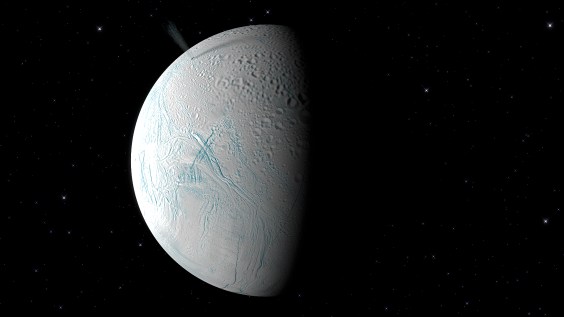
Recent studies have reignited hope among planetary scientists that Enceladus, a moon of Saturn, may harbor life. Enceladus is believed to have vast salty oceans beneath its icy surface, which, along with energy and chemicals emitted from deep-sea vents, could provide the necessary conditions for life to evolve. This revelation is based on NASA's Cassini spacecraft flybys of Enceladus in 2005, which gathered icy particulate matter spewed into space by volcanic geysers.
These minuscule grains of ice, which make up one of Saturn's faintest rings, were analyzed using lab experiments and theoretical modeling to understand the journey of Enceladus' waters to space. The findings suggest that as bubbles filled with gas from deep-sea vents emerge at the surface, they freeze more slowly than initially thought.
This slow process allows dissolved components, including potential microscopic life, to separate en route to space. Furthermore, when these icy droplets collide with the walls of space, they break into smaller fragments, each containing a unique substance. This process could potentially simplify the detection of signs of life. The second study focused on the types of life that might be found on Enceladus.
Researchers replicated the moon's conditions—low oxygen, pH levels of 10 to 11, and high carbonate concentrations—in a laboratory setting. They introduced a species of archaea, Methanothermococcus okinawensis, known for thriving in deep-sea vents on Earth. Surprisingly, this organism not only survived but also adapted to Enceladus' conditions, despite the higher pH levels than found in Earth's oceans.
The analysis revealed a shift in the genes expressed by these organisms to better suit the lower carbon dioxide concentration. This finding suggests that Enceladus may already be home to some form of rudimentary life, which could be easily detectable from the plumes of icy grains ejected into space. However, a mission to Enceladus to gather more data is not expected to launch until 2038.
Written by urgent.news from Nautilus's reporting — not their text. Machine-written — may contain errors; check the original before relying on it.