NPP rewrites the campaign playbook as opposition reality shapes national executive contest
If the New Patriotic Party (NPP) were still in power, the campaign for its October 3, 2026, national executive elections would probably have looked very different. There would have been giant billboards competing for attention across the major cities. Convoys would have announced the arrival of candidates. Affluence would have been displayed with little restraint, […]
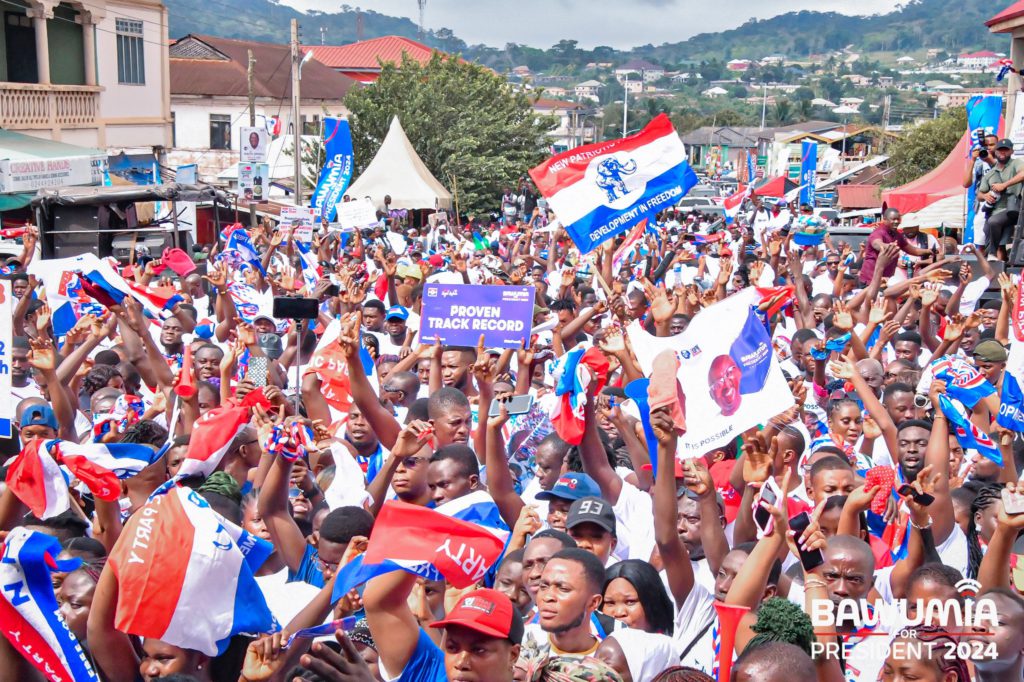
If the governing New Patriotic Party (NPP) were still in power, the campaign for its national executive elections on October 3, 2026, would likely have resembled a grand spectacle. Gigantic billboards would have adorned the major cities, while candidates would have been announced through convoys. The party would have splurged on resources, broadcasting a barrage of messages, endorsements, and counter-endorsements across the media landscape.
Political tension within the party would have likely escalated to new heights. However, the party is no longer in government, and this simple political fact has rewritten the NPP's campaign playbook. The campaign, which officially concluded on Friday, has been notably restrained compared to what many would have anticipated. Insults, accusations, political tantrums, and verbal exchanges have been relatively muted.
While there have been occasional exchanges between supporters of John Boadu, Paul Afoko, and Boakye Agyarko, these have not reached the explosive levels that many had predicted. The NPP is now preparing to elect a new national leadership at a time when its primary task is to rebuild, reorganize, and reposition itself as a robust opposition force.
This reality has shifted the focus from extravagant campaigning to organizational credibility, grassroots mobilization, party unity, and the ability to work harmoniously with delegates nationwide. Political scientist Maurice Duverger's observation that opposition serves as a mechanism for criticism and scrutiny has taken on new significance for the NPP.
However, this opposition is no longer just a constitutional position; it has become the environment in which the party's internal political calculations are being made. The NPP's four-way National Chairmanship contest involving John Boadu, Sammy Crabbe, Paul Afoko, and Boakye Agyarko remains a closely watched contest. While the billboard campaign has quieted down, the true contest may be unfolding in private conversations, meetings, regional networks, personal relationships, constituency structures, and conversations with delegates.
The outcome of the chairmanship race remains uncertain, as delegate decisions can change in the final hours, personal loyalties can clash with regional considerations, alliances can shift, and a candidate's performance, message, or perceived momentum at the venue itself can alter voters' perceptions. Even the most carefully constructed bloc of delegates may not hold together when individual choices are made in the voting booth.
Unstructured telephone interviews with delegates from the sixteen regions reveal that delegates do not necessarily feel bound by decisions made at constituency or regional levels. They possess their own political agency. Political parties may rely on structures, but elections are ultimately decided by individual acts of political choice.
The assumption that delegates will unquestioningly follow a predetermined set of instructions from their constituencies, regions, or factions may underestimate the complexity of internal party elections. While the NPP's current contest highlights the importance of organizational structures in political behavior, it also demonstrates that these structures can exert influence without stifling individual agency.
Delegates listen, calculate, negotiate, and sometimes change their minds. Another crucial factor to consider is the regional balance of the NPP. Historically, the party has paid significant attention to geographical representation in its leadership arrangements. This consideration may once again factor into delegates' decisions as they choose the leaders who will guide the party through its next phase.
This is not a formal voting formula but rather a reflection of the party's political culture and internal arithmetic, which must maintain connections across the country.
Written by urgent.news from Adom Online's reporting — not their text. Machine-written — may contain errors; check the original before relying on it.