Newly Identified <em>Norellraptor</em> Could Reshape What We Know About Feathered Dinosaur Flight Evolution
Learn about Norellraptor barsboldi , a dinosaur species found in China that is providing new information on how dinosaurs and birds started to fly.
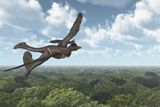
A newly discovered dinosaur from China, dubbed Norellraptor barsboldi, is shedding fresh light on the enigmatic evolution of flight in feathered dinosaurs. Published in Nature Communications, the research suggests that the path to powered flight may have involved multiple evolutionary routes rather than a singular trajectory. Found in the Lower Cretaceous Jiufotang Formation of Liaoning, China, the specimen's nearly complete skeleton and plumage fragments, estimated to belong to a three-year-old individual, provide a rare glimpse into the anatomy of a microraptorine - a group of small, feathered predatory dinosaurs related to birds.
By comparing the bird-like dinosaur's features with those of its kin, the study reveals distinct timing in the development of flight-related traits. In Norellraptor, certain finger bones elongated before others fused, a sequence that diverges from the order observed in birds. This discrepancy hints at the possibility that different evolutionary pressures may have driven the emergence of flight-related adaptations in microraptorines and birds.
The findings challenge the notion that microraptorines and birds inherited a common flight apparatus, instead pointing to the emergence of similar anatomical solutions under distinct evolutionary demands. While more specimens are required to confirm these hypotheses, the study underscores the complexity of the evolutionary story of flight and the numerous paths that led to the skies.
Written by urgent.news from Discover Magazine's reporting — not their text. Machine-written — may contain errors; check the original before relying on it.