Luftfahrt: Lufthansa-Chef erwartet noch höhere Kerosin-Kosten
Nicht nur den Autofahrern machen die gestiegenen Ölpreise an den Tankstellen zu schaffen. Auch die Lufthansa muss mehr Geld für Kerosin aufwenden. Das spüren die Passagiere.
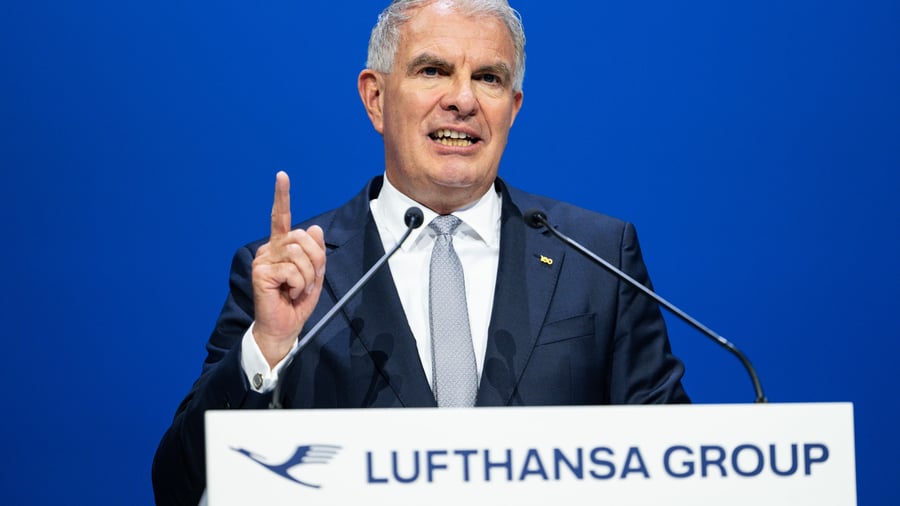
Lufthansa's Chief Executive Carsten Spohr anticipates even higher fuel costs for Germany's largest airline due to the ongoing Iran war and rising oil prices. Spohr expressed this expectation to journalists in Frankfurt, stating that the figure might exceed the previously reported 1.5 billion euros in additional costs. He revealed that the exact amount will likely be disclosed by the end of the year.
Despite expecting a near-previously high operating profit for 2026 through reductions at Lufthansa's main brand and increased ticket prices, Spohr emphasized the need to address the soaring fuel costs. In August, Lufthansa reported that fuel expenses for the year would rise to 8.7 billion euros, prompting them to raise passenger ticket prices.
The airline is reacting to the global aviation industry's struggle with high oil prices, with Brent crude oil recently surpassing the 100-dollar per barrel mark. Spohr was pleasantly surprised by ticket sales during the summer, particularly in premium classes like first, business, and premium economy. He noted that these classes were experiencing robust demand, with more than half of Lufthansa's revenue coming from long-haul flights in premium classes.
He also mentioned that ticket demand is largely unaffected by geopolitical risks, unlike other customers who might prefer to hold back. Spohr anticipates that more airlines will face difficulties due to high fuel costs, following recent requests for bankruptcy protection from Air Baltic in Estonia and Volotea in Spain. In August, Spohr had informed shareholders of an expected profit decline, with the adjusted operating profit expected to range between 1.7 and 2.2 billion euros, potentially falling short of the previous year's 1.96 billion.
While Spohr would prefer to reduce kerosene consumption by deploying newer, more fuel-efficient aircraft, the production rates of Airbus and Boeing are not fast enough, and Lufthansa must keep older, thirstier jets like the Airbus A340 longer than initially planned. In November, Spohr expects the first Airbus A350-1000 to join the Lufthansa fleet, followed by additional Boeing 777X aircraft, with a seven-year delay.
Written by urgent.news from Handelsblatt's reporting — not their text. Machine-written — may contain errors; check the original before relying on it.