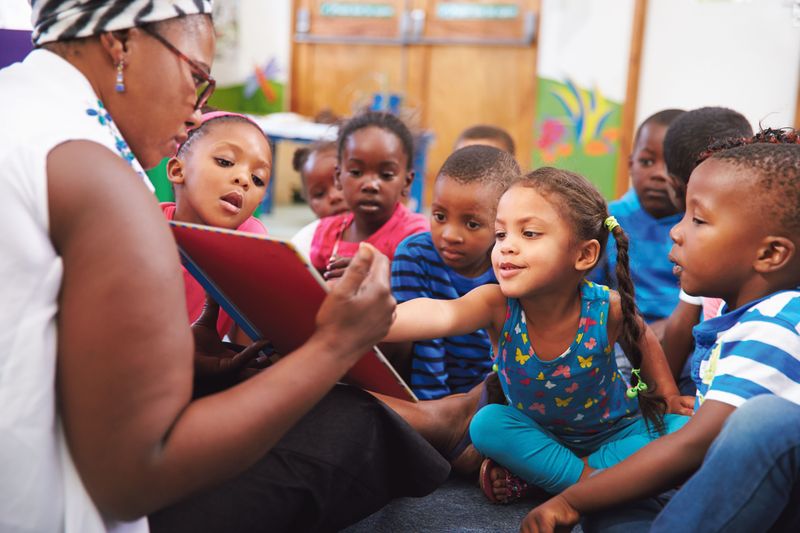
Learning in Germany: Education Study: Progress in the System - and Some Weaknesses
The OECD regularly takes a look at education - also in Germany. Recently, the Pisa study caused a shock. Now a more positive message is coming. How do both go together?
Germany's education system shows progress and is sometimes ranked among the best internationally, according to the OECD's "Bildung auf einen Blick 2026" report. However, performance in reading, math, and science remains weak. Education Minister Karin Prien acknowledges the system's shortcomings, stating, "We are not effective."
The CDU politician is pushing for reforms, including early support for children, improved teaching, and making reading the top priority. The 2025 Pisa study results, released in early September, shocked many. German 15-year-olds achieved the lowest competence scores in reading, math, and science since the Pisa assessments began.
The study reveals a few positive aspects, such as 34% of Abitur graduates taking a Mint (Mathematics, Informatics, and Natural Sciences) course, the highest percentage in the OECD comparison. Additionally, 41% of those aged 25-34 have a university or higher professional degree, reflecting an 11% increase from a decade ago. Ninety-six percent of German children aged three to five attend kindergartens, compared to 90% in the OECD average.
Each public and private education worker in Germany cares for 7.5 children on average, slightly better than the OECD average of 9.4. Public and private funding for education from kindergarten through university amounts to $16,430 (€14,480) per student annually, higher than the OECD average of $14,861 (€14,480). However, education spending as a percentage of GDP (4.4%) is lower than the OECD average of 4.7%.
Written by urgent.news from Handelsblatt's reporting — not their text. Machine-written — may contain errors; check the original before relying on it.