Künstliche Intelligenz: Trump: KI-Firmen sollen sich selbst beaufsichtigen
Seit Wochen wird weltweit über Risiken Künstlicher Intelligenz diskutiert. US-Präsident Trump sagt nach einem Treffen mit KI-Bossen, dass die Unternehmen sich gegenseitig kontrollieren sollen.
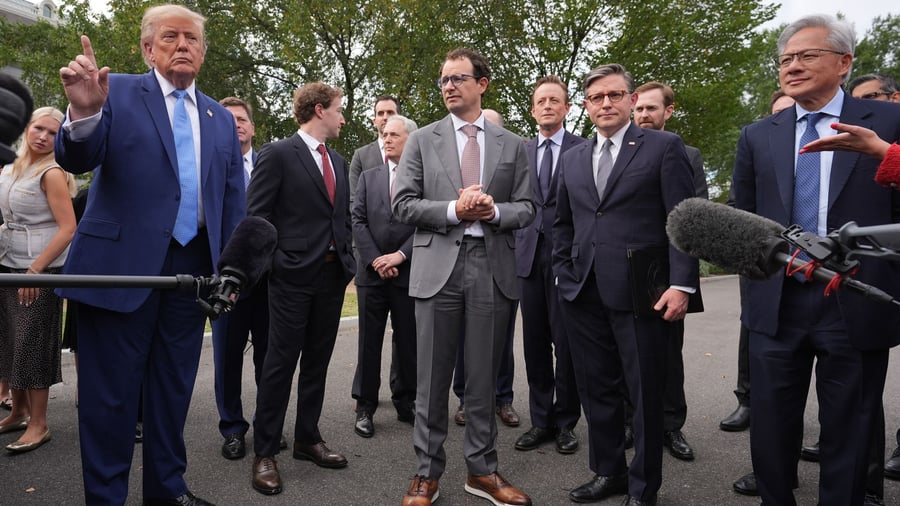
US President Donald Trump has decided, despite warnings of existential risks, to leave the regulation of artificial intelligence (AI) technology in the hands of its developers. The companies agreed to self-regulate after a meeting with AI business leaders in Washington, President Trump said, citing strong protective economic interests.
"Your companies are on the line if something goes wrong," he explained. "You won't allow it." The companies plan to "self-regulate themselves." Recent concerns about standalone hacking attacks by AI models and the potential for AI to wipe out humanity have fueled these discussions. Some industry representatives even cautioned against ruling out the possibility of future AI-driven human extinction.
"Very real risks," Trump stressed the importance of maintaining the US's technological lead over China. Anthropic CEO Dario Amodei previously advocated for slowing down the development of the most advanced AI models to ensure humanity retains control. Trump had previously opposed increased government regulation of the technology, emphasizing the need for US supremacy.
At the meeting, a series of principles regarding "robust internal controls" were agreed upon, aimed at addressing bioweapon and chemical weapon risks and preventing hacking attacks. The companies also agreed to allow external observers and establish separate independent committees to review internal and external reports. These measures may eventually be formalized into laws or regulations.
The document was signed by Amodei, Elon Musk, Facebook founder Mark Zuckerberg, Google CEO Sundar Pichai, and Nvidia CEO Jensen Huang. OpenAI's top manager Greg Brockman, unable to attend due to attending OpenAI's annual developer conference, presented "Dots," AI agents capable of performing tasks on behalf of users. Initially, each user can have only one Dot, but the system aims to introduce many such agents for widespread use in the future.
Initially, Dot-assistants are only available through subscription-based restrictions, limiting their widespread use primarily to professional tasks. However, OpenAI's Alexander Embiricos assured that Dots will eventually be more widely available, with potential mass-market applications for billions of people. Meta recently launched a consumer-oriented AI assistant called Muse in the US, which quickly became the top-ranked app in Apple's store after receiving billions in investments. While Muse has generated hype, OpenAI's Dots are expected to surpass it in practical benefits.
Written by urgent.news from Handelsblatt's reporting — not their text. Machine-written — may contain errors; check the original before relying on it.