Justice Cannot Be Either Partial Or Limited
The Supreme Court of India’s willingness to examine certain aspects of the Bombay High Court verdict of May this year, acquitting 22 persons—21 of them policemen from Gujarat and Rajasthan—in the Sohrabuddin Shaikh ‘fake encounter’ case but firmly declining to examine Para 43 of the verdict that pertains to Union Home Minister Amit Shah, is a grim reminder of the faultlines in the judicial…
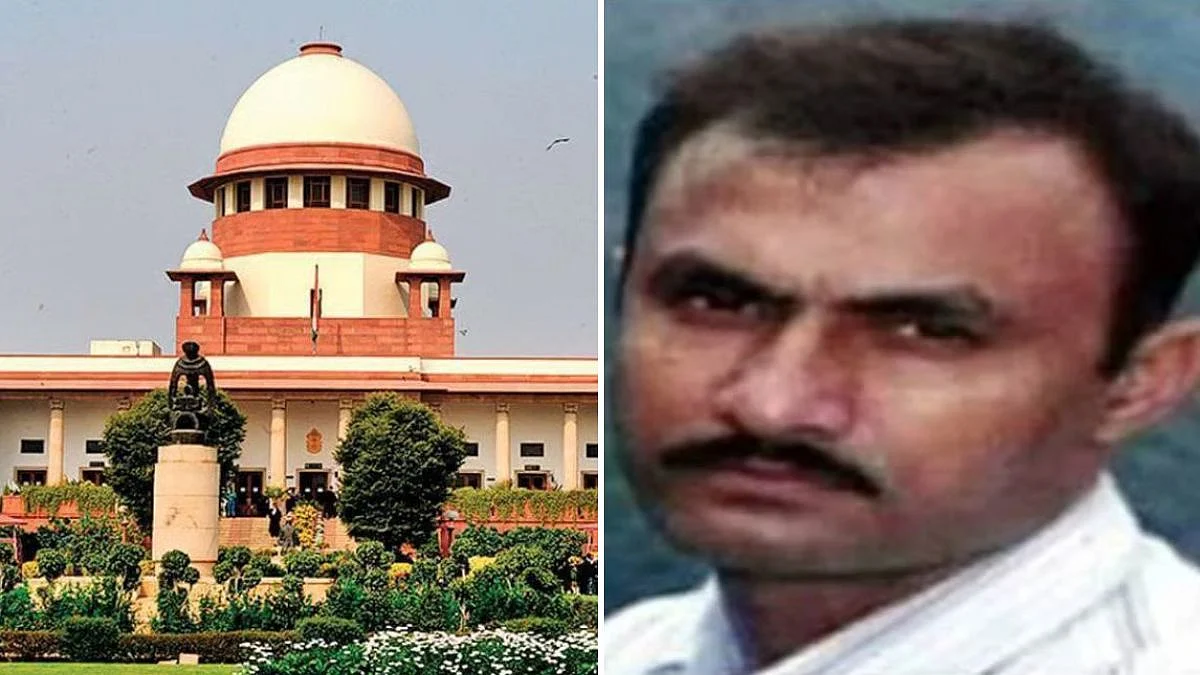
The Supreme Court of India's decision to scrutinize certain elements of the Bombay High Court's May 2021 verdict acquitting 22 individuals, including 21 policemen from Gujarat and Rajasthan, in the Sohrabuddin Shaikh ‘fake encounter’ case, but refraining from examining Para 43 concerning Union Home Minister Amit Shah, underscores the inherent divisions within the judicial system.
The three-judge Bench, comprising Chief Justice Surya Kant, Justice Joymalya Bagchi, and Justice V Mohana, was resolute in its decision not to re-examine the entire case involving Shaikh and his wife, Kauser Bi, or their friend Tulsiram Prajapti, who were killed in November 2005 and a year later, respectively.
Shaikh, a well-known criminal, was initially arrested near the Gujarat-Rajasthan border, accused of carrying firearms and plotting an attack on Narendra Modi, who was the Chief Minister of Gujarat at the time, and later became the Prime Minister of India. It should be noted that the case was transferred to the Central Bureau of Investigation (CBI) and the trial was moved to Mumbai in 2010.
Shah was acquitted by Special CBI Judge MB Gosavi in December 2014, while his predecessor, Judge BH Loya, mysteriously passed away earlier that month. The trial court had originally ordered the acquittals of the 22 accused in December 2018, which were subsequently upheld by the Bombay High Court in May 2021.
While the Supreme Court made an effort to reconcile the situation, it ultimately failed. By not dismissing the appeal by Shaikh's younger brother, Rubabuddin Shaikh, it revealed that the highest court's doors remain open, even in cases where powerful individuals were once accused. However, the judges’ request to only review "some statements of witnesses… you give us whatever 3-4 statements you feel are vital" imposes an inexplicable self-imposed constraint.
This review cannot serve as a substitute for reopening the case, which would have allowed for a comprehensive re-examination of all evidence, investigation of trails that suddenly became cold, and clarification on why as many as 92 witnesses turned hostile, resulting in the acquittals. In its explicit refusal to revisit Shah’s discharge, the Supreme Court has understandably exercised caution.
Had it agreed to reassess the case, it would have set a precedent for an independent, robust, and fearless judiciary. Not only was the opportunity squandered, but its comments on the application requesting the reversal of Shah’s discharge, "an oblique motive" filed by "some political adversary of Shah," have inadvertently supported the argument that the challenge is politically motivated.
The complexities of the case called for a thorough re-examination by the Supreme Court. The limited review is unlikely to result in convictions, leaving open the question 21 years later: who was responsible for the deaths of Sohrabuddin Shaikh, Kauser Bi, and Prajapati?
Written by urgent.news from Free Press Journal's reporting — not their text. Machine-written — may contain errors; check the original before relying on it.