How to restore your online sanity, one random webcam at a time
A special kind of vertigo kicks in when you start clicking the camera icons scattered across the world map at World Watcher Live . Each one drops you into a live feed somewhere on Earth. A street vendor sets up shop off a busy street near the Teatro Amazonas in Manaus, Brazil, the bright orange canopy of his pop-up tent competing for attention with the theatre’s huge golden dome. Blinkers…
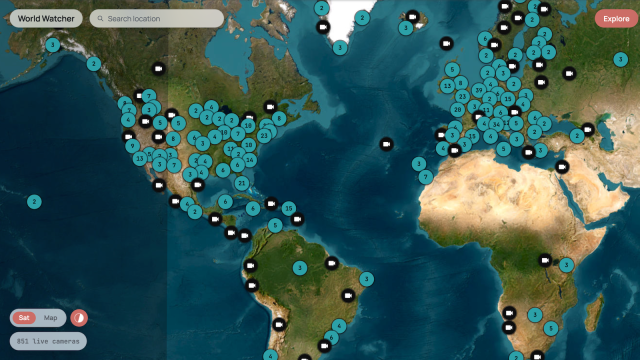
When you start clicking the camera icons across the world map on World Watcher Live, you are dropped into live feeds from various locations around the globe. A street vendor in Manaus, Brazil, operates his pop-up tent while a truck makes deliveries on Bourbon Street in New Orleans. In Hwange Safari Lodge, Zimbabwe, a warthog grazes peacefully amid scrub and birds chirp in the background.
Despite their diverse settings, these feeds share a common trait: a complete absence of narrative and drama. Watching a warthog at a safari lodge may be the most sane thing you do online today, and it highlights what the internet once was - a window to the world rather than a magnifier of outrage. This is reminiscent of the early web, when webcams were one of the defining curiosities.
In 1991, researchers at the University of Cambridge created a webcam that monitored the communal coffee pot in their laboratory. This project became one of the internet's earliest viral sensations and was later auctioned for several thousand pounds. Other notable webcam projects include FogCam, the oldest continuously operating webcam, and Jennicam, which featured the daily life of Jennifer Ringley.
As technology advanced, webcams became largely obsolete with the rise of YouTube, smartphones, and algorithmic content.
Written by urgent.news from Big Think's reporting — not their text. Machine-written — may contain errors; check the original before relying on it.