How elite universities got tangled up in politics and petroleum
Half a century of corporate influence set the stage for Trump's attacks, a new study argues.
Since President Donald Trump returned to office in January, federal funding for elite American universities has been subject to strings attached. The administration has frozen or withdrawn billions of dollars in financial support from top schools and launched investigations into them, leveraging its influence to impact admissions, hiring, and diversity, equity, and inclusion policies.
The impact has been significant, with institutional autonomy in the United States sharply declining according to the Academic Freedom Index, placing it on a more rapid decline than seen in countries like Hungary, Turkey, and India.
A new study published in the journal Energy Research & Social Science suggests that this assault did not originate without cause. Researchers argue that corporate interests, including oil companies, have been seeking to influence universities for at least half a century. By providing substantial donations, these entities have shaped research agendas, weakening universities' defenses against outside influences and creating opportunities for Trump's attack.
Noel Healy, the lead author of the study and a professor of geography and sustainability at Salem State University, explained that private donors have been employing a smaller version of the same strategy for years by offering funding in exchange for a say over how university programs are run.
This phenomenon, known as "corporate capture," grants donors sway over hiring decisions, research topics, and curriculum content. Some experts believe that the current strategy can be traced back to a 1971 memo written by Lewis F. Powell Jr. shortly before he became a Supreme Court justice. In the memo, Powell advised the U.S. Chamber of Commerce to defend free enterprise by funding scholars who evaluate textbooks and urge boards of trustees to rectify the perceived imbalance caused by an abundance of liberal faculty members.
The conservative Olin, Scaife, Koch, and Bradley foundations, formed by wealthy individuals from industries such as chemical manufacturing and fossil fuels, also played a significant role in the corporate capture of higher education. These foundations financed think tanks like the Heritage Foundation, which later became a driving force behind Project 2025, a conservative agenda embraced by the Trump administration.
Not all universities have resisted these pressures. Columbia, Brown, and Northwestern are among the institutions that have acquiesced to some of the Trump administration's demands. The administration has specifically targeted climate initiatives, revoking $4 million in grants to Princeton University due to concerns about "climate anxiety."
Many of the influential donors are linked to the fossil fuel industry. Exxon Mobil, BP, Chevron, Shell Oil, ConocoPhillips, and Koch Industries collectively donated at least $700 million to 27 U.S. universities between 2010 and 2020. BP even funded Princeton University's Carbon Mitigation Initiative for a quarter century before allowing its contract to expire in 2025.
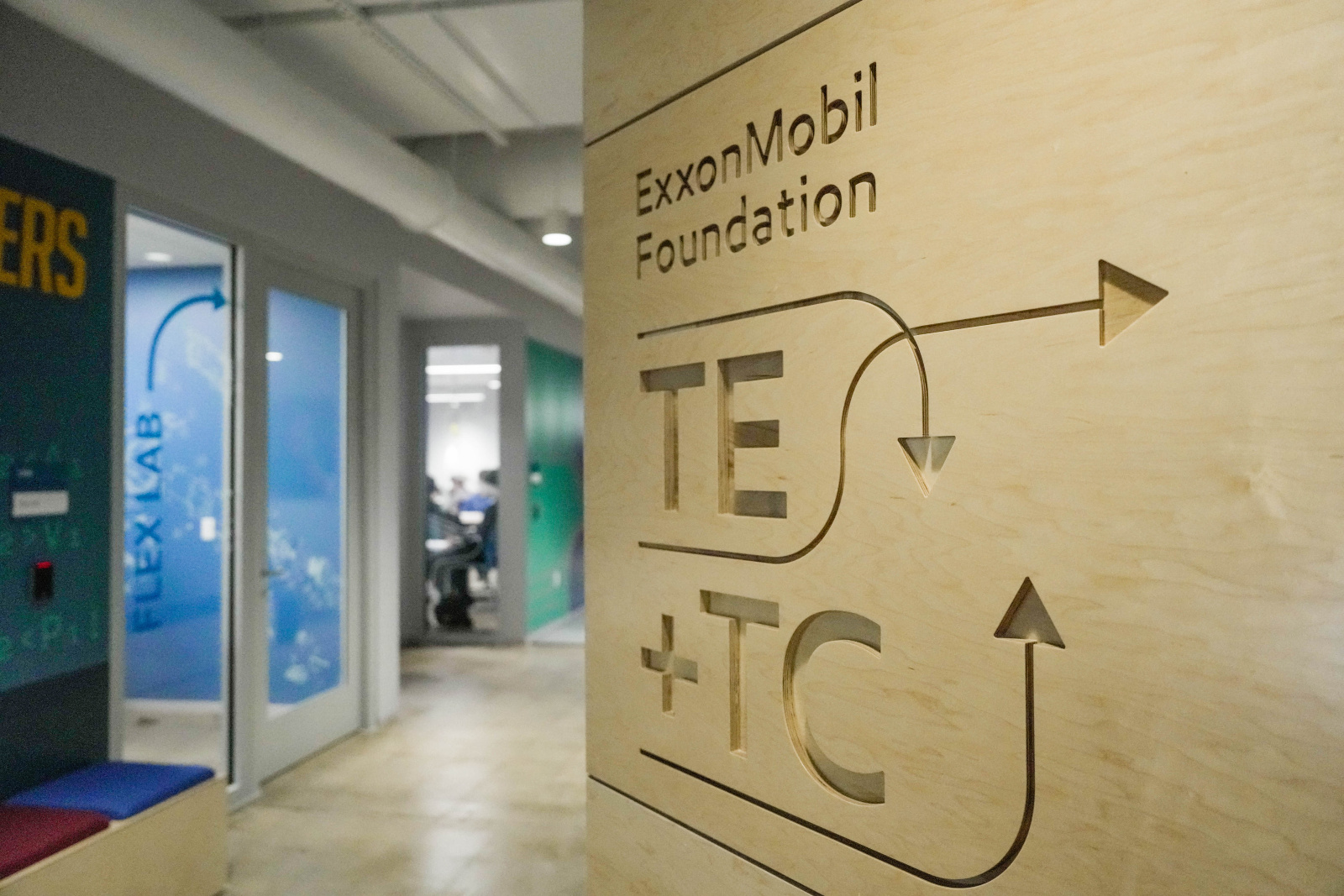
An email obtained during a congressional investigation revealed a BP executive in 2020 expressing delight at how its relationship with Princeton was "becoming increasingly synergistic (as of course we had planned!)". One notable example of the impact of these relationships is a free after-school STEM program for students in Houston hosted at the ExxonMobil Foundation Teen Engineering and Tech Center in January 2026.
These types of connections can influence research directions and even shape policy discussions. A 2022 study found that reports published by MIT, Harvard, and Stanford while receiving funding from oil companies favored natural gas over independent research. A 2011 MIT report, funded by fossil fuel interests, popularized the notion of natural gas as a "bridge fuel" to a cleaner future, a concept that later gained traction during Barack Obama's presidency.
Additionally, a prominent 2004 Princeton paper, significantly influenced by BP, played a crucial role in introducing carbon capture into international climate policy discussions, although its long-term effectiveness remains uncertain.
Corporate capture in higher education is not limited to oil companies. Pharmaceutical companies, agricultural interests, and other industries have utilized a similar strategy for over a century. Electric utilities even launched a widespread propaganda campaign in the 1920s to promote free-market ideals, employing academics to revise textbooks and develop curricula.
The withdrawal of federal funding further exacerbates universities' reliance on private donors. According to Ryan Wishart, a co-author of the study and a sociology professor at Creighton University, as budgets have tightened historically, university administrations have become more willing to engage in deals with funders that circumvent standard academic practices.
Many funding arrangements remain undisclosed, prompting the authors to call for a dedicated congressional investigation into fossil fuel influence in higher education and for schools to disclose their donor contracts and external partnerships.
Written by urgent.news from Grist's reporting — not their text. Machine-written — may contain errors; check the original before relying on it.