Hernan Diaz’s New Novel Isn’t a Dystopia—Trust Him
Pulitzer winner Hernan Diaz releases his first novel in four years this week, and he’s parrying a few questions about genre. “I take issue with the word dystopia,” he replies to an opening inquiry. “I don’t think Ply is a
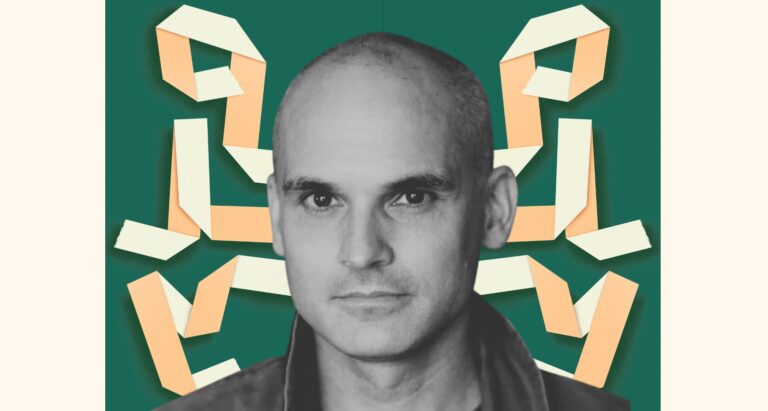
Hernan Diaz, a Pulitzer Prize winner, has just released his latest novel, Ply, after a four-year hiatus. The author is addressing questions about the novel's genre, specifically dismissing the labels of "dystopia" and "post-apocalyptic." Diaz argues that since there has been an apocalypse, it cannot be post-apocalyptic, and he labels Ply as a novel about a new way of life and thinking.
The story takes place in a future urban environment reclaimed by nature, where crime is low, and punk shows are prevalent. The protagonist, a nameless pincher, steals electricity from a sporadic grid and distributes it to clients in battery form.
The novel combines a plot-centric narrative with Diaz's signature philosophical musings. He acknowledges that his work can appear to be social theory disguised as traditional adventure stories. Diaz believes that the modern novel, since the 17th century, has been a medium for ideas and presenting them in a narrative way that is both appealing and formal. He also defends the concept of adventure novels, stating that they have contributed significantly to the novel form.
Diaz was born in Argentina and Sweden but has lived in New York for over two decades. His new novel completes a trilogy of works centered around American history and the canon. The first two novels, In the Distance and Trust, take place before and during the U.S., respectively, and Ply explores the post-U.S. era. Diaz admits that while he didn't intentionally create this trilogy, the themes and settings aligned, making it a natural progression.
To ensure the scientific accuracy of Ply, Diaz conducted extensive research on particle physics. He spent a week at CERN, the European Organization for Nuclear Research, to gain a better understanding of the subject matter. Diaz also spent time at Columbia University's Zuckerman Mind Brain Behavior Institute, where he explored debates around human consciousness. By delving into these fields, Diaz aimed to present a scientifically plausible and engaging narrative for his readers.
Written by urgent.news from Literary Hub's reporting — not their text. Machine-written — may contain errors; check the original before relying on it.