From monsoon to markets: How AI can transform India’s agricultural landscape
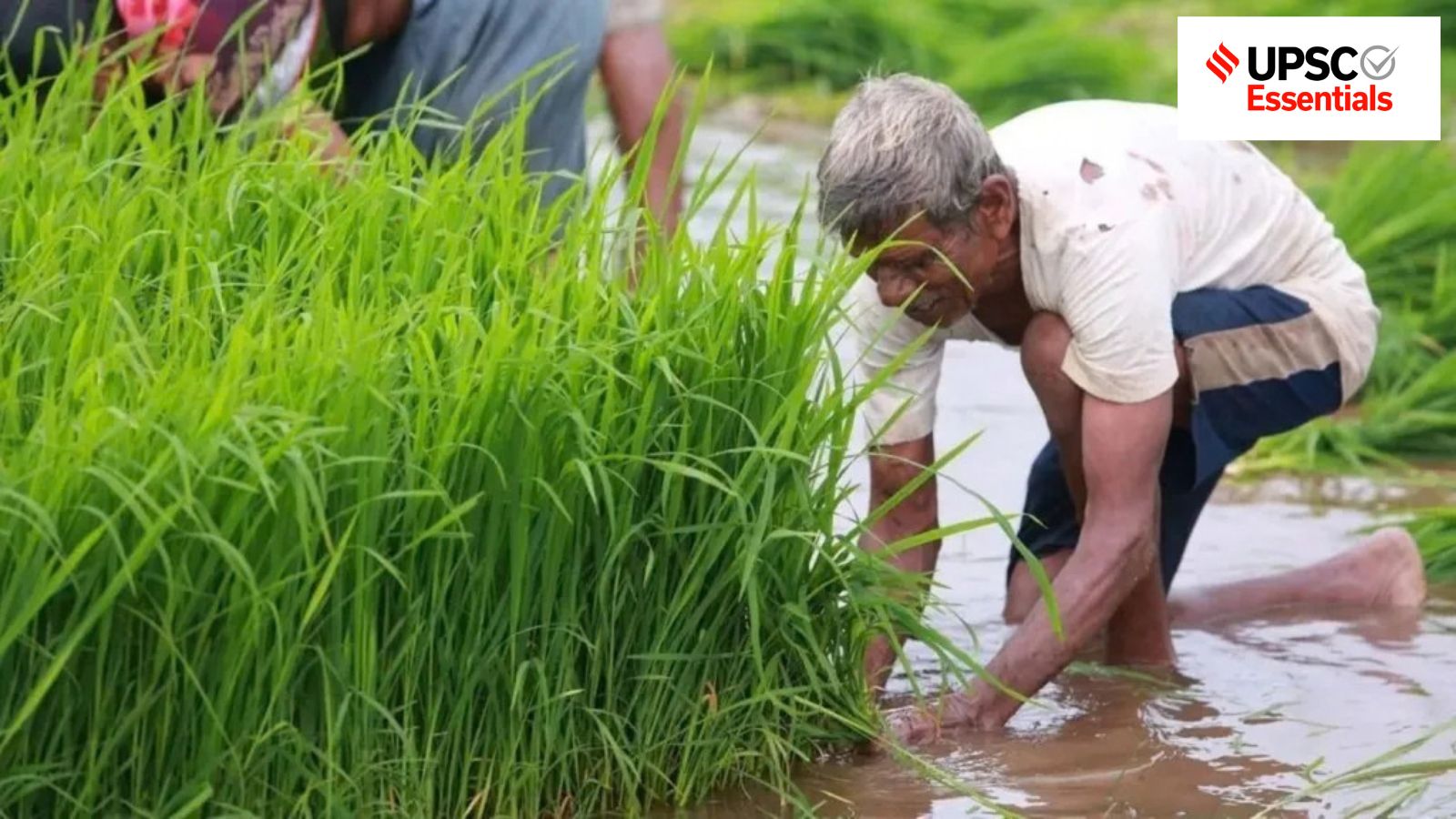
The rapid growth of Artificial Intelligence (AI) technology has sparked discussions about its advantages and potential risks. In agriculture, AI holds significant promise to tackle longstanding issues such as unpredictable weather, information gaps, and fragmented markets that have impacted farm output. With the global population expected to reach 9.7 billion by 2050, increasing global agricultural production by up to 70% will be crucial to meet future food demands.
The extent to which AI can provide scalable solutions to agricultural productivity challenges in India is an important question. Can these technologies assist small landowners, a common feature of Indian farming, to enhance productivity and resilience?
Recent advancements in AI and associated technologies have the capacity to revolutionize agriculture by facilitating decision-making based on real-time data. AI excels at identifying patterns and relationships within vast and diverse datasets, which can streamline more informed and data-driven decisions. In agriculture, this means farmers can make better choices about crop selection by considering factors such as weather forecasts, soil conditions, and market demand.
The Food and Agriculture Organisation (FAO), a specialized agency of the United Nations (UN), is currently developing the world's first domain-specific foundational AI model based on its extensive data and global expertise. This model aims to deliver real-time policy guidance, agronomic advice, and climate change strategies.
India has embraced AI as a key component of its agricultural policy, research, and investment strategy. The Union Budget 2026-27 introduced 'Bharat-VISTAAR' (Virtually Integrated System to Access Agricultural Resources), a multilingual AI tool that aims to integrate AgriStack platforms and the Indian Council of Agricultural Research (ICAR).
This platform is tailored to India's specific agricultural conditions and seeks to mitigate farm risks by offering personalized advice on soil types, climate zones, and crop varieties. The 'Bharat-VISTAAR' platform is designed to operate on low-connectivity rural devices, such as mobile phones and farm equipment.
In 2024, India launched the Digital Agriculture Mission, a comprehensive initiative to support digital agriculture projects. The mission comprises two main elements: Agri Stack and Krishi Decision Support System. Agri Stack is designed to provide a farmer-focused Digital Public Infrastructure (DPI), including a unique farmer ID registry, geo-referenced village maps linked with land records, and a Crop Sown Registry for digital seasonal crop sowing data.
The Krishi Decision Support System (DSS) will continuously monitor crops, soil, weather, and water resource-related factors, including floods, droughts, and groundwater levels, using geospatial data. The mission also aims to create detailed soil profile maps at a scale of 1:10,000 covering approximately 142 million hectares of agricultural land.
Other AI-driven agricultural initiatives in India include the National Pest Surveillance System (2024) for early detection of pests and crop diseases, and Kisan e-Mitra (2023), an AI-powered chatbot for inquiries about agricultural government schemes. These policy initiatives empower farmers with more informed, real-time decisions, enabling them to tackle structural challenges like weather forecasting, precision farming, and crop management, soil health, yield estimation, and market optimization.
Written by urgent.news from The Indian Express's reporting — not their text. Machine-written — may contain errors; check the original before relying on it.