Flu is here early. Plus Covid, mosquitoes, and more.
The Dose (Sept 29)
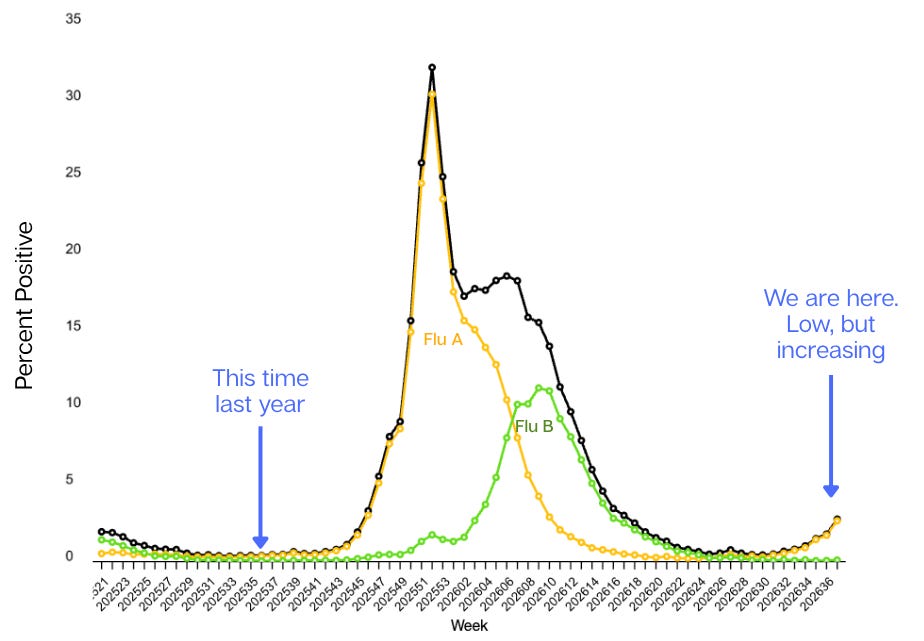
As fall settles in, an early arrival of various pathogens is making headlines. Influenza is making an unusually early appearance, accompanied by a surge in Covid-19 cases and an uptick in mosquito-borne diseases, particularly in the Southwest region of the United States. Amidst these health concerns, it's crucial to address the spread of false information and rumors. Let's delve into what's happening in the world of health and how it impacts you.
Unusually early flu activity has been observed in the United States, with emergency department visits and flu metrics showing a rise, even though national levels remain low. This phenomenon is particularly notable in the Western region, where flu typically doesn't make its debut until October or November. In most years, flu activity begins in the Southern states like Florida and Texas, gradually spreading across the country. However, this year, flu is defying the norm, demonstrating its unpredictable nature.
The early onset of flu isn't limited to the United States. Similar trends are emerging in other Northern Hemisphere countries such as the United Kingdom, Japan, and beyond. The reasons behind this premature emergence remain unclear. To gain insights into this unusual trend, epidemiologists often look to the Southern Hemisphere, where the flu season occurs earlier due to the seasonal differences. By examining the Southern Hemisphere's viral season, they can infer what to expect in the Northern Hemisphere.
Interestingly, the Southern Hemisphere's flu season has shown a mixed pattern. For instance, Argentina experienced an early start to their flu season, starting about three weeks ahead of schedule. On the other hand, Chile and South Africa adhered to their typical timeline, while Australia, New Zealand, and Fiji saw a quieter season before a sudden surge in August and September.
This late arrival in the Pacific region may be attributed to a new strain (subclade K) that dominated the previous year, disrupting established patterns. In Australia, for example, the 2025 flu season was its worst on record, ending late and peaking just before Christmas. Consequently, this has led to a later season this year.
Written by urgent.news from Your Local Epidemiologist's reporting — not their text. Machine-written — may contain errors; check the original before relying on it.