EXPLAINER: Decoding the animal spirits that guide the economy
Reserve Bank Governor Lesetja Kganyago and his international counterparts heading up the globe’s central banks have largely become hawks. The opposite of a hawk is a dove, and midway between the two is an owl. Economic totems are weird.
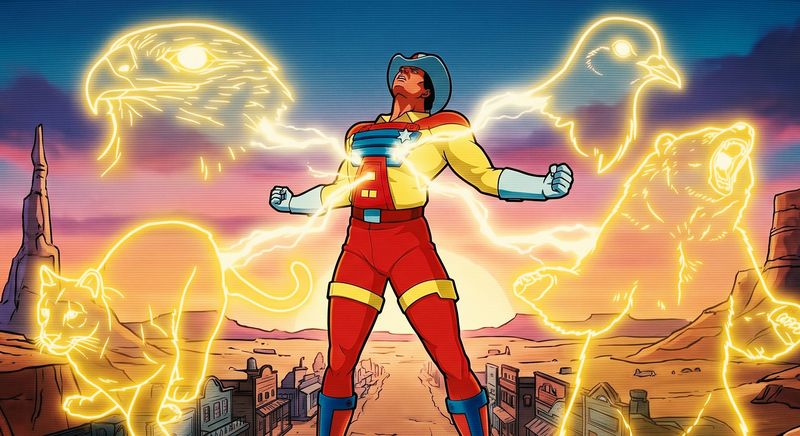
The Reserve Bank Governor of South Africa, Lesetja Kganyago, and his international counterparts are all characterized as hawks in the world of central banking. Hawks are the opposite of doves, with owls falling somewhere in between. The global economy has been metaphorically likened to a complex scientific discipline, replete with technical jargon like quantitative easing, asset-backed securities, stochastic modelling, and rational expectations.
However, at its core, economics is essentially the collective behaviour of humans, a system shaped by biological imperatives, emotional fluctuations, fear, greed, the pursuit of fairness, and narrative-driven desires.
In 1936, during the Great Depression, John Maynard Keynes introduced the term "animal spirits" in his book, The General Theory of Employment, Interest and Money, to replace the rigid economic framework that failed to withstand the shock of the Wall Street crash in 1929. Keynes argued that economic decisions under extreme uncertainty cannot be determined purely through mathematical probabilities and expected profits.
Instead, the world needed a more fluid vocabulary to describe the waning enterprises and cash reserves observed during prolonged recessions.
Building on Keynes' idea, Nobel laureates George Akerlof and Robert Shiller reintroduced the concept of "animal spirits" in behavioural economics following the 2008 financial crisis. Their argument was that standard macroeconomic models, which assume rational expectations, fail to predict major financial crises or systemic panics.
This led to the adoption of animal spirits as a convenient explanation for unpredictable market movements. These metaphors, according to the source, are essential to better understand the complex economic realities that often elude traditional mathematical formulations like yield curves, the Taylor rule, and credit default swaps.
Written by urgent.news from Daily Maverick's reporting — not their text. Machine-written — may contain errors; check the original before relying on it.