China reveals plan to map the entire surface of Mars by 2028 amid race with US
China plans to complete a geological map of Mars by the end of 2028, as the red planet increasingly features in its space rivalry with the United States. Hou Zengqian, chief scientist of China’s next Mars mission known as Tianwen-3, on Monday said the map would cover the entire surface of the planet and it aimed to be the global standard for the Martian geological ages. State news agency Xinhua…
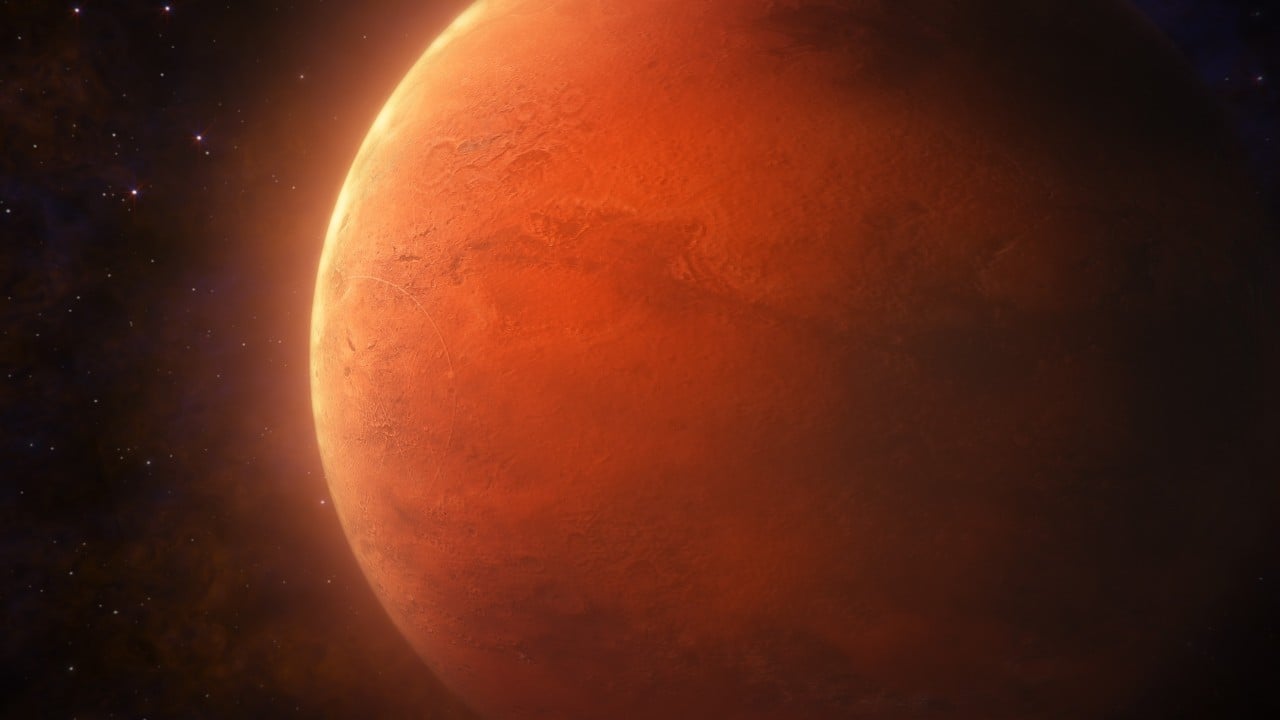
China has announced ambitious plans to create an extensive geological map of Mars by the end of 2028, as the country intensifies its space competition with the United States. Hou Zengqian, the chief scientist behind China's upcoming Mars mission, Tianwen-3, revealed that the map will cover the whole surface of the planet and serve as the global benchmark for Martian geological periods. This AI-driven map will be the first of its kind and a crucial step towards the Tianwen-3 mission.
Key findings from the first Chinese rover on Mars, Zhu Rong, have contributed to the map's development. These findings include evidence of an ancient intercontinental-scale ocean on Mars around 3.5 billion years ago and possible short-term flooding around 1.6 billion years ago. Zhu Rong landed on Mars in May 2021 as part of the Tianwen-1 mission, making China the second nation after the United States to successfully place a rover on the planet's surface. The rover traveled over 1.9 kilometers during its nearly year-long mission.
The map project will also generate a detailed 1:50,000 geological map of the Tianwen-3 landing zone and an atlas series, potentially setting a precedent for future geological mapping of other celestial bodies like the moon, Venus, and asteroids. China aims to launch the Tianwen-3 mission by late 2028, with the goal of collecting and returning at least 500 grams of Martian samples to Earth by around 2031.
This would make China the first country ever to accomplish a successful Mars sample-return mission, involving two separate launches - one carrying a lander and ascent vehicle to gather Martian material, and another carrying an orbiter and return module to transport the samples back to Earth.
However, a joint NASA and European Space Agency Mars sample-return mission has faced financial challenges and delays, with the Perseverance rover, which has been operating on Mars since 2021, collecting and caching numerous rock and soil samples. Originally, these samples were set to be retrieved and transported back to Earth in the 2030s; but, due to increased costs and repeated delays, NASA estimated the program could cost up to US$11 billion and not return samples until 2040.
In January, the US Congress effectively abandoned the existing program due to its high price tag and repeated delays, leading to some funds being reallocated towards a new Mars Future Missions initiative focused on developing cost-effective technologies. The future architecture and schedule for any future Mars sample-return mission remain uncertain.
Written by urgent.news from Reuters Business via SCMP's reporting — not their text. Machine-written — may contain errors; check the original before relying on it.
This story
This is one outlet's version. Read the fullest account.