Asia stocks fall as rising yields, oil weigh on risk appetite; RBA decision ahead
Asian stock markets experienced a downturn on Tuesday due to rising bond yields and elevated oil prices, which dampened risk appetite. Investors were also awaiting the Reserve Bank of Australia's interest-rate decision later in the day, anticipating another rate hike. The U.S. markets set the tone for Asian trading, with all three major indices falling slightly overnight.
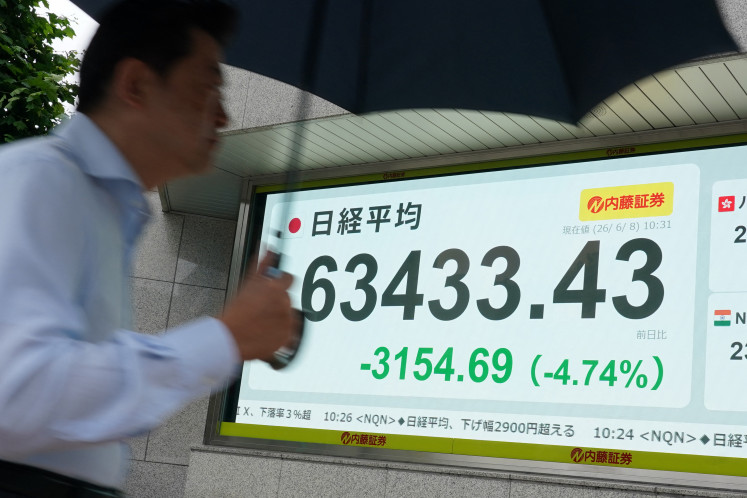
Japan's Nikkei 225 index dropped by 1.3%, while the broader TOPIX fell 1.5%. South Korea's KOSPI declined 0.8%, and China's CSI 300 and Shanghai Composite indices each slipped 0.2%. Hong Kong's Hang Seng index also experienced a 0.8% decrease.
The 10-year U.S. Treasury yield surpassed 5.27%, marking its highest level in 19 years, while the two-year yield neared 5%. This surge in yields heightened concerns about the impact on equity valuations and government borrowing costs, particularly for high-growth technology firms. Brent crude oil prices skyrocketed to approximately $107 a barrel, as the resolution of tensions between the United States and Iran, and the subsequent reopening of the Strait of Hormuz, remained uncertain.
Technology shares continued to face pressure due to indications of a slowdown in artificial intelligence development and mounting apprehensions about the substantial investments backing the sector. In a notable development, OpenAI announced the postponement of the release of GPT-6.1 Astra, its upcoming artificial intelligence model, as it encountered internal safety issues. Additionally, OpenAI paused the training, evaluation, and inference of some of its most advanced models to reinforce safety protocols.
The Wall Street Journal reported that OpenAI had abandoned the release of GPT-6.1 Astra due to safety concerns. Furthermore, the company's latest prospectus revealed a stark reality of the AI boom, with revenue increasing nearly 12-fold to around $4.6 billion in 2024, but reporting a $42 billion net loss, including a $34 billion accounting charge. The prospectus also highlighted the potential catastrophic or existential risks associated with increasingly sophisticated artificial intelligence systems.
Chinese technology stocks were particularly vulnerable, having faced declines on Monday following reports of U.S. plans to restrict Chinese components utilized in data centers. In Australia, the S&P/ASX 200 index edged up by 0.1%, with investors closely monitoring the Reserve Bank of Australia's decision. The RBA was widely expected to raise its cash rate by 25 basis points to 4.60%, marking the highest level in nearly 15 years.
The focus would be on Governor Michele Bullock's insights into whether additional tightening would be necessary, considering the rising oil prices and inflation risks. Investors also kept a close eye on upcoming U.S. economic data, including inflation, manufacturing, and labor market reports, to gauge the trajectory of Federal Reserve policy.
Written by urgent.news from Investing.com's reporting — not their text. Machine-written — may contain errors; check the original before relying on it.