As AI makes copying easier, this product leader says trust is the real edge
At DevSparks Chennai 2026, Responsive's Kunal Shrestha explains why trust, not features, is developers' real edge in the AI era.
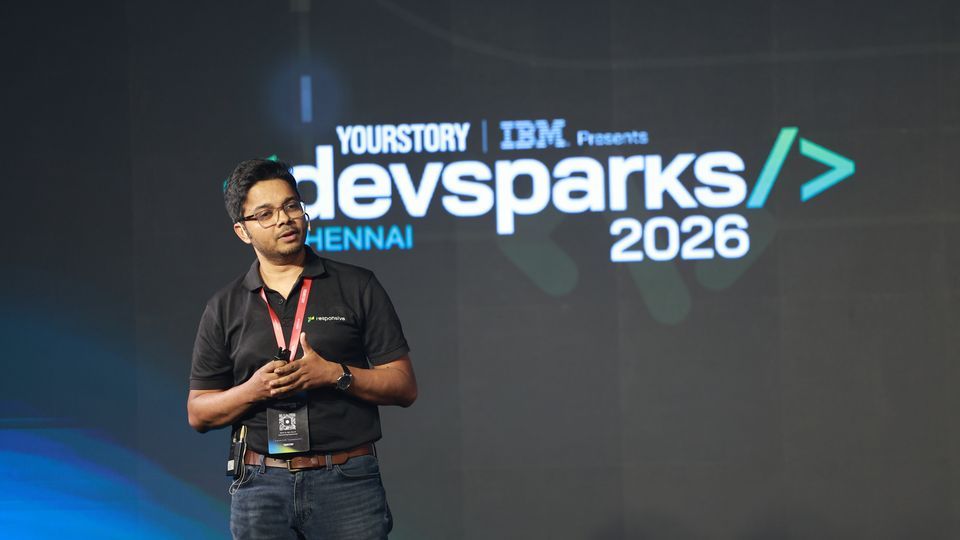
A.R. Rahman, the renowned composer, built his initial studio in 1989 and single-handedly created film soundtracks. By 1992, his work had become a nationwide hit. Now, he continues to shape the landscape of film music. Kunal Shrestha, VP of Product at Responsive, began his session at DevSparks Chennai 2026 with Rahman's story, drawing parallels to developers facing the ease of software creation through AI.
Shrestha's presentation, titled 'The new moat for developers: moving beyond the feature', aimed to explore the avenues for differentiation once features cease to be exclusive. He quoted a decline in questions posted on Stack Overflow, attributing this to the growing adoption of AI tools by developers entering the workforce post-2021.
Shrestha emphasized that if businesses fail to redefine their offerings, they risk being replaced by AI-generated alternatives. He also noted that 32% of organizations declined to purchase a software product due to the potential for internal construction using agentic coding tools. Responsive, a firm aiding enterprises with RFP responses, security evaluations, and vendor questionnaires, launched its first AI feature in 2024.
Shrestha explained that they did not construct or fine-tune their own models; rather, their initial focus was on establishing a 'trust gap' between customers and AI-generated outputs. Currently, 70% of their clientele utilizes AI within their products. Serving over 2,000 customers, including more than a quarter of the Fortune 500, some of which possess the engineering capability to develop similar tools in-house, Responsive achieved trust initially, then automated processes, and finally introduced reasoning capabilities to their systems.
Shrestha identified three key areas for differentiation: trust, intelligence, and distribution. For trust, he argued that AI systems need transparency beyond simple confidence scores, including traceability of answers and thorough logging of AI decision-making processes. Intelligence, according to Shrestha, involves the use of agentic Retrieval-Augmented Generation (RAG) combined with a customer's history to retain context throughout interactions.
Additionally, learning from patterns across various customers can enhance onboarding experiences without compromising individual data privacy. In terms of distribution, Shrestha advocated for integrating AI tools into platforms customers already utilize, through direct integrations or the Model Context Protocol, which enables AI systems to connect with external tools and data sources.
Shrestha also contrasted the traditional software development process at Responsive, where separate departments handled specifications, design, and engineering, with their current streamlined approach wherein one individual, often a developer, leverages AI coding tools to create and publish solutions. He concluded by urging developers to maintain their curiosity, questioning not only the quality of their solutions but also the relevance of the problems they aim to address.
Written by urgent.news from YourStory's reporting — not their text. Machine-written — may contain errors; check the original before relying on it.