Archaeologists Discover Monumental Ritual Baths Near Jerusalem’s Temple Mount
Archaeologists have uncovered a monumental complex of ritual baths near Jerusalem’s Temple Mount, providing new evidence of the facilities likely used by Jewish pilgrims before entering the Second Temple nearly 2,000 years ago. The excavation also uncovered an earlier public purification complex beneath it, showing that the site served this purpose for generations. The complex, […]
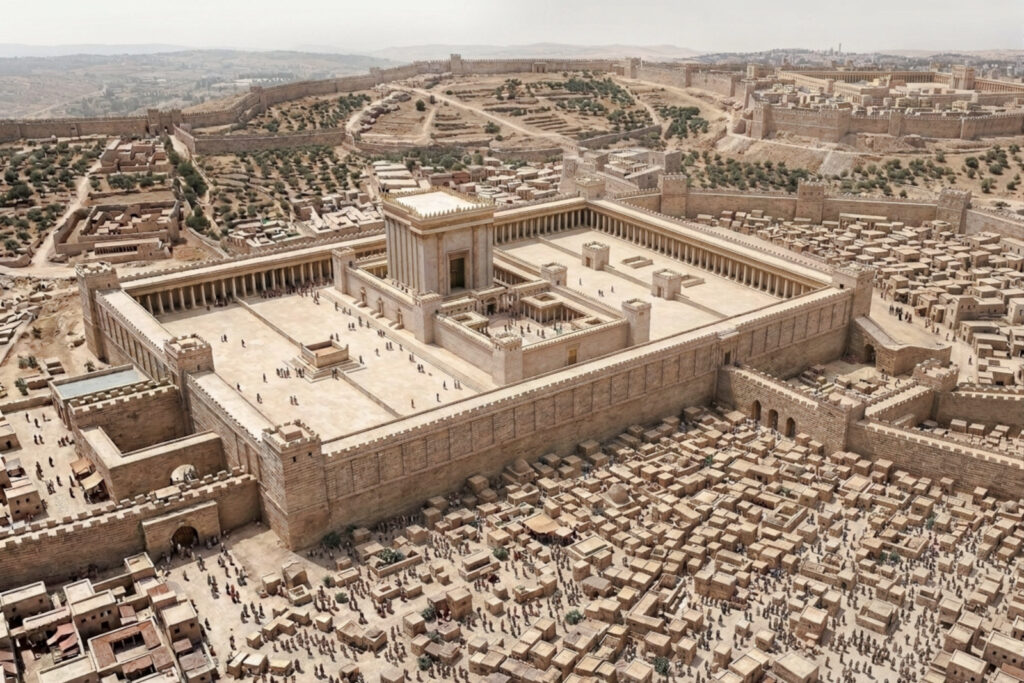
Near Jerusalem's Temple Mount, archaeologists have unearthed a large-scale complex of ritual baths, shedding light on the facilities used by Jewish pilgrims during the late Second Temple period around 2,000 years ago. Situated in the Ophel area, near the Triple Gate, the complex dates back to the early first century CE and was discovered by researchers from the Hebrew University of Jerusalem's Institute of Archaeology.
The excavated site comprises three substantial ritual baths, a grand plastered pool, a paved forecourt, and an elaborate water system spanning approximately 280 square meters. These findings indicate that the complex served a critical purpose for the multitude of Jewish pilgrims who journeyed to Jerusalem, undergoing ritual purification before entering the Second Temple.
Beneath the monumental structure, archaeologists uncovered an earlier ashlar-built public purification complex, likely dating back to the first century BCE. This earlier site contained a large ritual bath, suggesting that the location had a history of providing ritual facilities for generations. The overall design and scale of the site suggest it was built to accommodate large numbers of pilgrims seeking purification before entering the Temple.
The complex's location near a major entrance to Jerusalem's Temple Mount implies that it was strategically positioned to facilitate the purification rituals of countless visitors. Its sophisticated water system, capable of handling significant volumes of water, further underscores its role in supporting the religious activities of the time.
The baths and pool were connected to drainage channels that extended toward the Kidron Valley, indicating a well-planned infrastructure for managing water resources. This evidence reveals that the area was not just a religious site, but a well-organized system designed to meet the needs of a large and diverse group of pilgrims.
The complex's existence was recorded from the early first century CE and endured through the reign of Tiberius, who ruled from 14 to 37 CE. It was ultimately destroyed in 70 CE during the First Jewish-Roman War. Coins from the Jewish revolt have been found at the site, providing a clear timeline and further confirming its historical context within the Second Temple period.
These discoveries place the complex within the religious and political landscape of Jesus' time. While the exact use by Jesus remains speculative, the baths were a part of the same Jerusalem landscape in which Jewish pilgrims approached and worshipped at the Temple. This archaeological evidence confirms the significance of the location and the vital role these purification facilities played in the religious practices of the era.
Written by urgent.news from Colombia One's reporting — not their text. Machine-written — may contain errors; check the original before relying on it.