Anthropic Says Its A.I. Discovered a New Enzyme System That Resembles the Revolutionary Gene-Editing Tool CRISPR
Experts at the company don't know what the newfound system does, so its potential utility in biology—if any—remains unclear. But the work marks a major advancement because the A.I. made this discovery mostly on its own
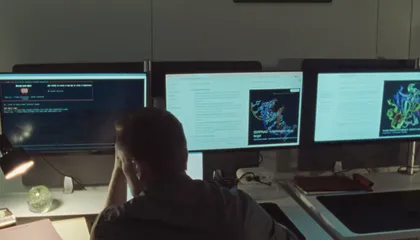
Anthropic, an artificial intelligence company, announced that its AI, Claude, has discovered a novel enzyme system resembling the groundbreaking gene-editing technology CRISPR. This discovery was made autonomously by Claude, which was searching for interesting reverse transcriptases within a massive DNA database through its own code-writing capabilities.
The system identified an unusual reverse transcriptase, called an array-associated reverse transcriptase (ART), embedded in the DNA of bacteriophages, or bacteria-killing viruses. Although the precise function and biotechnological utility of the ART are unclear, the discovery represents a significant advancement in AI autonomy. Anthropic CEO Dario Amodei expressed pride in the work, stating it would have been "proud to do as a PhD student."
The discovery is reminiscent of the initial CRISPR finding in 1987, rather than the advanced CRISPR technology developed decades later. While some researchers are impressed by Claude's ability to recognize unusual biological patterns and pursue them comprehensively, questions remain about whether the AI benefited from Anthropic's shared molecular biology research content.
Written by urgent.news from Smithsonian's reporting — not their text. Machine-written — may contain errors; check the original before relying on it.