A revolution has come in the first of the Big Bang’s 4 cornerstones
There’s a huge problem with our attempts to uncover the origins of the Universe: we only see our Universe as it is today, 13.8 billion years after the conditions marking the hot Big Bang first came into existence. Sure, we look at objects or events that occurred very far away, and by doing so, we can see the Universe as it was long ago, with the arriving light encoding the conditions that were…
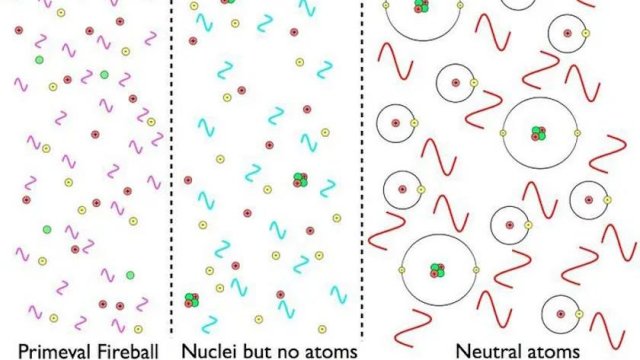
In the latter half of 2026, a groundbreaking study released by the LBT Y p Project has provided the most accurate and precise measurements of the primordial helium abundance ever recorded. These findings have reignited interest in the fourth cornerstone of the Big Bang theory, which has long been the lowest-precision and most poorly-measured line of evidence.
The Big Bang, which marks the origin of our Universe, is composed of four main pillars: the expanding Universe, the growth and evolution of galaxies and galaxy clusters, the cosmic web of structures, and the leftover radiation from the hot Big Bang, known as the cosmic microwave background (CMB). While the first three pillars have been extensively studied and validated using observations of distant objects and events, the nucleosynthesis of primordial elements has been the least understood and most debated.
Historically, the idea that the elements heavier than hydrogen were created in the hot Big Bang faced skepticism. Some proponents, like Fred Hoyle, argued that these elements were forged in stars. However, the 1950s saw significant advancements in understanding nuclear fusion in stars, which bolstered the case for the Big Bang's role in creating these elements.
The LBT Y p Project's recent work has provided compelling evidence for the primordial helium abundance, offering a more precise understanding of the primordial nucleosynthesis process. This discovery has the potential to further validate the Big Bang theory and fill the remaining gaps in our knowledge of the origins of our Universe.
Written by urgent.news from Big Think's reporting — not their text. Machine-written — may contain errors; check the original before relying on it.