What is the Budget and what could be in it?
Chancellor John Healey will set out his plans for UK taxes in October.
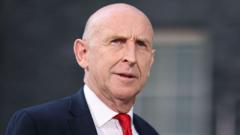
On 28 October, Labour leader John Healey will present his first Budget, outlining the party's tax and spending plans. He has not ruled out tax increases despite acknowledging that government borrowing costs are at historic highs. The government's capacity to raise taxes is constrained as Labour has pledged not to raise income tax, National Insurance, and VAT before the 2024 general election.
At the Budget, Healey will detail how the government plans to adjust taxes. Additionally, the Treasury will release further information about the proposed measures and their costs. The Office for Budget Responsibility (OBR) will publish its assessment of the UK economy's health and future forecasts.
Speculation about the Budget's content has been limited this year. Healey and Prime Minister Andy Burnham must carefully balance supporting households and meeting defense spending commitments while adhering to their manifesto commitments on taxes and fiscal rules. The previous chancellor, Rachel Reeves, established two main rules that the current leadership intends to follow: avoiding borrowing for day-to-day public spending by the end of the parliament and reducing government debt as a share of national income by the same deadline.
In March, the OBR determined that the first rule would be met with £23.6bn of headroom, but this is expected to decrease due to rising government borrowing costs. Analysts at KPMG estimate the headroom could be as low as £12bn. However, one possibility being considered is Healey accepting a smaller buffer, which could reduce the need for tax increases in the Budget.
The Your First Home scheme, aimed at assisting first-time buyers in England with a 2.5% deposit, is expected to be announced in the Budget. This scheme would provide a loan worth 20% of a property's value to help with the purchase. There has been speculation about changes to Capital Gains Tax, including higher rates or removing exemptions. The High Value Council Tax Surcharge, previously known as the Mansion Tax, has been discussed, with reports suggesting it may be extended to properties valued over £1.5m.
Banks have reported strong profits, leading unions to call for increased taxes on the sector. However, banks have opposed such measures, arguing that higher levies would undermine their aim to boost growth and make the UK less competitive. Despite a modest UK economic growth of 0.6% in the first quarter, it slowed to 0.4% in the April-to-June period.
The economy grew by 0.4% in July, stronger than anticipated. While the UK economy shows resilience amid energy price shocks from the US-Israel conflict with Iran, causing oil and gas trade disruptions and rising oil and fuel prices, economists expect UK growth to slow as these costs impact households and businesses.
Inflation rose to 3.1% in August, the highest rate in five months, above the Bank of England's 2% target. The Bank of England held interest rates at 3.75% for the sixth consecutive time in September, but signaled potential rate hikes if high energy prices persist. The Budget speech begins around 12:30 UK time and lasts about an hour, broadcast live on the BBC iPlayer and website.
Conservative MP Kemi Badenoch will respond to the speech in the House of Commons, and MPs will debate and vote on the measures over four days. Approved tax changes can take effect immediately, but the government must pass a finance bill to make changes permanent.
Written by urgent.news from BBC Business's reporting — not their text. Machine-written — may contain errors; check the original before relying on it.