Supreme Court Suggests Linking Unpaid Traffic Challans To Electricity Bills, Vehicle Service Restrictions To Recover Outstanding Fines
New Delhi, September 28, 2026: The Supreme Court has suggested a range of measures to recover unpaid traffic challans, including linking outstanding fines to electricity bills, restricting vehicle-related services and conducting random checks of vehicles. The suggestions came as the Court considered ways to ensure that e-challans do not remain unpaid. The Bench of Justice JB Pardiwala and Justice…
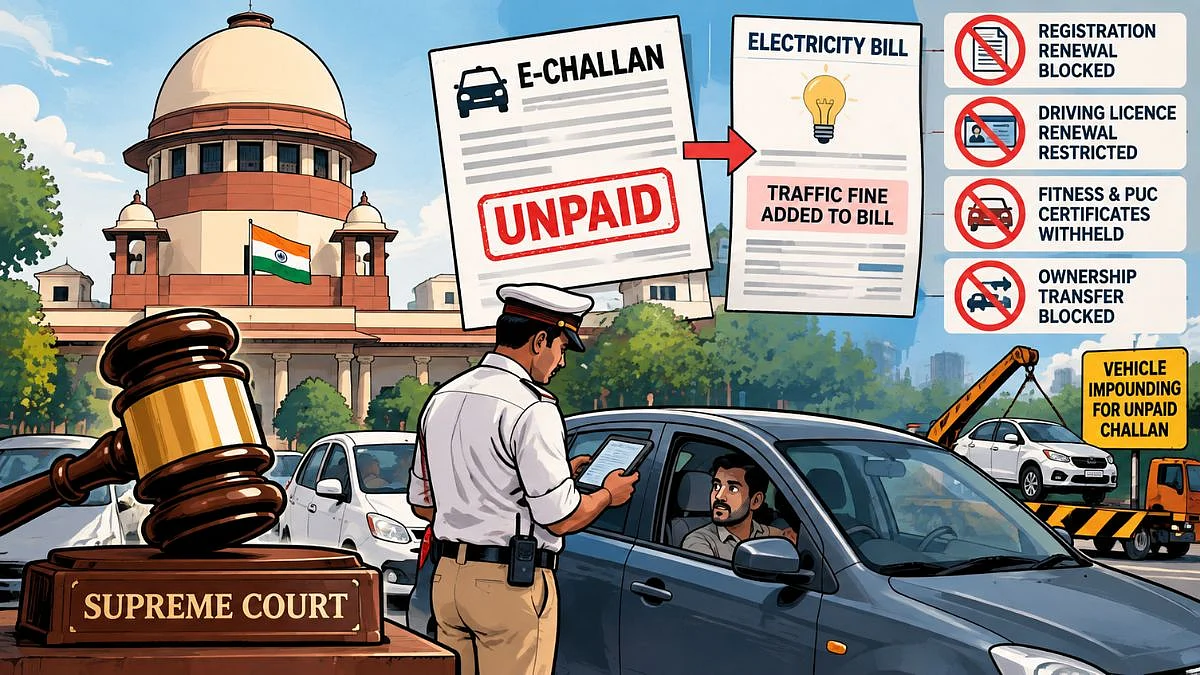
New Delhi, September 28, 2026: The Supreme Court has proposed several tactics to compel payment of unpaid traffic fines, including tying fines to electricity bills, limiting vehicle services, and performing random vehicle inspections. These suggestions emerged as the Court deliberated on methods to compel the payment of e-challans.
Justice JB Pardiwala and Justice KV Viswanathan of the Court emphasized that while issuing e-challans is necessary, the real challenge lies in recovering the fines. The Bench contended that simply issuing numerous e-challans is insufficient without a mechanism for collection. "It's not enough to continuously issue e-challans," remarked Justice Pardiwala.
"The key question is how to recover the imposed fines." The Court heard proposals that could result in broader repercussions for vehicles with unpaid fines. States and Union Territories could embed unpaid fines into electricity bills, compelling defaulters to settle their traffic debts to avoid power disconnection. The Court also contemplated restricting vehicle-related services, such as halting registration certificate renewals, issuing duplicate certificates, altering ownership details, and blocking vehicle transfers until fines are cleared.
Other measures under consideration included blacklisting vehicles with outstanding fines on the Parivahan portal, preventing ownership transfers, withholding fitness and Pollution Under Control certificates, and suspending existing driving licenses. Additionally, the Court suggested conducting random vehicle checks to identify those with unpaid e-challans, potentially leading to vehicle impoundment if fines remain unpaid.
These proposals stem from a public interest litigation petition seeking to improve road safety and enforcement of the Motor Vehicles Act. The Court questioned the practical implementation of its past directives over the years, urging authorities to act upon its recommendations rather than merely issuing them.
Written by urgent.news from Free Press Journal's reporting — not their text. Machine-written — may contain errors; check the original before relying on it.