Supreme Court Seeks RBI, NPCI Response On 0.4% UPI MDR Rule, Refuses To Stay Oct 15 Rollout
The Supreme Court on Monday issued notices to the Reserve Bank of India (RBI) and National Payments Corporation of India (NPCI) on a petition challenging the government’s decision to introduce a 0.4% Merchant Discount Rate (MDR) on certain UPI person-to-merchant transactions exceeding Rs 2,000. However, the court did not suspend the implementation of the new MDR framework, which is scheduled to…
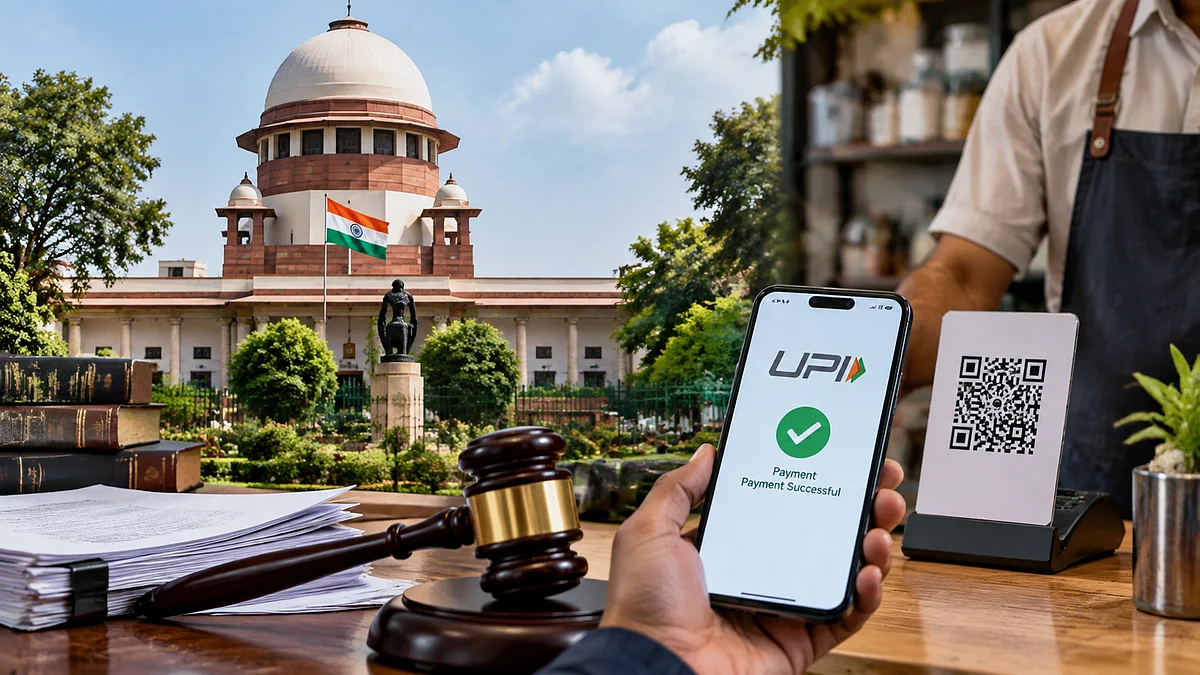
On Monday, the Supreme Court issued legal notices to the Reserve Bank of India (RBI) and National Payments Corporation of India (NPCI) regarding a challenge to the government's plan to impose a 0.4% Merchant Discount Rate (MDR) on specific UPI person-to-merchant transactions exceeding Rs 2,000. Notably, the court decided not to halt the introduction of the new MDR framework, which is set to commence on October 15.
Both the Union of India, RBI, and NPCI have been instructed to submit their responses within a four-week period.
The solicitor general clarified during the proceedings that the MDR would not be imposed by the government, but rather as a service charge levied by aggregators and banks. The focus of the new MDR is on eligible UPI merchant payments above Rs2,000, marking a shift from the previous system of completely free UPI payments that had persisted for nearly six years. However, person-to-person transfers and smaller transactions will continue to be exempt from the charge.
To manage costs for transactions, the revised framework stipulates a maximum ceiling of Rs300 for qualifying transactions exceeding Rs75,000. Certain sectors, including railways, telecom, insurance, fuel, and agricultural inputs, will be subject to a flat MDR of Rs5 for qualifying transactions. Additionally, payments involving mutual funds, securities, and stockbrokers will be subject to a lower MDR of 0.02%, also capped at Rs300.
The petition, filed by advocate Anjan Datta, challenges the government's decision to implement the MDR without adequate statutory safeguards, transparency, or public consultation. The plea raises concerns about the potential impact on merchants, especially small businesses with limited margins, and the possibility of higher costs being ultimately shouldered by consumers.
The petitioner seeks either the withdrawal or suspension of the MDR provisions for UPI transactions above Rs2,000 or a review of the framework based on transparent consultation, impact assessment, and safeguards for micro and small enterprises.
Written by urgent.news from Free Press Journal's reporting — not their text. Machine-written — may contain errors; check the original before relying on it.