Sugarcane farmers query House over sugar imports
Leaders of the Indonesian Sugarcane Farmers Association (APTRI) have complained at the House of Representatives that sugar imports would keep prices depressed and put strain on an industry struggling to gain a footing.
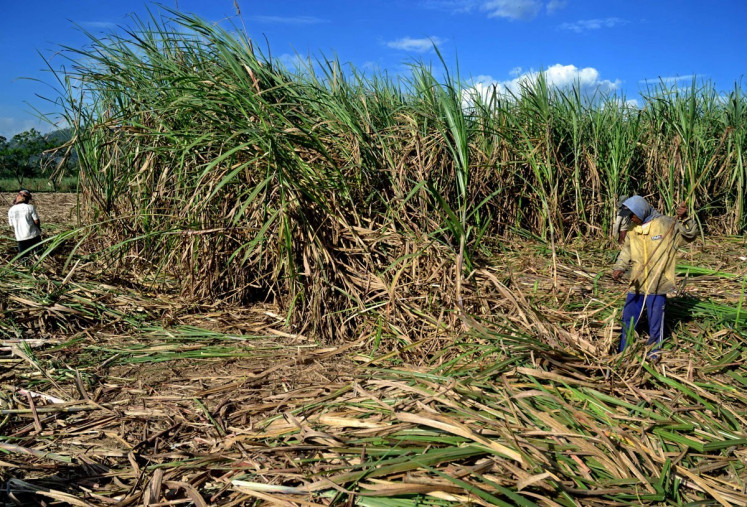
The Indonesian Sugarcane Farmers Association (APTRI) has raised concerns in the House of Representatives about impending sugar imports, arguing that these will depress prices and burden the industry that is still establishing itself. APTRI executives made their case to lawmakers from Commission VI and Commission IV on September 22 and 23.
They contend that importing 150,000 tonnes of raw sugar for household consumption is ill-advised during the harvest season and mere weeks after the government declared Indonesia self-sufficient in consumer sugar.
APTRI chairman Soemitro Samadikun informed lawmakers that the country ended 2025 with roughly 1.4 million tonnes in sugar stock after receiving 200,000 tonnes of imports last year. He urged policymakers to assess the policy against the national sugar balance sheet, the arrival schedule, end users, and distribution areas. According to a government projection for 2026, sugar production is expected to reach around 3.02 million tonnes, with stocks of 1.45 million tonnes at that time.
Additionally, 142,500 tonnes of raw sugar imports are anticipated for September to December, resulting in stocks of approximately 1.78 million tonnes by year-end.
The permits for the imports have been granted by the state-owned food holding company ID Food, with 50,000 tonnes destined for milling at the Madukismo sugar mill in Bantul, Yogyakarta, and the remaining 100,000 tonnes allocated to a privately owned mill in Bombana, Southeast Sulawesi, owned by local tycoon Haji Isam. Soemitro questioned both the necessity of the imports and their allocation, noting that regulations permit only state-owned mills to process imported raw sugar for consumer use.
Written by urgent.news from The Jakarta Post's reporting — not their text. Machine-written — may contain errors; check the original before relying on it.