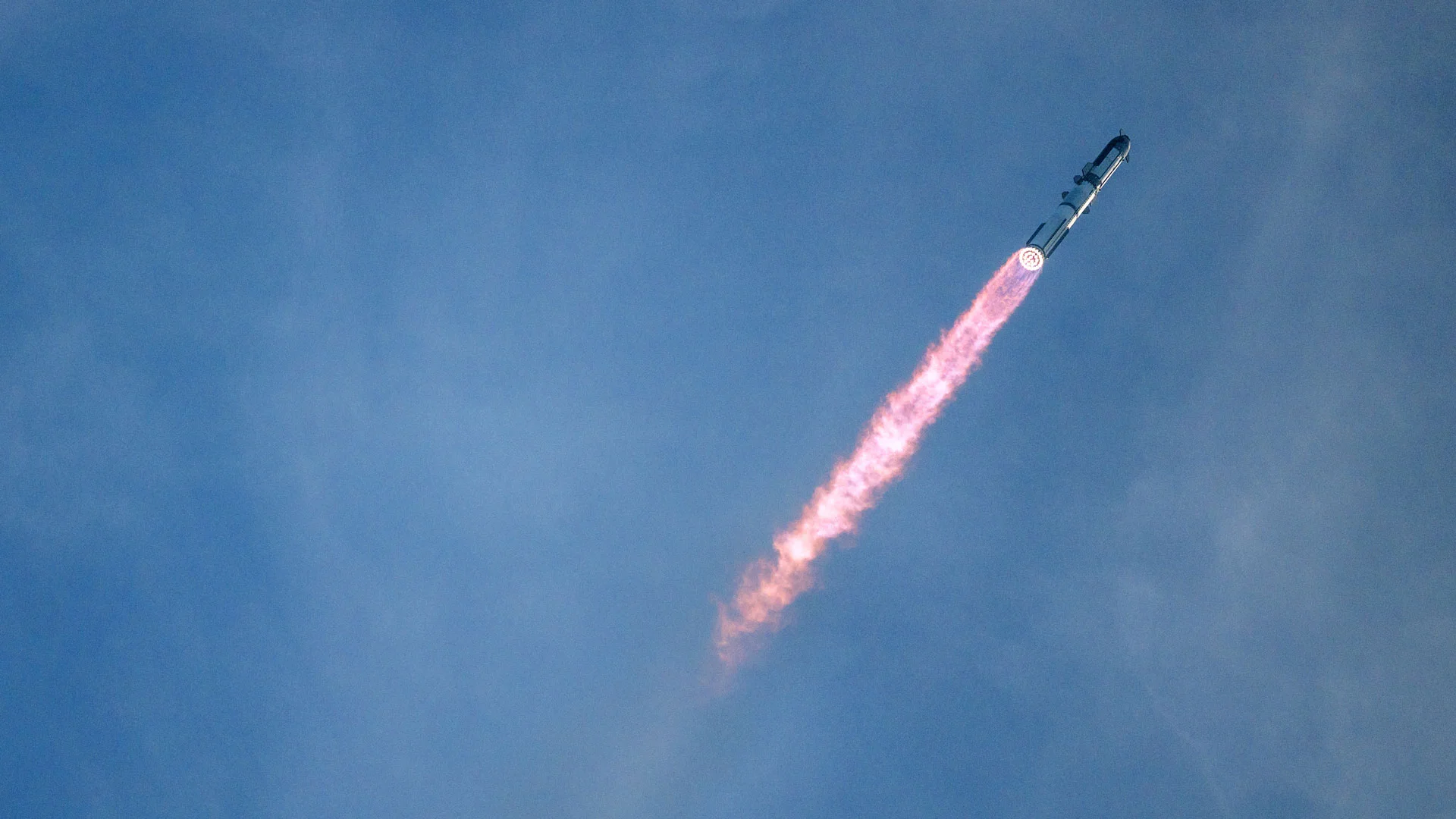
Startship, o megafoguete da SpaceX, atinge a órbita
O lançamento não foi perfeito, com a falha de um dos motores no meio do caminho. Mas a Starship, o veículo espacial da SpaceX, entrou em órbita pela primeira vez – em mais uma conquista da companhia de Elon Musk. Foi o 14° voo da Starship desde o seu primeiro lançamento em 2023. A falha […] The post Startship, o megafoguete da SpaceX, atinge a órbita appeared first on Brazil Journal .

Startship, a colossal SpaceX rocket, reached orbit in its maiden successful flight, marking a significant milestone for the company founded by Elon Musk. The launch, however, was not flawless; one of its engines failed mid-flight, shortening the mission. Only three orbits around Earth were completed instead of the planned six, but this was still a historic achievement.
The successful entry into orbit is crucial for satellite launching operations and could potentially pave the way for missions to the Moon and even Mars in the future. All previous 13 test flights of Starship, conducted since 2023, had only reached suborbital space.
Martin Barstow, an astrophysics and space science professor at the University of Leicester, said, "This is an important milestone for SpaceX with Starship achieving orbit successfully – and again on the first attempt." SpaceX has invested around $15 billion in the development of Starship over the last decade, making it the largest and most powerful rocket built to date.
The success is also great news for NASA, which plans to use Musk's rocket to send astronauts to the Moon, but for that, Starship will have to be refueled in orbit.
Launching from a base in Texas at 7:48 AM local time, the rocket landed in the ocean two and a half hours later. Despite being an official test mission, it carried 26 new generation Starlink satellites, larger and with higher connection capacity than previous ones. Musk posted on X that all the satellites were launched and operating normally.
Musk also claimed that Starship is "two or three years away from flying every hour." Once Starship enters commercial operation, Starlink will be able to accelerate the expansion of its satellite constellation, with each mission carrying 60 satellites and Starship capable of carrying up to 150 tons of payload, equivalent to 7 times the capacity of the Falcon 9.
Additionally, Starship is 100% reusable, which reduces mission costs and speeds up scale acquisition. To put objects into a stable orbit, rockets need to reach a speed of approximately 28,000 kilometers per hour.
Written by urgent.news from Brazil Journal's reporting — not their text. Machine-written — may contain errors; check the original before relying on it.