SpaceX's Starship goes orbital, deploying first next-gen Starlinks
Starship had already flown 99 percent of the way to low-Earth orbit. Monday's flight added the last bit.
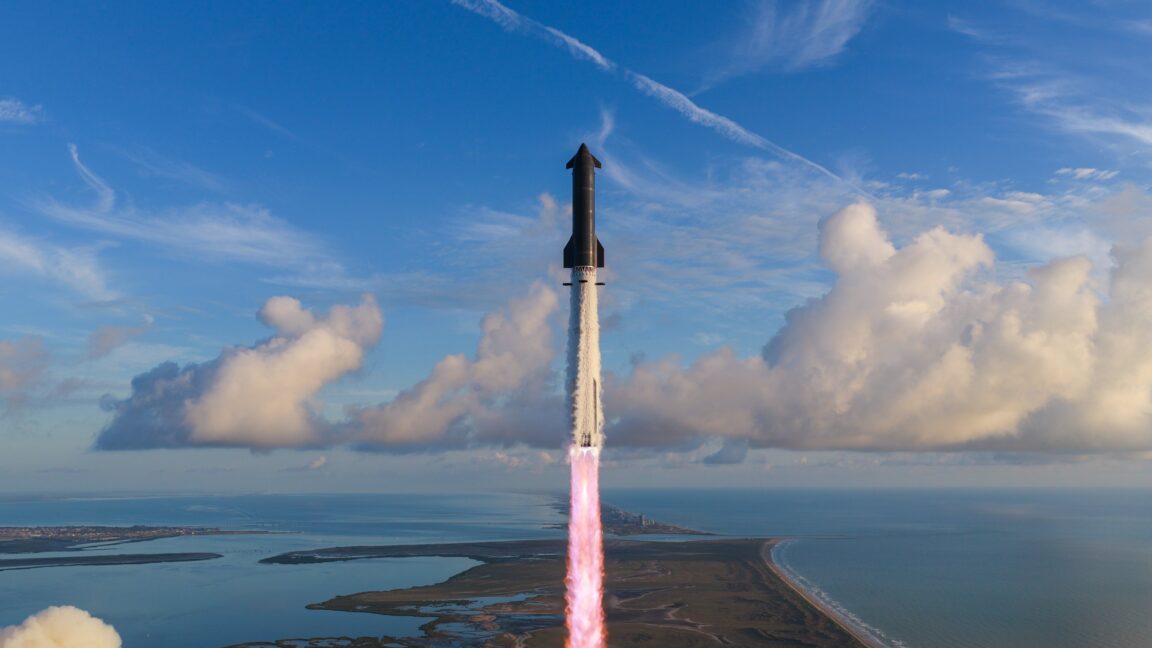
SpaceX's Starship rocket launched into the sky over South Texas on Monday, marking the 14th test flight of the world's most powerful launch vehicle. This time, however, the rocket's powerful Raptor engines managed to propel Starship to orbital velocity, breaking free from the suborbital trajectory it had been flight testing. The rocket had previously intentionally limited its full potential during suborbital flights, ensuring Earth's gravity would pull it back into the atmosphere before completing a full orbit around the planet.
But SpaceX officials decided that this particular launch should reach low-Earth orbit, and it did. Additionally, SpaceX loaded 26 of their latest generation Starlink broadband satellites into the rocket's cargo bay. The satellites, too large to fit inside SpaceX's Falcon 9 rocket, were deployed from Starship's payload deployer via a system of pulleys and cables, ejecting them one by one into orbit like a Pez dispenser releasing candy.
Written by urgent.news from Ars Technica's reporting — not their text. Machine-written — may contain errors; check the original before relying on it.