SpaceX aims to put Starship in orbit for the first time
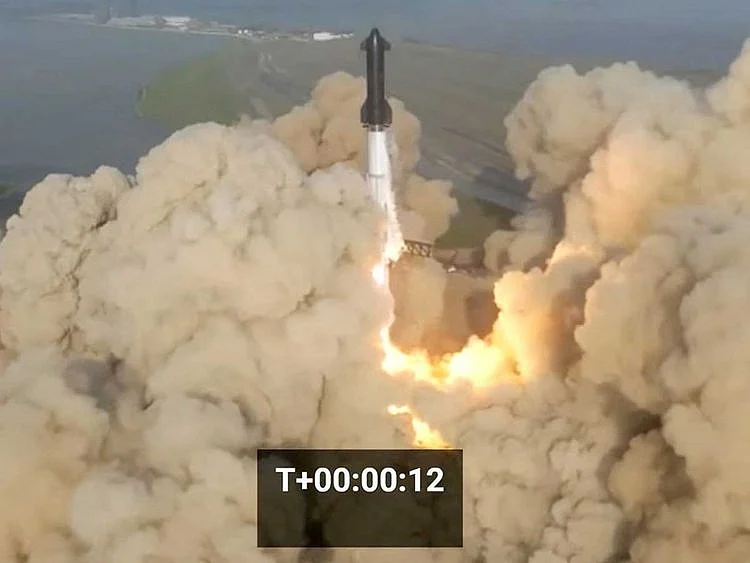
Three years after its inaugural test flight, SpaceX's Starship rocket embarks on its 14th test flight on Monday with the goal of entering Earth's orbit. This milestone is a crucial step towards the development of the colossal launch vehicle that Musk envisions for future missions to the Moon and Mars. SpaceX, which recently completed a high-profile initial public offering in June, plans to leverage this test flight to achieve ambitious objectives.
The 10-hour-long test will see the upper stage of the experimental rocket travel into Earth orbit and deploy 26 next-generation Starlink satellites. The launch is scheduled to occur in Texas at 7:15 am local time (1215 GMT).
However, this test flight, like many previous ones, carries the possibility of unanticipated complications, given that multiple prior tests have concluded in dramatic explosions. Since its inception in 2023, SpaceX has been flying the rocket in its full configuration, but always on suborbital trajectories, a safer and less challenging approach. Despite extensive development and testing, numerous modifications have been made to the rocket, which remains the largest and most powerful object ever to have flown.
The upcoming test represents a pivotal moment for SpaceX as it strives to bring Starship closer to commercial flights and lunar or Martian exploration. The rocket must achieve a circular orbit approximately 275 km (171 miles) above Earth, requiring a speed of around 28,000 km/hour. Kathleen Curlee, a senior analyst at Georgetown University's Center for Security and Emerging Technology, highlights the significance of this test in ushering in a new phase of Starship development, including potential in-orbit refueling tests.
If successful, the rocket will aim to deploy satellites designed to expand SpaceX's expansive satellite internet constellation. SpaceX plans for the rocket to conclude its journey in the Pacific Ocean after orbiting Earth six times. The massive first-stage booster, dubbed "Super Heavy," will plummet shortly after launch into the Gulf of Mexico, where SpaceX does not plan to retrieve it using large mechanical arms.
From an engineering standpoint, merely achieving flight and gathering data would be considered a success. Nonetheless, spectators and investors harbor different expectations, demanding flashy tests. SpaceX's dominance in the global space launch market, bolstered by its partially reusable Falcon rockets, is well-established. Despite facing repeated delays and competition from Chinese firms in the reusable rocket sector, SpaceX remains committed to a policy of risk-taking, positioning itself for a historic endeavor that could propel Moon missions forward.
Written by urgent.news from Gulf News's reporting — not their text. Machine-written — may contain errors; check the original before relying on it.
Also reported by 1 other outlet
- SpaceX Starship targets orbit in biggest test yet economictimes.indiatimes.com