Reliable Robots: Meet Johnson’s Dexterous Robotics Team
The idea of humans and robots working side-by-side in space was once the stuff of science fiction, but with NASA launching increasingly complex missions deeper into space, human-robot collaboration could become reality. Advanced robotic systems are critical for human spaceflight because they can enhance a crew’s performance and productivity while reducing risk and expanding the […]
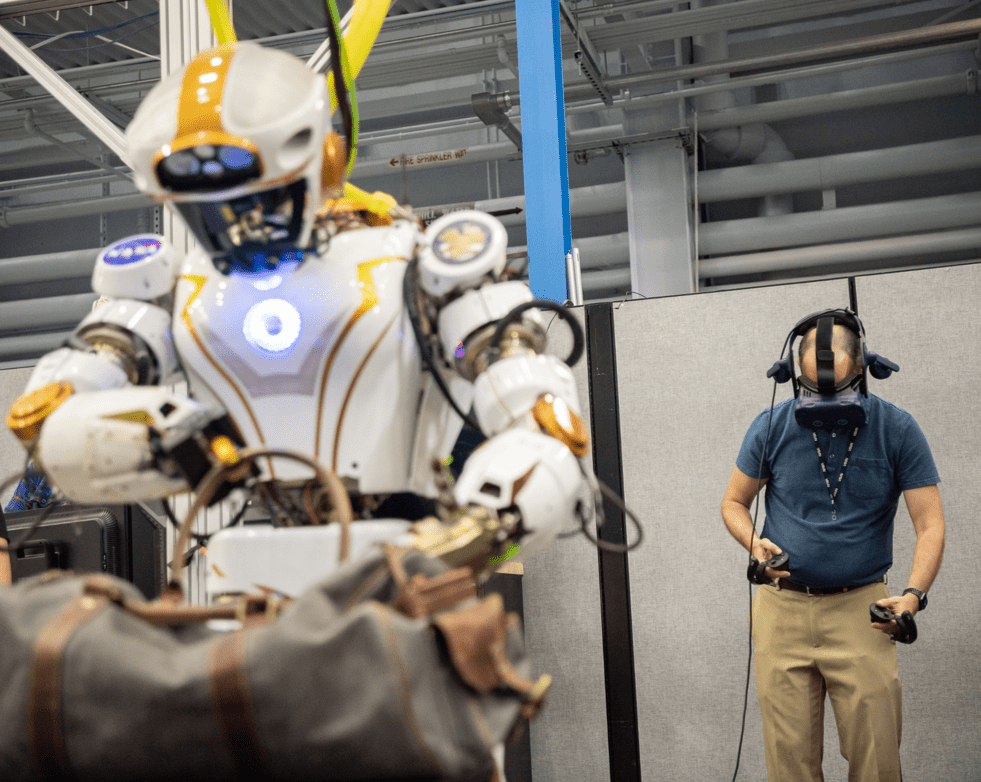
Shaun Azimi, lead of NASA's Dexterous Robotics Team, showcases a demonstration with the Valkyrie humanoid robot. As humans venture deeper into space, the idea of collaboration between humans and robots is transitioning from science fiction to reality. Advanced robotic systems play a vital role in human spaceflight, as they enhance crew performance, productivity, reduce risk, and expand exploration capabilities.
The Dexterous Robotics Team at NASA's Johnson Space Center in Houston is pivotal in developing robotic hardware and software to support NASA's ambitious future plans, with a focus on robots capable of performing tasks humans do with their hands. Team member Shaun Azimi emphasizes that the goal is not to replace human explorers but to make exploration safer and more sustainable by developing capable, reliable, and trustworthy robots for extreme environments.
The 16-member team is part of NASA's Robotic System Technology Branch, which also creates mobility systems, such as unmanned planetary rovers. Azimi leads both dexterity and mobility projects, with crossover experience gained from working on well-known humanoid robots like Robonaut 2 and Valkyrie. Many team members who worked on these projects continue to build upon their legacy.
Today, the team supports various agency projects and programs, including those exploring connections to building a lunar base. They collaborate with private industry and external partners, such as an oil and gas company, that face similar challenges in harsh environments. The team's major focus has been developing the Integrated Mobile Evaluation Testbed for Robotics Operations (iMETRO) facility at Johnson, which supports the adaptation of terrestrial robotic technologies for human-supervised space exploration applications. iMETRO offers open-source software, simulations, space vehicle and habitat mockups, "house robots," and an outdoor rock yard, providing flexibility to test entire robots or individual hardware or software components.
This facility helps remove the guesswork from NASA's collaborations with external partners, enabling technology providers and habitat designers to learn from each other and enabling a better understanding of the challenges involved in human-supervised space exploration.
Written by urgent.news from NASA's reporting — not their text. Machine-written — may contain errors; check the original before relying on it.