New method suggests the Moon once had an internal magnetic field
New research supports the idea that the moon once had its own internal magnetic field just as Earth does today.
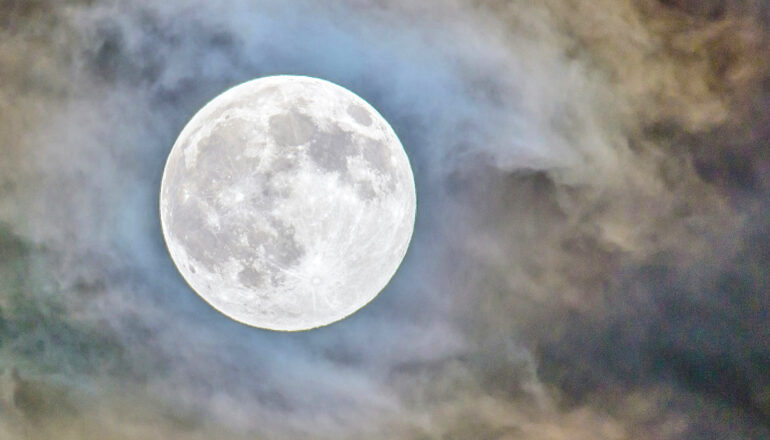
New research suggests the Moon once harbored an internal magnetic field. Unlike Earth, the Moon does not possess a core-generated magnetic field today. Earth's global magnetic field is generated by the movement of liquid iron in its outer core, similar to a bicycle dynamo converting mechanical motion into electrical energy. However, the debate remains open regarding whether the Moon also operated a dynamo in the past.
This is because analysis of rock samples collected by the Apollo astronauts is contradictory, with some researchers assuming a long-lasting magnetic field between 4.25 and 3.5 billion years ago, while others find no evidence.
The study, conducted by ETH researchers Xi Yang and Anna Mittelholz in collaboration with colleagues at DLR and the Technical University of Berlin, supports the dynamo theory. They conclude that the Moon did indeed possess an internally generated magnetic field around 4.2 billion years ago, some several hundred million years after its formation.
Their findings are based on data collected by lunar orbit probes, such as gravity measurements from NASA’s GRAIL probes and magnetic field models from the Lunar Prospector and Kaguya missions.
The focus of the study is on a specific region called Dewar, located on the far side of the Moon, which never faces Earth. Dewar is a strong magnetic field anomaly and a distinct gravity anomaly coincide spatially, containing rock that is more strongly magnetized and denser than elsewhere. This region offers a potential window into the Moon’s internal structure.
Gravity data provides insights into the density and material beneath the surface, while magnetic field and gravity signals coincide to attribute the anomaly to a specific geological structure, as demonstrated by the Dewar region.
The researchers created an accurate model of the subsurface by jointly processing gravity and magnetic field data, revealing a rock body approximately 60 kilometers wide beneath the lunar surface. It extends to a depth of around 9 kilometers and is much denser than the surrounding crust while being strongly magnetized. The age of the structure can be determined from various deposits of impact material on the lunar surface, around 4.2 billion years old.
A strong magnetic field present at that time is estimated to be stronger than 10 microtesla, compared to Earth's current magnetic field strength of around 50 microtesla.
The researchers rule out the possibility of a violent impact causing the magnetic field, as the Dewar region lies outside the possible impact candidates. They conclude that the magnetic field must have originated from a longer-lasting dynamo generated in the core. However, the exact mechanism of how the small lunar core could have generated such a strong magnetic field remains unclear, so the existence of an early lunar dynamo is not fully resolved by the researchers.
The study provides insights into lunar swirls, bright, curved or striped patterns on the Moon’s surface, which always have a magnetic anomaly above them. The origin of swirls is debated, with one explanation suggesting that they only form where the magnetic field runs horizontally at the surface, as in the Dewar Swirl. This horizontal field deflects the solar wind, protecting the surface from weathering and making it brighter than its surroundings.
The findings help future lunar missions select priority targets for on-site measurements and may assist in the analysis of lunar samples to understand the Moon’s magnetic evolutionary history.
Written by urgent.news from Futurity's reporting — not their text. Machine-written — may contain errors; check the original before relying on it.