Meet the 'Fire Amoeba,' a Newfound Blobby Organism That's Defying Expectations About How Much Heat Complex Life Can Handle
The newly described species, found in Northern California's Lassen Volcanic National Park, can still reproduce at 145 degrees Fahrenheit and move around at 147 degrees, according to a new study
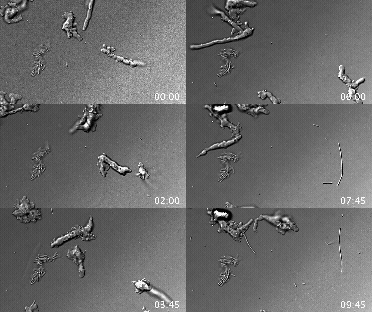
A newly discovered single-celled organism, known as Incendiamoeba cascadensis or the "fire amoeba of the Cascades," has been found in the hot springs of Lassen Volcanic National Park in Northern California. This amoeba can survive and move around at temperatures as high as 147 degrees Fahrenheit, challenging existing scientific beliefs about the heat limits of complex life.
With this discovery, scientists may expand their search for life elsewhere in the universe. The amoeba, which belongs to the eukaryotic category of life, is more complex than prokaryotes, such as bacteria and archaea, and includes organisms like humans, plants, and algae. Researchers previously thought that eukaryotic cells could not withstand temperatures above 144 degrees Fahrenheit, but this new finding suggests that at least one species can endure even higher temperatures.
The team found genes in I. cascadensis that protect and stabilize DNA, help the organism sense its environment, and maintain proper protein folding under extreme heat. These findings indicate that there may be similar extremophile organisms living in other geothermal locations such as New Zealand and Yellowstone National Park.
Written by urgent.news from Smithsonian's reporting — not their text. Machine-written — may contain errors; check the original before relying on it.