Mass shootings: Weekend bloodshed leaves questions about police intelligence
Mass shootings in the West Rand and Cape leave South Africa reeling
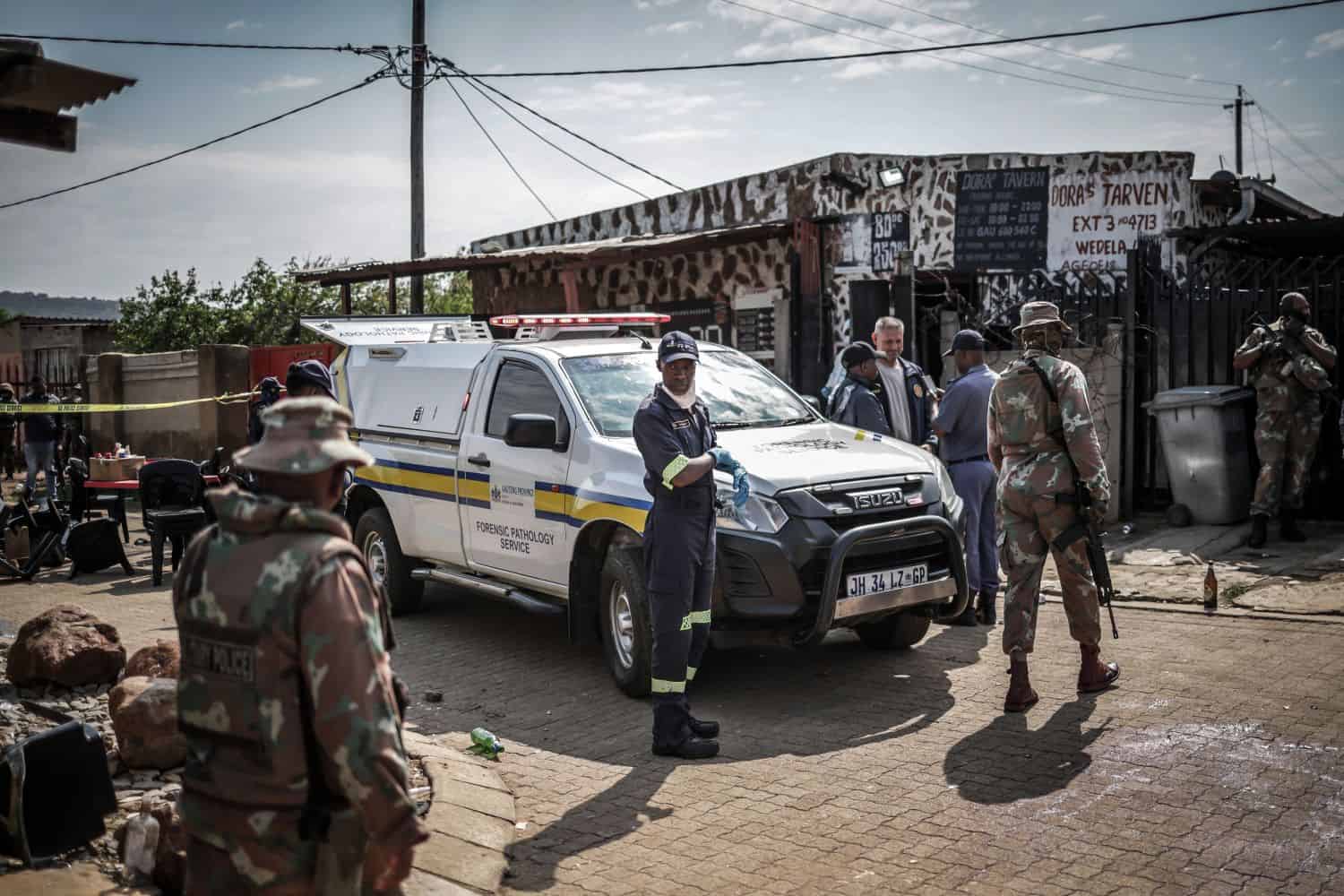
In a weekend marked by extreme violence, South Africa witnessed at least 27 deaths and 26 injuries stemming from multiple mass shootings. This disturbing trend has sparked questions about the effectiveness of police intelligence in preventing such tragedies and the role of inadequate policing in fueling the illegal weapon trade.
In Wedela, a tavern in the West Rand, near Carletonville, a shooting on Saturday night left 17 individuals dead and 15 wounded. The following day, an entertainment venue in Lwandle, Western Cape, became the scene of another shooting that claimed 10 lives and left 11 injured. Experts suggest that bolstering intelligence and combating illegal gun trafficking could help avert such mass casualty incidents.
Criminologist Prof Kholofelo Rakubu argues that the shootings should prompt a reevaluation of how the country approaches and prevents multiple-victim firearm violence. However, he cautions against hastily determining motives, stating that investigations should establish whether incidents are related to robbery, revenge, organized crime, extortion, gang activity, interpersonal conflict, or another motive.
Rakubu emphasizes that identifying conditions that enable mass casualty attacks is crucial, as the taverns where the shootings occurred are not necessarily the root cause of the violence.
Willem Els, an ISS expert, points to similarities between the Wedela shooting and previous attacks, suggesting a potential link to illegal mining. He stresses the need for improved crime intelligence to warn of or detect potential shootings. Station commissioners should collaborate with local policing forums to devise crime-prevention plans, including increased police presence. Seized firearms may shed light on the attack's planning, gun supply, and links to earlier crimes.
Ian Cameron, chair of the portfolio committee on police, also raises the possibility of the Wedela shooting being connected to illegal mining. He calls for proper emergency response measures, such as reliable call handling, functioning radios, available response vehicles, and coordination with medical services. Cameron asserts that expanding investigative powers to local and provincial governments requires clear responsibilities, training, vetting, national standards, information-sharing, and independent oversight.
He emphasizes the importance of understanding whether threats were reported beforehand and how that information was handled.
Stanley Maphosa, executive director of Gun Free South Africa, advocates for strengthening intelligence, detective work, ballistics, and firearm tracing. He notes that SAPS recovers around 100 illegal firearms weekly but has destroyed more than 317,000 firearms and parts in the past seven years, indicating a continuous replenishment of the criminal pool. Maphosa urges every crime gun to answer three questions: where it came from, who supplied it, and what other crimes it may be linked to.
Written by urgent.news from The Citizen's reporting — not their text. Machine-written — may contain errors; check the original before relying on it.