Los neobancos aceleran su expansión en España y apuntan a la convergencia con la banca tradicional
Los directivos de N26, Trade Republic y Revolut han abordado las claves de crecimiento, la resiliencia regulatoria y el nuevo paradigma de 'principalidad distribuida' durante el XVII Encuentro Financiero EXPANSIÓN-KPMG. Leer
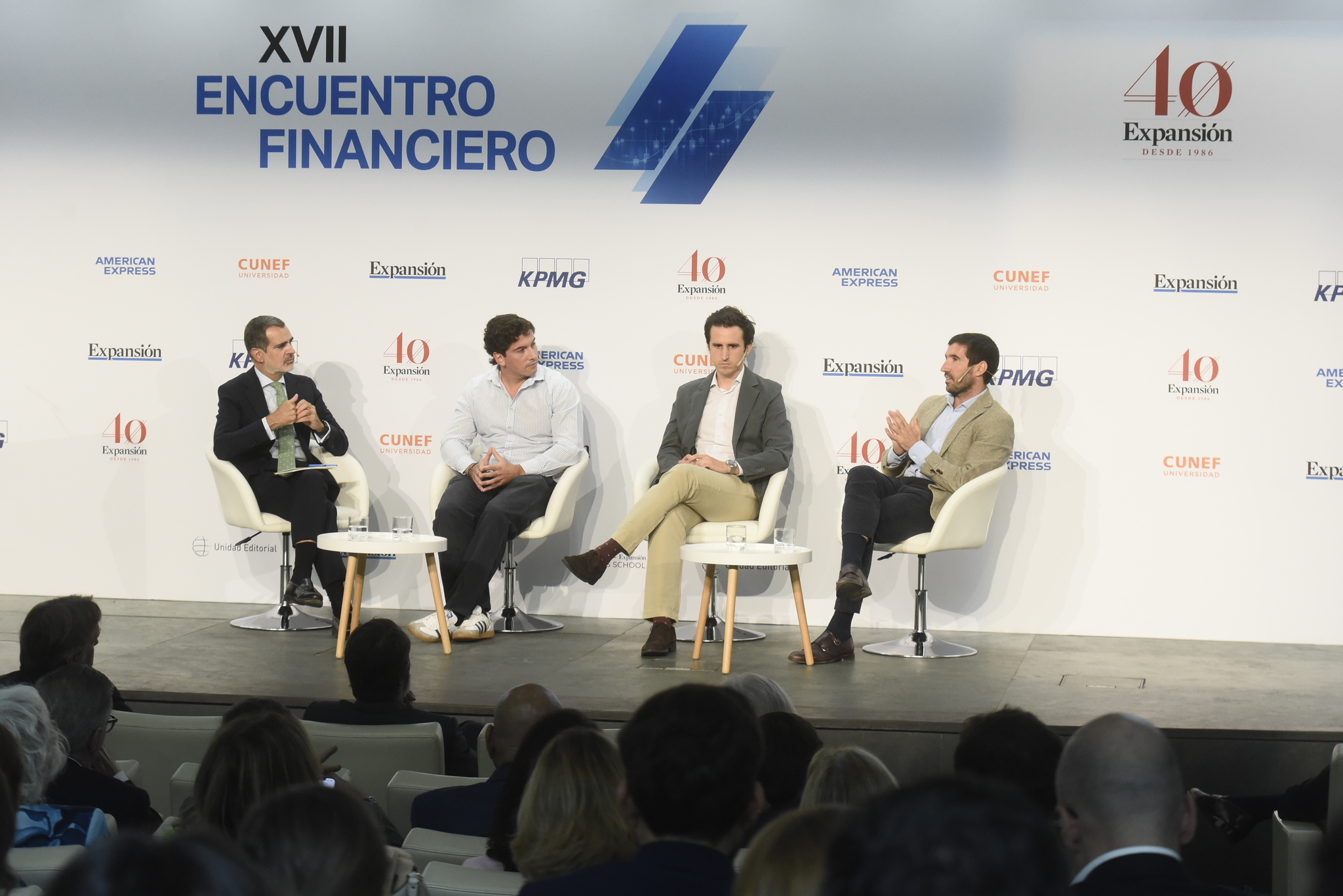
Directors from N26, Trade Republic, and Revolut discussed the keys to growth, regulatory resilience, and the new paradigm of distributed leadership during the XVII EXPANSION-KPMG Financial Expansion Forum. Spain has become one of the key growth centers for digital banking in Europe. During a roundtable titled "Neobanks: Redefining Banking in the Digital Era," organized by EXPANSION and KPMG in collaboration with American Express and Cunef University, the executives shared figures reflecting this scale.
Revolut Spain's CEO Santiago Pérez Olano revealed that his institution has already surpassed 7 million clients in the country, and aims to reach 8 million by year-end and 10 million in the next fiscal year, which would serve approximately 20% of the Spanish population. His business service, Revolut Business, already has 30,000 corporate clients in Spain, representing 20% of the company's global profit. "Our ambition is to be the primary bank for all Spaniards," assured Pérez.
Trade Republic's General Director for Spain and Portugal, Pablo López Gil-Albarellos, noted that the company has surpassed 2 million users in the Spanish market. He emphasized that the company was born to solve users' dissatisfaction through superior technology, transparency, and reduced costs. Antón Díez Tubet, General Director in Spain of N26, stressed that Spain is N26's second fastest-growing market globally.
He reaffirmed the idea of not competing with traditional banking, but rather coexisting. Díez Tubet explained that in the banking sector, there is now talk of a "distributed monarchy," as users no longer seek a single entity for all their operations, but rather choose the best option for each specific need. To differentiate themselves, he said, it will be necessary to offer a high-quality product, accessible and transparent, with very low fees, and create value tools with personalized service.
Faced with the advancement of traditional banking in digital experience and remuneration, the three neobanks defended their competitive advantages. Pérez Olano, CEO of Revolut, said, "We try to turn existing products on their head: the remunerated account, subscriptions... we work to offer things easily, comfortably, and at a good price to users in the same ecosystem, so the customer does not need more."
In the savings and investment field, Trade Republic's López Gil-Albarellos highlighted the goal of democratizing access to capital markets without entry barriers or crossed incentives, while maintaining the commitment to transfer 100% of the European Central Bank's interest rates to its clients' remunerated accounts and offering access to national fund managers from a euro.
Regarding regulatory scrutiny and financial supervision requirements, the leaders of the sector reiterated their operational solidity. Díez Tubet emphasized that N26 prioritizes regulatory resilience and compliance in all its markets, using artificial intelligence to optimize fraud prevention and maintain reduced operating costs as it scales.
Likewise, López Gil-Albarellos acknowledged that banking is based on trust, and as fully digital operators, proximity to the user is critical. Therefore, he stressed that Trade Republic has a team of more than 1,000 human customer service agents, 200 of whom are dedicated entirely to Spain. Regarding the future of the banking sector, all three speakers agreed on an inevitable convergence between traditional and digital entities.
For Trade Republic, financial product features would no longer be the differentiating factor, ceding that role to the operational agility to develop and launch new solutions transparently and regulated. Pérez Olano anticipated a highly digital but hybrid environment. The firm envisions the deployment of physical elements and the integration of artificial intelligence as a daily financial assistant, reserving human assistance for more complex investment decisions.
Finally, Díez Tubet concluded that the future lies in hyper-personalization and the ability to add real value to users through efficient digital tools.
Written by urgent.news from Expansion ES's reporting — not their text. Machine-written — may contain errors; check the original before relying on it.