Iran claims US underwater drone seizure: How ROVs spy, map and hunt mines
Iran drone seizure claim: How underwater ROVs wage war
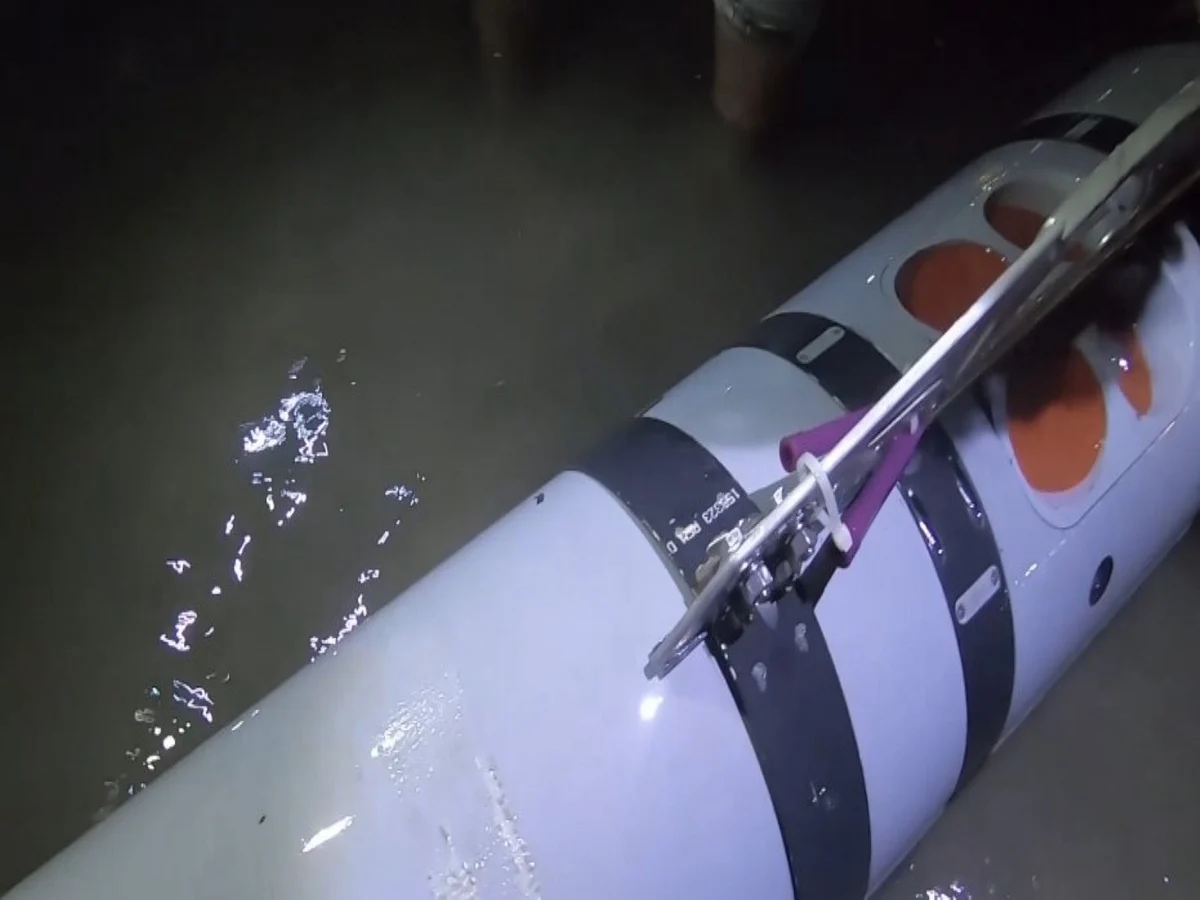
Dubai: Iran’s Revolutionary Guards have claimed to have seized a US REMUS 600 underwater drone in the Strait of Hormuz, highlighting the importance of such technology in modern naval warfare. The US military has denied the claim, stating it has "positive control of all operational drone assets". The IRGC Navy said it intercepted the unmanned underwater vehicle (UUV) during a reconnaissance mission following an intelligence and electronic warfare operation.
They claimed the vehicle, which was handed over to Iranian military experts, was used to retrieve data.
Underwater drones, also known as unmanned underwater vehicles (UUVs), come in two main types: remotely operated vehicles (ROVs) and autonomous underwater vehicles (AUVs). ROVs are controlled by a surface vessel, while AUVs can operate independently after being programmed. These drones are typically equipped with cameras, sonar, and other sensors to inspect, survey, and document submerged environments.
The US Navy has been pioneering the use of underwater drones since the 1950s, initially for retrieving lost equipment and performing deep-sea inspections. They later became crucial in oceanographic research and offshore industries, such as the exploration of shipwrecks like the Titanic. The REMUS 600, a medium-sized autonomous underwater vehicle designed to operate at depths of up to 600 meters, is one of the most notable models.
It is capable of mapping the seabed, locating potential mines, identifying underwater structures, and collecting detailed environmental information.
Unlike aerial drones, underwater drones cannot rely on GPS for navigation. Instead, they use technologies such as inertial navigation, depth sensors, sonar, and acoustic positioning to calculate their position and follow a programmed route. Communication with these vehicles is also challenging due to the limitations of radio waves in seawater.
As a result, underwater drones are mostly autonomous, with the vehicle storing information until it returns or surfaces. Their use offers a cost-effective and safer alternative to crewed submarines for various missions, including mine countermeasures, intelligence gathering, surveillance, and anti-submarine operations.
Written by urgent.news from Gulf News's reporting — not their text. Machine-written — may contain errors; check the original before relying on it.