Hong Kong to close deals with firms from strategic sectors in months: Paul Chan
A handful of leading firms from emerging industries are expected to receive preferential policy packages and set up operations in Hong Kong within the “next couple of months”, the city’s finance chief has said, as part of efforts to attract investment. In an exclusive interview with the South China Morning Post, Financial Secretary Paul Chan Mo-po provided an update on the city’s drive to draw…
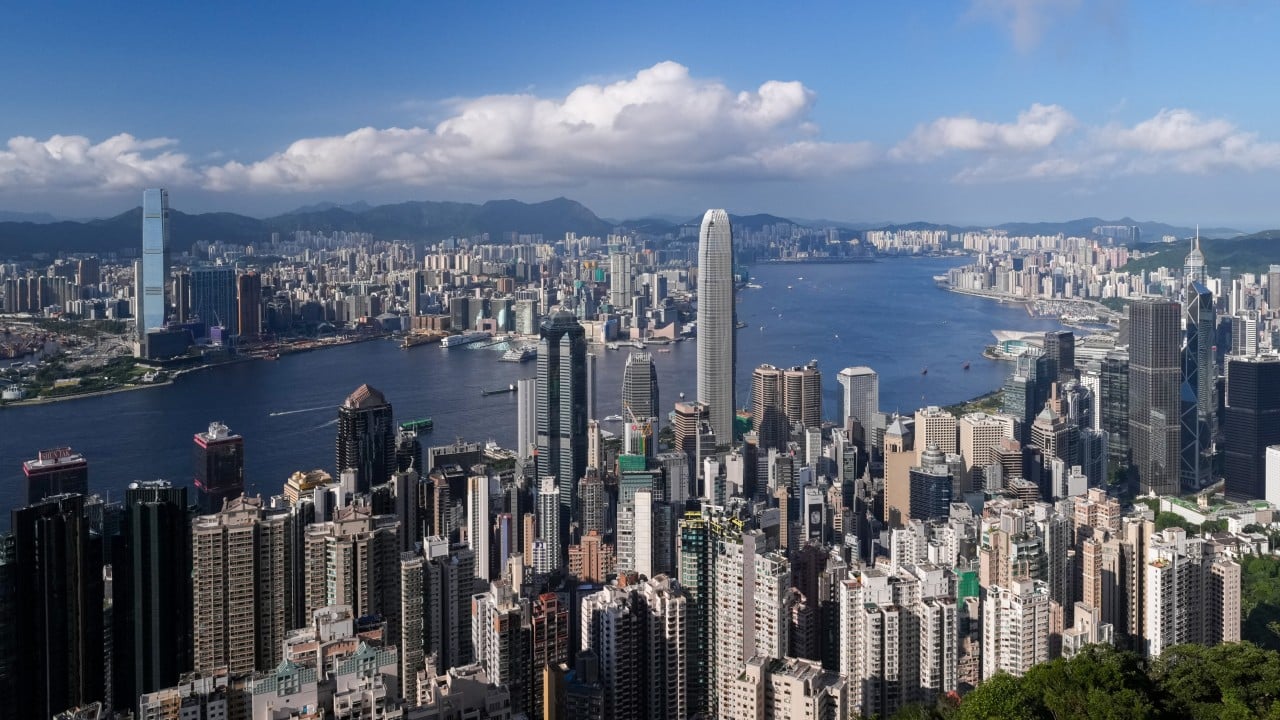
Hong Kong is exploring innovative methods to address its land value challenge. When the city's inaugural chief executive, Tung Chee-hwa, unveiled his housing blueprint in 1997, the objective was ambitious. The government aimed to construct a minimum of 85,000 flats annually, both in the public and private sectors, and elevate the home ownership rate to 70 percent.
The reasoning was straightforward: generate more homes, enhance affordability, and enable more families to acquire a portion of Hong Kong. However, history intervened. The Asian financial crisis struck, causing property prices to plummet. The economy weakened, rendering the 85,000-flat target politically untenable, and the government retreated.
Nearly three decades later, Hong Kong persists in grappling with the same quandary: to what extent can the government release land without destabilizing the value of existing land? This fundamental question lies at the heart of the Northern Metropolis today. Elevated land and property values can generate government revenue and household wealth but also complicate entry for younger generations into the housing market.
Hong Kong implemented this model to an extreme degree. Since colonial times, restrictions on land supply and the sale of development rights have yielded significant government revenue, enabling Hong Kong to maintain low taxation while funding infrastructure and public services. While this approach proved remarkably effective for decades, success also ushered in its own complications.
When property becomes a significant store of household wealth, a sharp decline in prices is no longer merely a housing market correction. It impacts homeowners, banks, developers, consumption, and government finances. Consequently, the government faces an awkward predicament. It aspires to make housing more affordable but also has compelling reasons to prevent property values from collapsing.
Tung's strategy may have addressed the core structural issue. Hong Kong needed additional land and homes. However, the timing was unfortunate. The combination of a massive supply surge, an economic downturn, and the Asian financial crisis resulted in the most severe property collapse in history. The lesson is not that Hong Kong should abstain from increasing land supply.
Instead, it demonstrates that housing policy cannot be treated as a switch. Overloading supply too rapidly can trigger a market shock, while withholding it for too long leads to scarcity, higher prices, decreased affordability, and escalating intergenerational tensions. Discussions of a "high land price policy" are not official; successive administrations have rejected the notion that Hong Kong intentionally sustains high land prices.
Perhaps the more pertinent inquiry is whether the economic incentives inherent in Hong Kong's land system continue to hinge on valuable land. This notion is more challenging to dismiss. Consider the Northern Metropolis. Recently, the government allocated its inaugural substantial district development project in Hung Shui Kiu and Ha Tsuen to a consortium comprising six companies, including China Overseas Land & Investment, China Resources Land (Overseas), JD.com, and Sino Land.
The HK$1.03 billion (US$131 million) tender encompasses three residential sites, with the winning consortium responsible for preparing additional land, developing a smart logistics center, and constructing public facilities. This represents a departure from conventional land sales. Instead of merely selling a site and entrusting the government to develop the surrounding area, the new model integrates private-sector capital and expertise into the development process.
There's logic behind this. The Northern Metropolis is a monumental undertaking, and entrusting the government to finance and build every component would impose a considerable financial burden on public finances. Consequently, the administration is experimenting with various ways to share development costs and risks with the market.
The policy statement indicates that this approach will persist, with a second large-scale land disposal pilot in Fanling North potentially initiated by the end of the year. Additionally, the government aims to prepare approximately 2,500 hectares of "spade-ready" sites over the next decade, with roughly 1,000 hectares within the Northern Metropolis within the next five years.
This may be the most significant change. Hong Kong is no longer solely contemplating the market value of a piece of land. Instead, it is increasingly pondering what that land can generate. The Northern Metropolis endeavors to merge housing with universities, technology, logistics, industry, and new communities. The government's most recent plans position university towns and the integration of education, technology, industry, and talent at the core of the development strategy.
If successful, the economic value of the Northern Metropolis will emanate from the activities generated within it, rather than solely from the value of the land beneath it. The ethical lesson is not that Hong Kong should never augment land supply. It underscores that housing policy cannot be treated as a switch. This approach represents a significant evolution of Hong Kong's land model.
However, the 85,000-flat episode serves as a useful reminder. Large-scale land policies necessitate time, consistency, and a readiness to endure short-term uncertainty for long-term gain. The government's strategy of augmenting supply while introducing more flexible development and financing mechanisms may offer a more measured alternative to the dramatic fluctuations of the past.
The more intriguing question is whether Hong Kong can ultimately construct a system in which land generates economic value, rather than economic value being predominantly contingent upon land value. The Northern Metropolis may be where this answer is found.
Written by urgent.news from South China Morning Post's reporting — not their text. Machine-written — may contain errors; check the original before relying on it.
This story
This is one outlet's version. Read the fullest account.