Home price shifts across America’s 50 largest metro housing markets
Want more housing market stories from Lance Lambert’s ResiClub in your inbox? According to our analysis of the Zillow Home Value Index, U.S. home prices are up +1.3% year-over-year between August 2025 and August 2026. That year-over-year pace is up a tad from a year ago—back in August 2025, when the national year-over-year home price shift rate was -0.01%.…
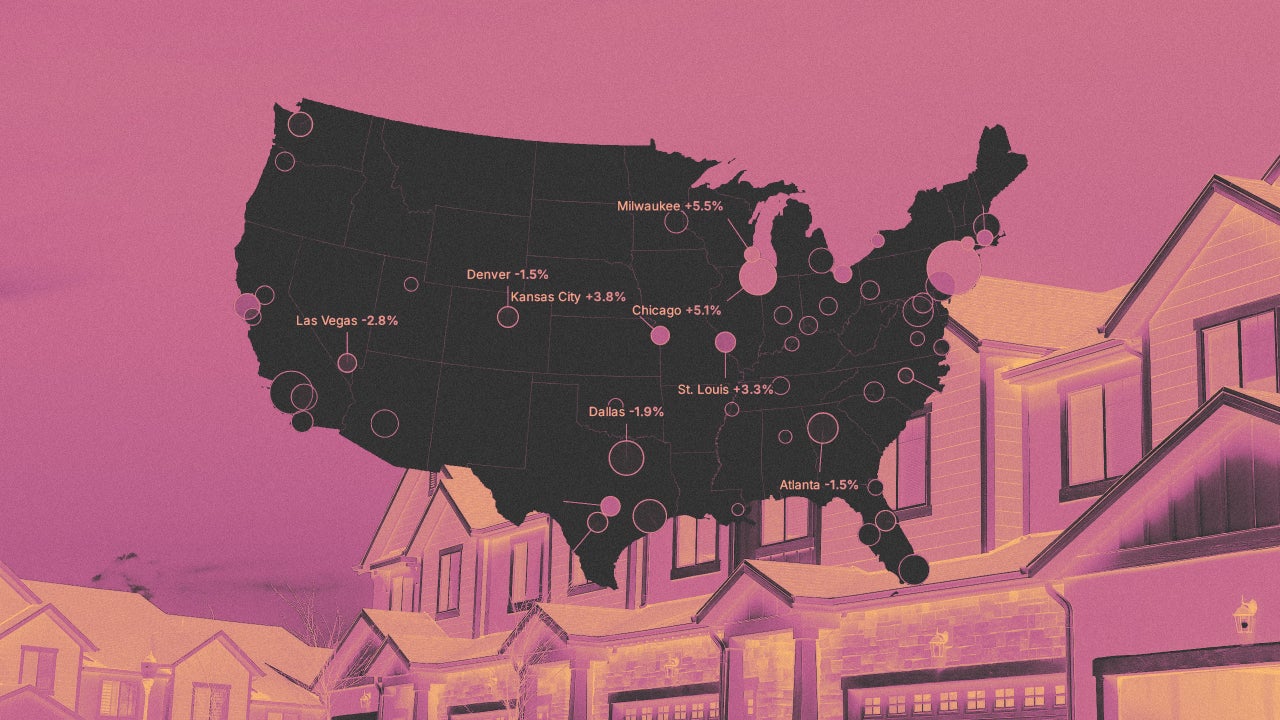
The median U.S. home price rose by 1.3% year-over-year from August 2025 to August 2026, according to the Zillow Home Value Index. This represents a modest increase from the previous year's 0.01% decline. The market has stabilized, moving from a softened and low-appreciation period to a more stable state. However, mortgage rate increases and higher long-term yields may impact the momentum of this stabilization in the coming months.
In certain regions, such as Texas, Florida, and Colorado, inventory levels have surpassed pre-pandemic 2019 figures, resulting in minor home price corrections. Conversely, tight inventory markets in parts of the Northeast and Midwest are likely to see slight price increases this year. San Francisco, particularly San Francisco proper, is experiencing substantial upward pricing due to an AI wealth boom.
The year-over-year shifts in home prices across the 50 largest metro housing markets are displayed in the table below, with MoM representing month-over-month changes and YoY indicating year-over-year changes. The period from July to August falls within the seasonally softer window of the national housing market. The table that follows focuses on the year-over-year changes for August, providing context for how the most recent 12-month shift compares to previous years.
Since the end of the Pandemic Housing Boom in mid-2022, many Sun Belt and Mountain West markets have been at higher risk for home price corrections, as these areas experienced significant price surges during the pandemic boom. These markets saw inflated home prices relative to local incomes, increasing carrying costs like insurance and property taxes.
Slowed pandemic-driven state-to-state migration and rising mortgage rates have exacerbated challenges for markets like Tampa and Austin, which relied more on local income levels to support high home prices.
The softening trend was accelerated by the abundance of new homes in the Sun Belt, as builders offered affordability incentives to maintain sales in a shifting market. This, in turn, put downward pressure on the resale market, as some buyers favored new homes with better deals over existing ones. Conversely, in the Northeast and Midwest, where home price surges during the Pandemic Housing Boom were smaller, softening has been milder.
These markets were less vulnerable due to relatively smaller home price increases during the boom and benefited from a slowdown in state-to-state migration. Additionally, these regions had lower levels of homebuilding and multifamily construction, so their resale markets experienced less cooling from builders and multifamily projects offering substantial discounts.
Midwestern housing markets have outperformed since the Pandemic Housing Boom ended four years ago, but it remains to be seen if this resilience will sustain.
Written by urgent.news from Fast Company's reporting — not their text. Machine-written — may contain errors; check the original before relying on it.