Headless DevOps Gives AI Agents Access to Delivery Workflows
Federico Larsen joins Alan Shimel to examine agent-accessible delivery workflows, API and MCP interfaces, and the testing and security checks needed for headless DevOps.
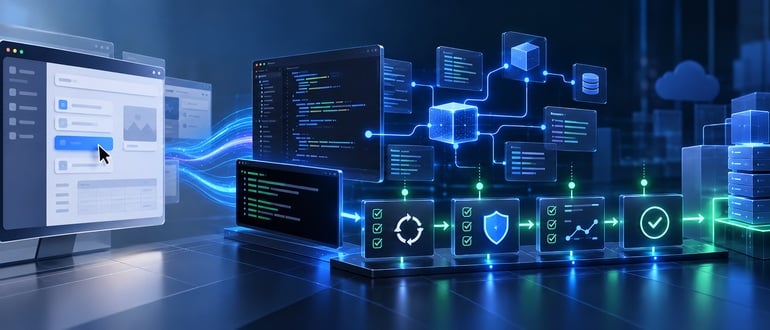
The article explores how headless DevOps practices enable AI agents to access delivery workflows, focusing on Salesforce development as an example. Traditional delivery platforms were designed for human interaction, creating constraints when developers delegate tasks to coding agents within their development environments. However, exposing capabilities through APIs, command-line tools, and agent interfaces alters how work reaches the platform without removing the need for testing, security checks, and human decision-making.
Federico Larsen, co-founder and CTO of Copado, explains this shift through three access layers: APIs, CLI commands, and packaged agent skills or MCP servers. Developers can now delegate work to tools like Cursor and Claude Code without moving every step back into a graphical interface. This design supports both autonomous execution and workflows that maintain human involvement in decisions.
Larsen emphasizes that granting agents more access expands the scope of validation needed by teams. Areas such as connected applications, IP ranges, and agent behavior require security scrutiny, along with quality gates earlier in the delivery process. Testing an agent introduces additional complexity, as responses are not identical across runs. Teams must assess whether the agent stays on task and adheres to corporate language requirements, rather than relying solely on fixed expected answers.
He also discusses generating regression tests from user-story acceptance criteria to address this challenge. Larsen highlights that the distinction between making a platform accessible and ensuring it is safe for automated tasks runs through his examples. APIs can expose operations, but the surrounding workflow still demands checks on the changes an agent produces.
His account connects headless access with testing and compliance, underscoring that removing the user interface does not eliminate the need for controls in the path from a developer's request to an accepted change.
Written by urgent.news from DevOps.com's reporting — not their text. Machine-written — may contain errors; check the original before relying on it.