Ghana's youth must not be left behind in the AI revolution - Kojo Bonsu
We want to create a growing network of young Ghanaian professionals capable of developing solutions to challenges in agriculture
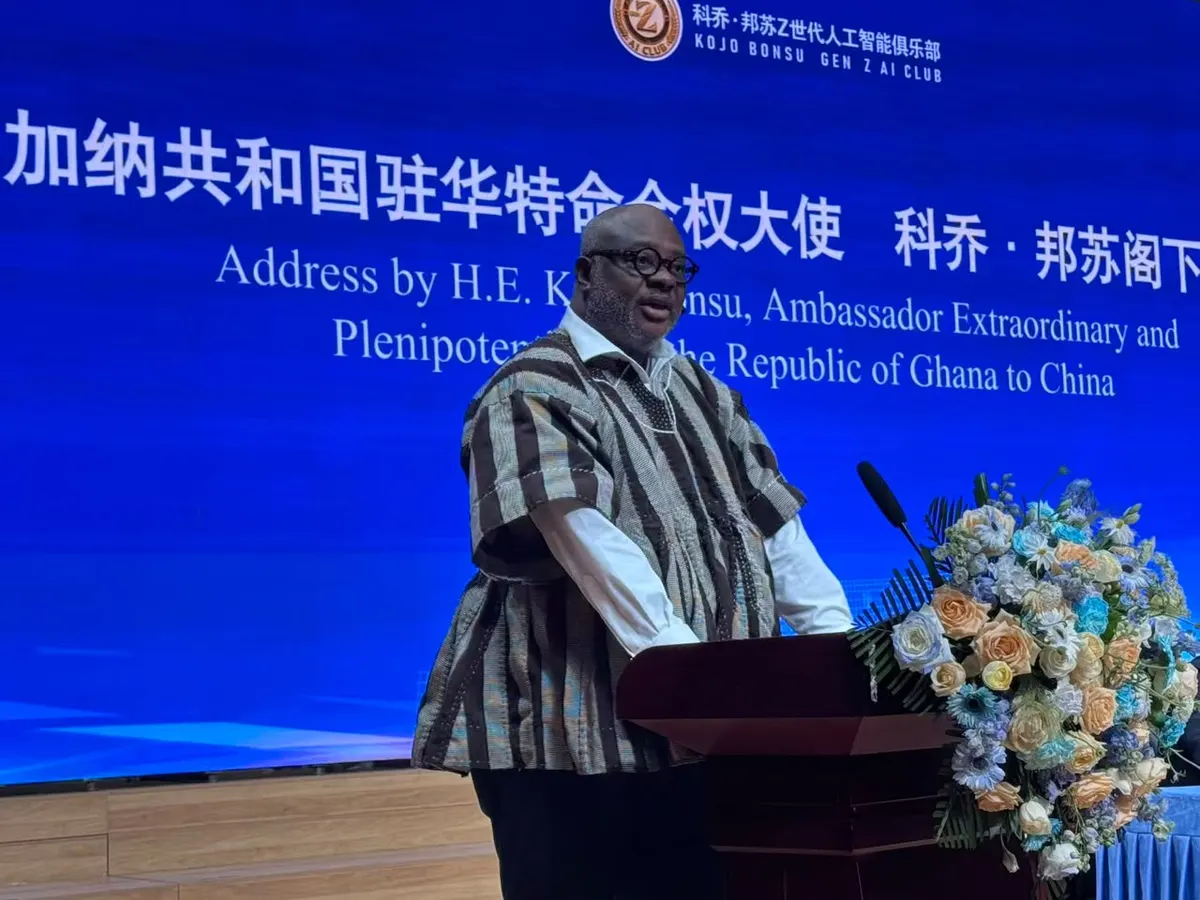
Ghana's Ambassador to China, Kojo Bonsu, is spearheading an initiative aimed at preventing the country's youth from being left behind in the artificial intelligence (AI) revolution. In the city of Zhoukou, Henan Province, Bonsu launched the China-Ghana Youth AI Talent Development Programme, a joint effort with Beijing-based AI technology company APUS Technology Co., Ltd., and Zhoukou Normal University.
The program's primary objective is to train young Ghanaians in AI and data science, offering full scholarships for students to study in China or Ghana. Participants from Bonsu's GenZ AI Club in China will receive on-site classes, while Ghanaian students will join the learning process online. Bonsu hopes that the most talented students will secure internships with APUS Technology Co., Ltd., providing them with valuable practical experience to build and advance their careers.
Bonsu believes that it is crucial for Ghana's youth to participate in the AI revolution, creating a network of young professionals skilled in addressing challenges in agriculture, healthcare, education, and finance. He encourages participants to become multipliers, returning to Ghana to share their knowledge with fellow students, universities, and tech communities across the nation.
This initiative represents a new form of diplomacy, focusing on empowering young individuals rather than solely relying on embassy relations and agreements. It offers Ghanaian youths the unique opportunity to work in an AI lab in China, dreaming about how they can contribute to developing solutions for Ghana. With the scholarship window now open, Bonsu's program promises to forge a lasting educational and technological bridge between Ghana and China, ultimately benefiting the country's economic growth.
Written by urgent.news from 3News's reporting — not their text. Machine-written — may contain errors; check the original before relying on it.