EAA Foundation highlights protection of education in crisis
<p>New York: Education Above All (EAA) Foundation, a global education foundation, placed the protection and continuity of education in crisis situations and the advancement of innovative approaches to mobilise additional financing for education at the centre of its engagement at the 81st United Nations General Assembly (UNGA81).</p> <p>Across nine high-level engagements from September 21 to 24,…
In New York, the Education Above All (EAA) Foundation, a global education charity, emphasized the significance of safeguarding education in crisis zones and exploring innovative methods to secure funding for education during the 81st United Nations General Assembly (UNGA81). For nine days, from September 21 to 24, the foundation engaged with governments, UN agencies, development finance institutions, philanthropies, businesses, and humanitarian groups to tackle two intertwined issues: protecting education for children and youth impacted by conflict, displacement, and other crises, and securing the necessary resources for their access and continued presence in education.
The foundation's discussions unfolded amidst a deteriorating global financing landscape for education. UNESCO's 2026 Global Education Monitoring Report projected an annual financing shortfall of US$97 billion for low- and lower-middle-income nations to achieve their education goals by 2030. Additionally, aid to education declined by 8% between 2023 and 2024, and basic education funding fell by 16%. Projections suggest that aid to education could drop by as much as 30% between 2023 and 2027.
Simultaneously, attacks on education persist, jeopardizing children's access to learning. The Global Coalition to Protect Education from Attack documented 9,259 incidents of attacks on education in 2024 and 2025, a more than 50% increase from the preceding two-year period. At least 10,600 students, teachers, professors, and education personnel were harmed.
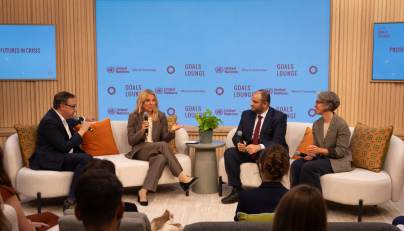
EAA Foundation's engagement at UNGA81 centered on protecting education in crisis, featuring a UN Goals Lounge session titled "Protecting Futures in Crisis: Building Resilience through Education and Mental Health in Humanitarian Settings." CEO Mohammed Al-Kubaisi participated alongside humanitarian leaders, policymakers, foundations, and technology partners to explore the integration of education, mental health, and psychosocial support into humanitarian response strategies.
The foundation underscored that education must be a fundamental and funded component of humanitarian action, not a secondary concern. The conversation stressed the need to link learning with mental well-being, child protection, and support for teachers, caregivers, and humanitarian workers, while ensuring that emergency education paves the way for future education, further learning, and economic prospects.
Drawing from the foundation's experiences in crisis settings, including its collaboration with War Child in Yemen and support for learning continuity in Gaza, EAA Foundation highlighted the importance of enabling children affected by conflict and displacement to maintain their education, even amidst disruption. The discussion solidified EAA Foundation's broader advocacy for shielding schools, students, and educators, and ensuring that emergency education responses address both immediate learning continuity and long-term recovery and opportunity.
Written by urgent.news from The Peninsula Qatar's reporting — not their text. Machine-written — may contain errors; check the original before relying on it.