China: Zollvorteil unter Vorbehalt: Findet die Schweiz eine Antwort auf den China-Schock?
Wie deutsche Maschinenbauer verlieren auch Schweizer Firmen Marktanteile in China. Das Land setzt auf ein ausgebautes Freihandelsabkommen – und könnte Unternehmen einen Vorteil verschaffen.
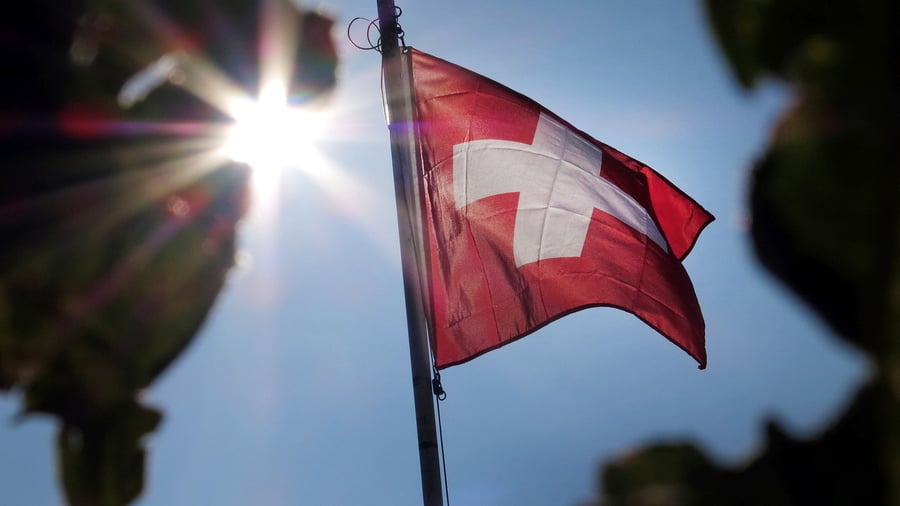
China's Swiss machinery manufacturers face a similar challenge to their German counterparts, as Chinese producers are increasingly supplying goods that were once imported from Europe. The Swiss government is advancing a comprehensive free trade agreement with China, aiming to sign it in autumn, according to the Federal Council. However, the extent to which the agreement helps against Chinese competition remains unclear.
Nonetheless, it could give Swiss manufacturers an edge over their competitors. The country promotes open market access in its trade policy, and Chinese industrial goods have been duty-free since 2014, and generally duty-free with regard to other countries since 2024. The Swiss state even intends to have machinery fully duty-free exported by the end of transition periods, with 99.8 percent of all Swiss exports eligible.
The additional savings potential amounts to around 244 million Swiss francs (about 258 million euros) per year. This potential could be significant for domestic manufacturers competing against Chinese firms. Martin Hirzel, President of the Swiss Industry Association Swissmem, regards the expansion as pragmatic foreign economic policy for an export-oriented small state.
The association highlights the substantial benefit for precision turning and grinding machines, which have traditionally been ordered by Chinese customers from Swiss manufacturers. In this segment, Swiss companies mainly compete with German suppliers, who are technologically on par. The German Machinery Manufacturers' Association VDMA attributes China's success more to competition environment than to market access, citing trade tariffs as an additional burden and state subsidies for domestic manufacturers under the "Made in China 2025" strategy as major challenges.
Particularly hard-hit are construction machinery, which China scales with large volumes. The Swiss Industry Association observes the same: Chinese manufacturers have caught up technologically and gained market share in the medium to high segments, both in China and Europe, except for top categories. European Central Bank (ECB) data supports the shift, describing the situation as a "China Shock 2.0."
Already in 2020, China became the largest machinery exporter to the world, overtaking Germany, and now accounts for one-third of the world's machinery production. China also topped the tooling machines market in 2025, a key industry for German and Swiss industries. German machinery exports to China fell by 8.2 percent in 2025 to around 16 billion euros.
Meanwhile, Germany imports machinery worth about 12 billion euros from China. China is increasingly selling the same goods as Germany: According to ECB calculations, the two countries' machinery exports now even equalize to around 44 percent, a six percentage point increase over 2019 – the strongest growth in the EU, driven primarily by machinery and vehicle manufacturing.
The EU lacks a free trade agreement with China, the investment agreement negotiated since 2021 is on hold. Therefore, an EU machine faces the regular tariff, around nine percent for precision turning and grinding machines. EU Trade Commissioner Maros Sefcovic will visit Beijing at the beginning of October to discuss the industrial situation.
In July, the VDMA called for defensive measures: countervailing duties against subsidized competition, such as in construction machinery, and new free trade agreements with countries like Malaysia and Thailand. German companies could benefit indirectly. German companies could potentially benefit as well, as Swissmem hopes that they may use more EU-origin materials or carry out specific production steps in EU countries, avoiding the loss of Swiss origin for the machine. The Swiss state will determine the details after the agreement is signed.
Written by urgent.news from Handelsblatt's reporting — not their text. Machine-written — may contain errors; check the original before relying on it.